Language

The Role of Peer Learning in Language Mastery

As you initiate on your language learning journey, you will discover that your progress is not solely dependent on your individual efforts. Your ability to grasp and retain new language skills is influenced by the company you keep, and the interactions you have with your peers. You will find that learning alongside others who share your goals can significantly enhance your understanding and application of the language, allowing you to navigate its complexities with greater ease and confidence, and ultimately, achieve language mastery.

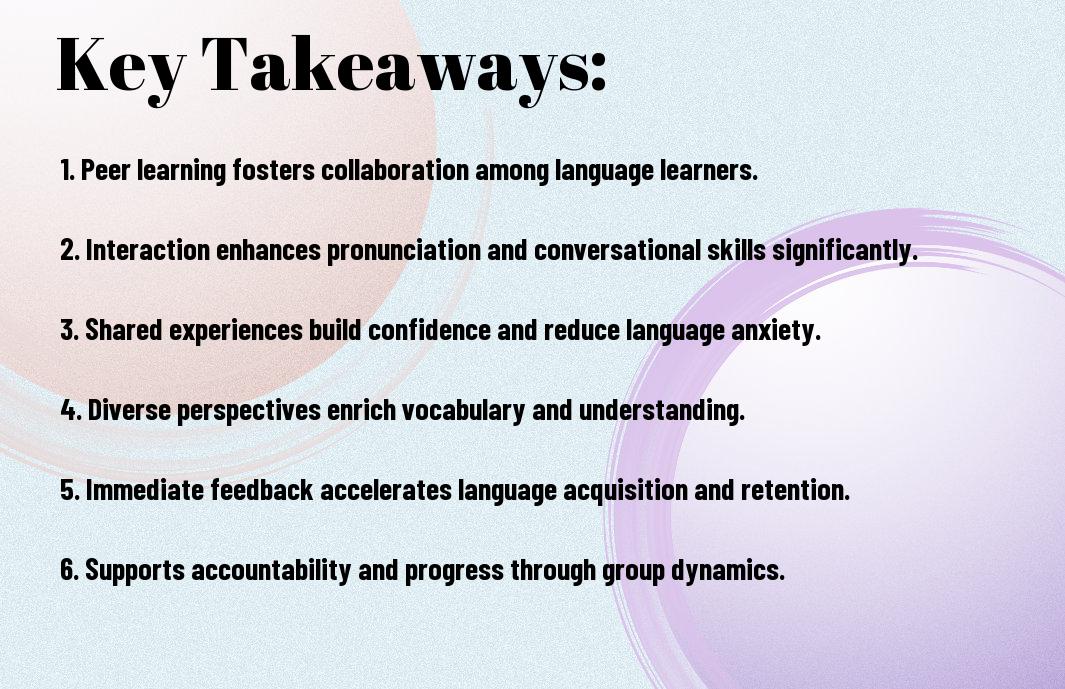
Key Takeaways:

  • The effectiveness of peer learning in language mastery lies in its ability to provide authentic interactions, allowing learners to engage in meaningful conversations and receive immediate feedback from their peers.
  • Peer learning facilitates collaborative learning, where learners can work together to complete language-related tasks, share resources, and learn from each other’s strengths and weaknesses.
  • The flexibility of peer learning enables learners to take ownership of their language learning process, set personalized goals, and develop strategies that cater to their individual learning styles and needs.

    Introduction to Peer Learning

    Before delving into the world of language mastery, you should consider the significance of peer learning in your educational journey. You will find that learning from your peers can be a highly effective way to improve your language skills, as it allows you to engage in interactive and collaborative activities.

    The Importance of Peer Interaction

    Beyond the traditional classroom setting, you will discover that peer interaction plays a vital role in language development. Between engaging in conversations and participating in group discussions, you will be able to practice your language skills in a more authentic and immersive environment.

    Language Mastery through Social Learning

    Peer learning enables you to learn from others, as you observe and imitate their language use. Like a mirror, your peers reflect your own language abilities, helping you to identify areas for improvement and develop a more nuanced understanding of the language.

    It is through this process of social learning that you will begin to notice significant improvements in your language mastery. As you engage with your peers, you will be exposed to new vocabulary, grammatical structures, and pronunciation, all of which will help you to refine your language skills and become a more confident communicator.
    Introduction to Peer Learning

    Assuming you are engaged in learning a new language, you will likely encounter various methods to achieve mastery. One effective approach is peer learning, which involves collaborating with fellow learners to enhance your language skills.

    Cognitive Benefits of Peer Learning

    Any serious language learner will appreciate the cognitive benefits of peer learning, as it exposes you to diverse perspectives, promotes active listening, and fosters critical thinking, all of which contribute to improved comprehension and retention.

    Developing Communication Skills

    Among the most significant advantages of peer learning is the opportunity to develop your communication skills, as you engage in conversations, discussions, and debates with your peers, allowing you to practice your spoken language and receive feedback on your pronunciation and syntax.

    Indeed, as you participate in peer learning activities, you will find that your ability to express yourself effectively in the target language improves dramatically, enabling you to convey complex ideas, negotiate meaning, and build relationships with native speakers, all of which are necessary for language mastery and your personal growth as a learner.

    Effective Language Learning

    Now, as you research into the world of language mastery, you will discover the significance of peer learning in achieving fluency. Your progress will be influenced by the interactions you have with your peers, and the lessons you learn from them.

    The Role of Feedback in Language Acquisition

    The feedback you receive from your peers plays a substantial role in your language development, as it helps you identify areas that need improvement, allowing you to refine your skills and develop a more nuanced understanding of the language.

    Peer Review and Correction

    For instance, when you engage in peer review, you can gain valuable insights into your language usage, and your peers can point out errors you may have overlooked, enabling you to learn from your mistakes and develop your language skills further.

    Plus, as you participate in peer review and correction, you will develop your critical thinking skills, learning to analyze and evaluate your own language production, as well as that of your peers, and this will help you to become a more effective and confident language user.

    Peer Learning in Language Acquisition

    Keep in mind that peer learning plays a significant role in language mastery, as it allows you to engage with others who share your interests and goals, fostering a supportive community that facilitates language development.

    Language Learning Strategies and Peer Influence

    One of the key benefits of peer learning is the exchange of strategies and ideas, enabling you to learn from others and adapt your approach to language learning, ultimately enhancing your progress and understanding of the language.

    Cultural Exchange and Language Immersion

    Beneath the surface of language learning lies the opportunity for cultural exchange, allowing you to immerse yourself in the language and gain a deeper understanding of the cultural context in which it is spoken, which in turn enhances your language skills.

    Further, as you engage in cultural exchange and language immersion, you will find that your language skills improve significantly, as you are exposed to authentic language usage and cultural nuances, enabling you to develop a more nuanced understanding of the language and its applications in real-life situations, which will help you to become a more effective communicator in your target language.

    Peer Learning in Language Acquisition

    Your ability to learn a language is significantly influenced by the company you keep, and peer learning plays a vital role in this process, as it allows you to engage with others who share your goals and interests.

    Overcoming Language Barriers through Peer Support

    Akin to any other challenging task, overcoming language barriers requires dedication and support, and you can find this support in a community of peers who are also learning a language, as they can offer valuable feedback and encouragement.

    Building Confidence in Language Use

    For you to become proficient in a language, it is important to practice speaking and writing, and peer learning provides you with opportunities to do so in a supportive environment, where you can test your skills without fear of judgment.

    Through consistent practice and feedback from your peers, you will become more confident in your ability to use the language, and your skills will improve dramatically, allowing you to express yourself more effectively and engage in meaningful conversations with native speakers, which is a key aspect of language mastery.

    Introduction to Peer Learning

    Once again, you find yourself pondering the most effective methods for language mastery. You consider the various approaches, weighing the pros and cons of each. As you examine deeper, you begin to appreciate the significance of peer learning in language acquisition.

    Technology-Enhanced Peer Learning Platforms

    Platforms such as online forums and social media groups facilitate peer learning, enabling you to connect with fellow language learners. You can engage in discussions, share resources, and receive feedback on your language skills, all from the comfort of your own space.

    Online Communities and Language Exchange

    Beside traditional classroom settings, online communities offer a unique opportunity for language exchange and practice. You can interact with native speakers, practice your speaking and writing skills, and learn from others who share your interests.

    With online communities and language exchange, you can tailor your learning experience to suit your needs and preferences. You can choose from a variety of platforms, join discussions that interest you, and connect with language learners from diverse backgrounds, all of which can enhance your language mastery and broaden your cultural understanding.

    Conclusion

    Conclusively, you will find that peer learning plays a significant role in achieving language mastery. As you examine into the world of language acquisition, you will discover that your progress is greatly influenced by your interactions with fellow learners. For a more in-depth understanding, you can visit An Overview of Peer Learning in Adult Classrooms to explore the benefits of collaborative learning, ultimately enhancing your language skills.

    FAQ

    Q: What is the significance of peer learning in language mastery, and how does it facilitate the learning process?

    A: Peer learning plays a significant role in language mastery as it provides learners with the opportunity to engage in interactive and collaborative learning experiences. Through peer learning, individuals can practice their language skills, such as speaking, listening, reading, and writing, in a supportive and immersive environment. This approach helps to build confidence, improve pronunciation, and develop a deeper understanding of the language. Moreover, peer learning enables learners to learn from one another, share knowledge, and gain new insights, ultimately enhancing their overall language proficiency.

    Q: How does peer learning promote effective language practice and what are the benefits of this approach?

    A: Peer learning promotes effective language practice by providing a platform for learners to engage in spontaneous and authentic conversations, role-plays, and other interactive activities. This approach helps to simulate real-life communication scenarios, allowing learners to develop their language skills in a practical and meaningful way. The benefits of peer learning include improved fluency, enhanced vocabulary, and better grammar usage. Additionally, peer learning fosters a sense of community and motivation, as learners encourage and support one another in their language learning journey.

    Q: Can peer learning be adapted to different language learning contexts, and what role can technology play in facilitating peer learning experiences?

    A: Yes, peer learning can be adapted to various language learning contexts, including classrooms, online courses, and language exchange programs. Technology can play a vital role in facilitating peer learning experiences by providing a range of digital tools and platforms that enable learners to connect, interact, and collaborate with one another. For example, online discussion forums, social media groups, and video conferencing tools can be used to facilitate peer-to-peer interactions, while language learning apps and online resources can provide access to a wide range of learning materials and activities. By leveraging technology, peer learning can be made more accessible, flexible, and effective, ultimately supporting language learners in achieving their goals.

The Best TED Talks on Language Learning

As you commence on your language learning journey, you’re likely seeking inspiration and guidance from experts in the field. Your search ends here, as we’ve curated a list of the most insightful TED Talks on language learning. You’ll discover innovative approaches, hear from seasoned linguists, and gain valuable insights to enhance your language skills. With these talks, you’ll be equipped to overcome obstacles and achieve your language learning goals, making your journey more effective and enjoyable.

Key Takeaways:

To improve your understanding of language learning through TED Talks, consider the following points:

  • The brain’s ability to adapt and change is a key factor in successful language learning, as highlighted in several TED Talks on the subject, which emphasize the importance of neuroplasticity in language acquisition.
  • Immersion and surrounding yourself with the language you want to learn is another significant aspect, as it helps to speed up the learning process and improve fluency more effectively than traditional classroom methods.
  • The use of technology and online resources can greatly facilitate language learning, offering a wide range of tools and opportunities for practice and interaction that can enhance the learning experience and make it more enjoyable and efficient.

Inspiring Talks

For language learners, TED Talks offer a wealth of inspiration and guidance. You can explore various topics, from language acquisition to cultural immersion, and discover new perspectives on language learning.

Motivation to Learn

Around the world, people are driven to learn languages for different reasons. You will find talks that spark your motivation, helping you to stay committed to your language learning goals.

Language Learning Strategies

By exploring different approaches, you can develop effective strategies for language learning. You will discover new methods to improve your skills and enhance your learning experience.

Learning a language requires dedication and the right approach. You can use the strategies outlined in these talks to create a personalized learning plan, tailored to your needs and goals, and achieve success in your language learning journey.

Effective Methods

Assuming you’re looking for ways to improve your language learning, TED Talks offer valuable insights. You’ll discover innovative approaches that can enhance your skills and help you stay motivated.

Immersive Learning

Immersing yourself in a language is key to mastering it. You’ll learn how to surround yourself with the language you want to learn, using media, conversations, and other tools to create an immersive experience that works for you.

Language Acquisition Techniques

Around the world, language learners are using various techniques to acquire new languages. You’ll find that some methods work better for you than others, and understanding the different approaches can help you tailor your learning to your needs.

Hence, as you explore language acquisition techniques, you’ll begin to understand how your brain processes language and how to optimize your learning. You’ll learn to apply techniques like spaced repetition, active listening, and speaking practice to improve your language skills, making you a more effective and confident learner.

Expert Insights

All language learners can benefit from the expertise of renowned linguists and language learning experts who have shared their knowledge through TED Talks, offering you valuable insights into the language learning process and helping you improve your skills.

Cognitive Benefits

Counter to what you might think, learning a new language has numerous cognitive benefits, as discussed by experts in TED Talks, which can help you improve your memory, problem-solving skills, and concentration, making you a more effective learner.

Cultural Significance

Around the world, language is deeply intertwined with culture, and as you explore TED Talks on language learning, you will discover the significance of language in different cultures and how it can help you connect with people from diverse backgrounds.

And as you research deeper into the cultural significance of language, you will find that your understanding of the world and its diverse cultures expands, allowing you to communicate more effectively and form meaningful connections with people from different linguistic and cultural backgrounds, ultimately enriching your language learning experience and broadening your perspectives.

Overcoming Challenges

Keep in mind that language learning can be a daunting task, but with the right mindset, you can overcome any obstacle and achieve your goals.

Common Obstacles

Following the initial excitement, you may encounter setbacks, such as lack of motivation or difficulty with grammar, which can hinder your progress and make you question your ability to learn a new language.

Successful Mindsets

Besides the desire to learn, having a positive attitude and being kind to yourself when making mistakes is imperative for successful language learning, as it allows you to stay motivated and focused on your goals.

Plus, when you adopt a growth mindset, you will be more likely to take risks, experiment with new language structures, and learn from your mistakes, ultimately leading to faster progress and a more enjoyable learning experience, helping you to stay committed to your language learning journey and achieve your desired level of proficiency.

Innovative Approaches

After exploring various language learning methods, you can discover new ways to enhance your skills. Check out 7 Ted Talks to learn languages faster for inspiration. This will help you find the best approach for your learning style.

Technology Integration

Across the globe, you can access numerous language learning tools and apps, making it easier for you to practice and improve your language skills.

Gamification of Learning

Around the concept of gamification, you can find engaging language learning experiences that make the process enjoyable and interactive.

And as you investigate deeper into gamification, you’ll find that it can increase your motivation and participation in the learning process, allowing you to track your progress and set achievable goals, making language learning a fun and rewarding experience for you.

Personal Stories

Not all language learning journeys are the same, and hearing personal stories can be incredibly inspiring. You will find motivation in the experiences of others who have successfully learned a new language.

Language Learning Journeys

By exploring the paths of other language learners, you gain valuable insights into what works and what doesn’t. You can apply these lessons to your own language learning journey, making it more effective.

Tips from Polyglots

Stories from proficient language learners offer practical advice, such as:

  • setting achievable goals
  • immersive learning techniques
  • consistent practice

. After listening to their talks, you will be equipped with the tools to enhance your language skills.

Plus, when you listen to polyglots share their experiences, you learn about various learning methods and strategies. You can try:

  • language exchange programs
  • online courses
  • self-study materials

. After exploring these options, you will find what works best for your language learning style.

Summing up

Summing up, you now have a wealth of knowledge on language learning from the best TED Talks. You can apply your newfound understanding to enhance your language skills, exploring innovative methods and approaches. Your journey to language mastery is unique, and these talks offer valuable insights to support your progress, helping you navigate the complexities of language learning and achieve your goals.

FAQ

Q: What are the most inspiring TED Talks on language learning that can motivate me to start learning a new language?

A: There are several inspiring TED Talks on language learning that can motivate you to start learning a new language. One of the most popular talks is by Chris Lonsdale, titled “How to learn any language in 6 months”, where he shares his insights on how to learn a language quickly and efficiently. Another inspiring talk is by Patricia Ryan, titled “Don’t insist on English!”, where she emphasizes the importance of language diversity and encourages people to learn new languages. These talks, along with several others, can be a great starting point for anyone looking to start their language learning journey.

Q: How can I apply the tips and techniques from TED Talks on language learning to my own language learning process?

A: Applying the tips and techniques from TED Talks on language learning to your own language learning process can be done in several ways. Firstly, you can start by setting achievable goals and creating a schedule to practice regularly. Many TED Talks emphasize the importance of consistent practice, so try to allocate a specific time each day to practice speaking, writing, or listening to your target language. You can also use language learning apps, such as Duolingo, that incorporate gamification and interactive exercises to make learning more engaging. Additionally, try to immerse yourself in the language by watching TV shows or movies, listening to music, or speaking with native speakers.

Q: Are there any TED Talks on language learning that focus on the benefits of bilingualism and multilingualism for individuals and society as a whole?

A: Yes, there are several TED Talks on language learning that focus on the benefits of bilingualism and multilingualism for individuals and society as a whole. One notable talk is by Mia Nacamulli, titled “The benefits of a bilingual brain”, where she discusses the cognitive benefits of being bilingual, such as improved memory and problem-solving skills. Another talk is by Ramsey Musallam, titled “3 rules to spark learning”, where he highlights the importance of language and culture in shaping our identity and worldview. These talks, along with several others, highlight the numerous benefits of bilingualism and multilingualism, including improved academic and professional opportunities, increased cultural understanding, and a more diverse and inclusive society.

The Role of Language Learning Challenges in Progress

As you begin on your language learning journey, you will undoubtedly encounter numerous challenges that test your resolve and abilities. Your progress will be influenced by how you respond to these obstacles, and it is through overcoming them that you will experience significant growth. You will develop new strategies and approaches, adapting to the demands of language acquisition, and in doing so, you will refine your skills and deepen your understanding of the language, ultimately propelling your progress forward.

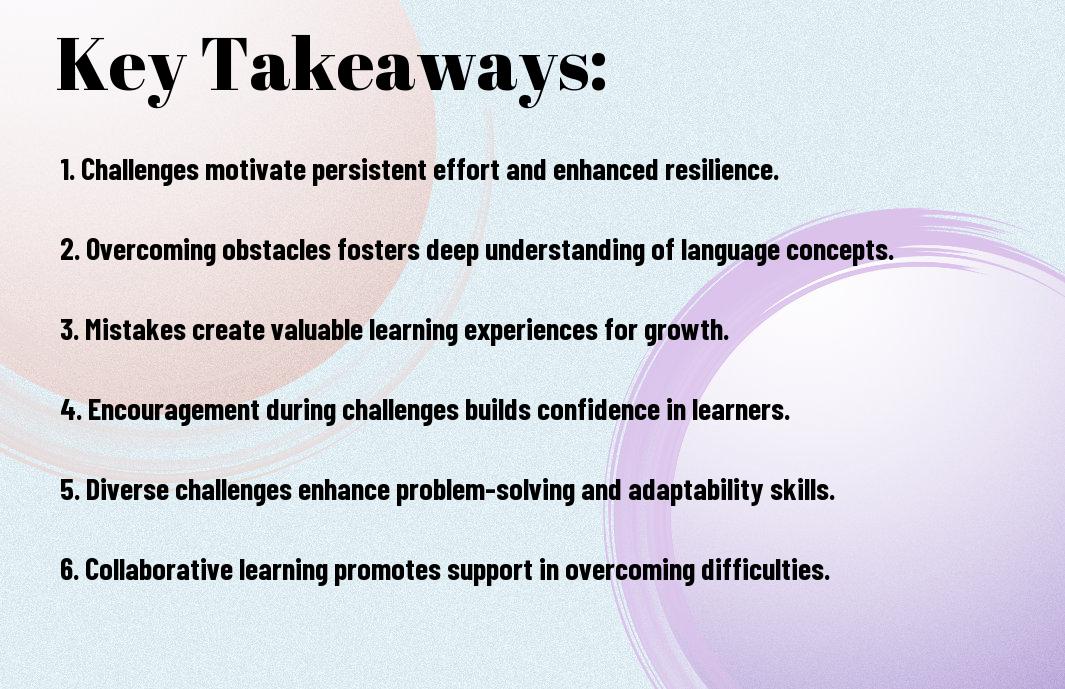
Key Takeaways:

  • Overcoming language barriers is crucial for achieving fluency in a new language, as it helps to build confidence and improve communication skills.
  • Challenging yourself with difficult vocabulary and grammar concepts can help to accelerate language learning progress and develop a deeper understanding of the language.
  • Embracing errors and setbacks as opportunities for growth and improvement can help language learners to stay and engaged in the learning process, ultimately leading to greater success in achieving their language learning goals.

Challenges in Language Acquisition

To overcome language learning challenges, you must first understand the obstacles that hinder your progress. As you begin on this journey, you will encounter various barriers that can impede your ability to acquire a new language.

Cognitive Barriers

With the complexities of language acquisition, you will face cognitive barriers that affect your ability to process and retain new information. Your brain’s ability to absorb and process new linguistic rules and patterns can be a significant hurdle.

Environmental Factors

At the outset, you are influenced by your surroundings, which can either facilitate or hinder your language learning process. You may encounter:

  • Lack of exposure to native speakers
  • Insufficient resources
  • Distracting learning environments

Knowing your environmental factors can help you develop strategies to mitigate their impact.

Hence, as you navigate the challenges of language acquisition, you will find that environmental factors play a significant role in shaping your learning experience. You may encounter:

  • Access to language learning tools
  • Opportunities for practice
  • Social support from peers and instructors

Knowing these factors will enable you to create a conducive learning environment that supports your language learning goals.

The Impact of Language Learning Challenges

There’s no denying that language learning challenges have a profound effect on your progression as a learner, pushing you to re-evaluate your approach and strive for improvement, which ultimately leads to growth.

On Personal Development

Besides the obvious benefits of language acquisition, overcoming challenges fosters resilience and adaptability, enabling you to tackle obstacles with confidence and persistence, which in turn enhances your overall personal development.

On Social Interactions

Above all, language learning challenges impact your ability to engage with others, as you navigate complex social situations and develop effective communication strategies, allowing you to build stronger relationships with native speakers and connect with diverse communities.

Language learning challenges, in the context of social interactions, present you with opportunities to engage in meaningful conversations, share your perspectives, and learn from others, thereby broadening your understanding of different cultures and ways of life, and enabling you to become a more empathetic and open-minded individual.

Overcoming Language Learning Obstacles

After encountering various hurdles, you can still make significant progress in language learning by persisted effort and dedication. You will find that your hard work pays off as you become more proficient in the language.

Effective Learning Strategies

Efficiently, you can develop strategies to tackle language learning challenges, such as setting achievable goals and practicing consistently, which will help you stay motivated and track your progress.

Technological Tools

Among the numerous resources available, you can utilize language learning apps, online courses, and podcasts to supplement your learning, making it more engaging and convenient.

Further, technological tools provide you with access to a vast array of learning materials, allowing you to practice at your own pace and focus on specific areas of improvement, thus enhancing your overall language learning experience.

Language Learning in Diverse Contexts

Not all language learning occurs in a traditional classroom setting. You will encounter diverse contexts that shape your learning experience, from informal conversations to formal instruction.

Cultural Influences

Akin to a key that unlocks new perspectives, cultural influences play a significant role in language learning, as you navigate different social norms and values that impact your communication style.

Institutional Support

Contextual factors, such as access to resources and instructional methods, affect your language learning journey, and you will find that institutional support can significantly impact your progress.

Another aspect of institutional support that you should consider is the quality of feedback and assessment, as constructive criticism and evaluation can help you refine your language skills and address areas that need improvement, allowing you to make informed decisions about your learning path.

The Role of Motivation in Language Learning

For effective language learning, you need to understand the factors that drive your progress, such as motivation, which you can explore further in Language learning: its challenges and rewards | EssayGenius.

Intrinsic Motivation

Beneath the surface of your language learning journey, you will find that intrinsic motivation, driven by personal interest and satisfaction, plays a significant role in your progress.

Extrinsic Motivation

After setting your language learning goals, you will likely encounter extrinsic motivation, driven by external factors such as rewards or social pressure, which can also impact your learning experience.

A closer examination of extrinsic motivation reveals that it can be a powerful tool to supplement your intrinsic motivation, helping you stay on track and achieve your language learning objectives, as you navigate the challenges and rewards that come with learning a new language, and you will find that understanding these motivations is crucial to your success.

Strategies for Success

Unlike other learning endeavors, language learning challenges require a unique set of strategies to overcome. You will need to develop a personalized approach to tackle difficulties and stay motivated.

Goal Setting

By establishing clear objectives, you can focus your efforts and track your progress, helping you to stay on course and make steady improvements in your language skills.

Feedback and Assessment

After receiving feedback on your language proficiency, you can identify areas for improvement and adjust your learning strategy accordingly, allowing you to refine your skills and move forward with confidence.

This process of feedback and assessment is crucial to your growth as a language learner, as it enables you to evaluate your strengths and weaknesses, and make informed decisions about your learning path, helping you to overcome challenges and achieve your goals in a more efficient and effective manner, and you will find that your language skills improve significantly as you continue to practice and refine your approach.

Final Words

With this in mind, you can now approach language learning with a newfound understanding of the challenges that lie ahead. As you tackle your linguistic goals, consider exploring 4 common language learning challenges to take on in class to enhance your skills. By acknowledging and overcoming these obstacles, you will ultimately refine your language proficiency and foster a deeper appreciation for the complexities of language learning, allowing your progress to flourish.

FAQ

Q: What is the significance of language learning challenges in measuring progress?

A: Language learning challenges play a significant role in measuring progress as they help learners assess their current level of proficiency, identify areas that require improvement, and set realistic goals for future development. By overcoming these challenges, learners can develop a sense of accomplishment and motivation, which can further enhance their language learning journey. Additionally, language learning challenges provide an opportunity for learners to develop problem-solving skills, think creatively, and learn from their mistakes.

Q: How do language learning challenges impact the development of language skills?

A: Language learning challenges have a profound impact on the development of language skills, including reading, writing, listening, and speaking. By engaging with challenging materials and tasks, learners can improve their comprehension, vocabulary, and grammar. Furthermore, language learning challenges encourage learners to practice active listening, speak confidently, and express themselves effectively in writing. As learners overcome these challenges, they develop a stronger foundation in the language, which enables them to communicate more effectively and accurately convey their intended message.

Q: What strategies can language learners use to overcome common language learning challenges and track their progress?

A: To overcome common language learning challenges and track their progress, learners can use several strategies, including setting achievable goals, creating a study schedule, and practicing consistently. Learners can also utilize language learning apps, join online communities, and engage with native speakers to stay motivated and receive feedback. Moreover, learners can track their progress by keeping a language learning journal, monitoring their test scores, and reflecting on their achievements. By adopting these strategies, learners can develop a growth mindset, stay focused, and make steady progress towards becoming proficient in the target language.

How to Learn a Language Through Theater and Drama

You can acquire a new language in a unique and engaging way by leveraging the power of theater and drama. As you explore this method, you’ll discover that it enhances your vocabulary, pronunciation, and comprehension skills. Your language learning journey will become more enjoyable and interactive, allowing you to express yourself in a more authentic and creative way. You will be able to tap into your emotional and cognitive abilities to connect with the language on a deeper level.

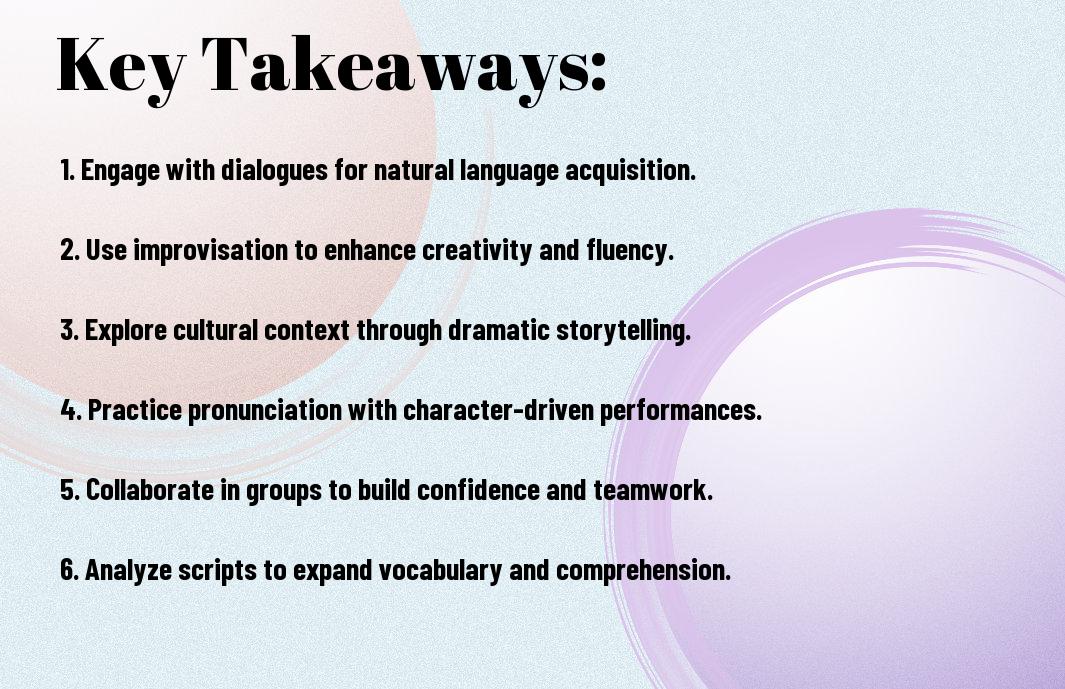
Key Takeaways:

To learn a language through theater and drama, consider the following points:

  • Immerse yourself in authentic materials by watching plays, musicals, and theater productions in the target language to get a feel for how the language is used in context.
  • Engage in role-playing activities that involve acting out scenarios, improvising, or performing scripted scenes to practice speaking, listening, and comprehension skills in a dynamic and interactive way.
  • Use drama techniques such as mime, puppetry, or storytelling to convey meaning and emotion, and to develop creative and expressive language skills, making the learning process more enjoyable and effective.

Language Learning Basics

The foundation of learning a language through theater and drama begins with understanding the principles of language acquisition. You will need to develop skills in reading, writing, listening, and speaking, and theater provides a unique opportunity to practice these skills in a creative and engaging way.

Language Foundations

Contrary to what you may think, learning a language through theater and drama can be an effective way to build your language foundations. You will be exposed to new vocabulary, grammar, and pronunciation, which will help you develop a strong base in the language.

Setting Goals and Motivation

Beneath the surface of language learning lies the importance of setting achievable goals and maintaining motivation. You need to define what you want to achieve through learning a language and use theater and drama as a tool to stay motivated and engaged.

For instance, you can set a goal to perform a monologue or a scene in the target language, which will give you a sense of purpose and direction. As you work towards your goal, you will be motivated to learn new vocabulary, practice your pronunciation, and improve your comprehension, all while having fun and being creative.

The Power of Theater

You can unlock the secrets of language learning through theater by exploring the resources available, such as the guide on How to Learn a Language Through Theater and Drama, which provides valuable insights to support your journey.

Immersive Storytelling

Before submerging into the world of theater, you’ll find that immersive storytelling helps you connect with the language on a deeper level, making it easier to understand and retain new vocabulary and grammar rules.

Cultural Enrichment

The cultural context of theater provides a unique opportunity for you to learn about the customs, traditions, and history of the language you’re studying, giving you a more nuanced understanding of the language.

A key aspect of cultural enrichment through theater is the exposure to various accents, dialects, and linguistic variations, allowing you to develop your listening and speaking skills in a more engaging and effective way, and enabling you to sound more natural and fluent in your language of choice.

Acting and Improvisation

For language learners, acting and improvisation can be a fun and engaging way to practice your skills. You can join a theater group or take an acting class to get started, and you’ll be amazed at how quickly your language skills improve as you take on new roles and characters.

Building Confidence

By stepping out of your comfort zone and onto the stage, you’ll build confidence in your language abilities and develop a more authentic accent and tone. You’ll learn to think on your feet and respond to unexpected situations, just like in real-life conversations.

Creative Expression

At the heart of acting and improvisation is creative expression, which allows you to convey emotions and ideas in a unique and personal way. You’ll discover new ways to express yourself and bring your language skills to life through movement, voice, and gesture.

With creative expression, you’ll find that your language learning experience becomes more enjoyable and interactive. You’ll be able to tap into your imagination and creativity, and develop a more nuanced understanding of the language and its cultural context. As you explore different characters and scenarios, you’ll gain a deeper appreciation for the language and its many possibilities, and you’ll be surprised at how quickly your skills improve.

Script Analysis and Interpretation

Now that you have your script, you can investigate into analysis and interpretation, exploring how language is used to convey meaning and emotion. You can find more information on this topic in FAQs: Learning Languages through Drama. – ERIC, which provides valuable insights into using drama for language learning.

Character Development

Across the script, you will encounter various characters, each with their own unique voice and language patterns, allowing you to develop your understanding of language in context and improve your own expression.

Language Nuances

Between the lines, you will discover subtle language nuances, such as idioms, colloquialisms, and figurative language, which will help you better comprehend the complexities of language and improve your communication skills.

Indeed, as you explore language nuances, you will begin to appreciate the richness and diversity of language, and your ability to pick up on these subtleties will significantly enhance your language proficiency, enabling you to express yourself more effectively and engage in more meaningful interactions.

Performance and Practice

After dedicating time to learning lines and understanding the plot, you will start to practice your performance, bringing your language skills to life on stage.

Rehearsals and Feedback

Rehearsing regularly helps you refine your pronunciation, intonation, and fluency, allowing you to receive constructive feedback from your instructor or fellow actors to improve your performance.

Overcoming Stage Fright

On the day of the performance, you may feel nervous, but with thorough preparation, you can manage your anxiety and focus on conveying the emotions and message of the play.

Overcoming stage fright is a process that takes time and practice, and as you continue to perform, you will become more confident in your language abilities, allowing you to express yourself more effectively and connect with your audience on a deeper level, making your language learning experience more enjoyable and rewarding.

Resources and Opportunities

Despite the challenges of learning a language, you can find numerous resources to help you achieve your goal through theater and drama. You can explore various options, such as language schools, programs, and theater groups, to improve your skills.

Language Schools and Programs

The availability of language schools and programs that incorporate theater and drama into their curriculum can provide you with a structured learning environment, where you can practice your language skills while exploring your creativity.

Theater Groups and Communities

By joining theater groups and communities, you can engage with like-minded individuals who share your passion for language and drama, and participate in productions, workshops, and other activities that will help you improve your language skills.

Theater groups and communities offer you a unique opportunity to immerse yourself in the language and culture, as you work together with others to bring a production to life, and you can take on various roles, such as acting, directing, or writing, to challenge yourself and enhance your language skills.

To wrap up

Following this guide, you will be well on your way to learning a language through theater and drama. You can apply your language skills in a creative and engaging way, making the learning process more enjoyable. As you participate in plays, you will improve your pronunciation, intonation, and comprehension, allowing you to become a more confident language speaker, and enhancing your overall language abilities. Your language skills will flourish in a unique and exciting way.

FAQ

Q: What are the benefits of learning a language through theater and drama?

A: Learning a language through theater and drama provides an immersive and engaging experience, allowing learners to develop their language skills in a creative and interactive way. By participating in plays, skits, and other dramatic performances, learners can improve their pronunciation, intonation, and fluency, as well as enhance their comprehension and vocabulary. Additionally, theater and drama provide a unique opportunity to practice language in a contextualized and meaningful way, making the learning process more enjoyable and effective.

Q: How can I get started with learning a language through theater and drama?

A: To get started with learning a language through theater and drama, you can begin by finding language learning groups or classes that incorporate drama and performance into their curriculum. You can also look for local theater companies or community centers that offer language classes or workshops that focus on theater and drama. Another option is to watch and participate in online language learning videos or podcasts that use drama and storytelling to teach language. Furthermore, you can practice at home by acting out scenes, creating your own skits, or even just practicing monologues in front of a mirror to improve your pronunciation and intonation.

Q: What are some tips for effectively learning a language through theater and drama?

A: To effectively learn a language through theater and drama, it’s helpful to start with simple scripts and scenes and gradually move on to more complex ones. You should also focus on understanding the context and meaning behind the dialogue, rather than just memorizing lines. Improvisation exercises can also be helpful in developing your language skills, as they require you to think quickly and respond in the target language. Moreover, working with a language partner or joining a language learning group can provide opportunities for practice, feedback, and support, helping you to stay motivated and engaged in the learning process. By combining these approaches, you can make the most of learning a language through theater and drama and achieve your language learning goals.

The Role of Language Schools in Fluency Development

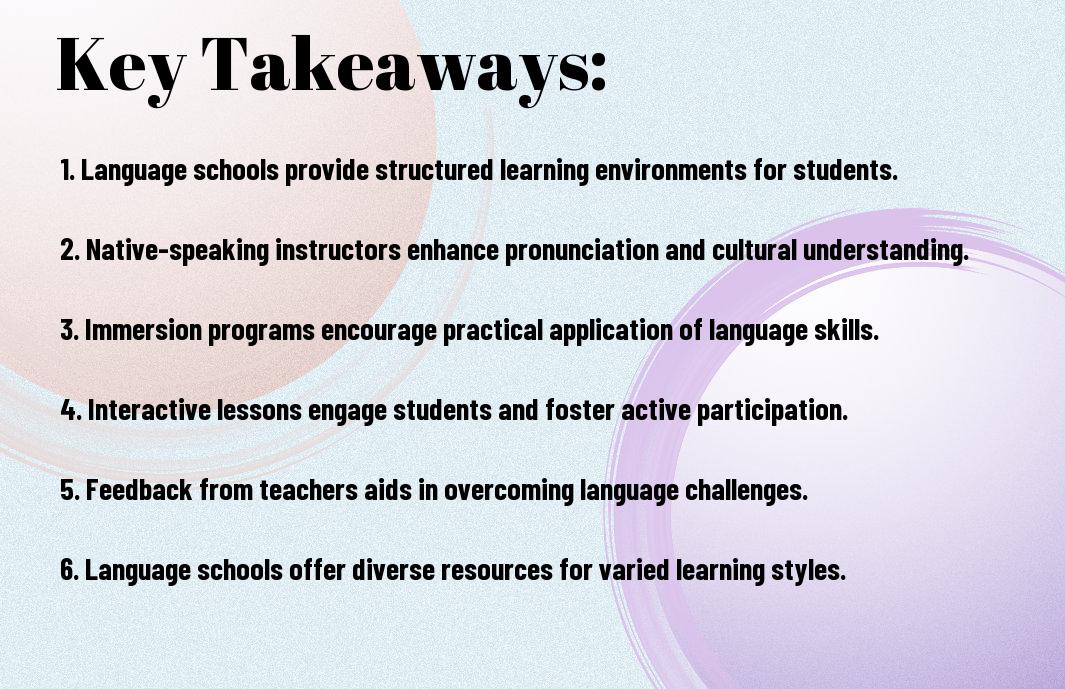
Key Takeaways:
  • The immersion provided by language schools plays a significant role in fluency development, as it allows students to engage with the language in a more authentic way, surrounded by native speakers and real-life situations.
  • Language schools offer a variety of teaching methods and resources that cater to different learning styles, helping students to develop their listening, speaking, reading, and writing skills.
  • The supportive environment of language schools, which often includes feedback from instructors and interaction with peers, helps students build confidence in their language abilities and stay motivated to continue improving their fluency.

Importance of Language Schools

Before enrolling in a language school, you should understand the significance of language development. You can learn more about The importance of Language development in early childhood and its impact on your future. This understanding will help you make informed decisions about your language learning journey.

Role in Language Foundation

To build a strong language foundation, you need a solid understanding of the language’s grammar, vocabulary, and pronunciation. You will learn these fundamentals in a language school, which will help you develop your language skills and improve your communication abilities.

Qualified Instructors and Resources

Around the world, language schools offer qualified instructors and resources to support your language learning. You will have access to experienced teachers, language learning materials, and technology to enhance your learning experience.

Role of qualified instructors and resources is significant in your language development. You will benefit from their expertise and guidance, which will help you overcome language barriers and achieve your fluency goals. As you progress in your language learning journey, you will appreciate the value of qualified instructors and resources in a language school.

Language Immersion Programs

Some language schools offer language immersion programs that allow you to surround yourself with the language you’re learning, helping you to develop your fluency more effectively.

Cultural Exchange Opportunities

Along with language instruction, you’ll have opportunities to engage with native speakers and experience the culture, which will enhance your understanding of the language and its nuances, enabling you to communicate more confidently.

Interactive Learning Methods

The interactive learning methods used in language schools, such as role-plays and group discussions, help you to practice your language skills in a supportive environment, allowing you to build your fluency and improve your pronunciation.

It is through these interactive learning methods that you can develop a deeper understanding of the language, as you’re able to apply what you’ve learned in real-life situations, and your progress will be evident as you become more comfortable expressing yourself in the target language.

Fluency Development Strategies

Once again, you find yourself at the forefront of learning, and language schools play a significant role in this process, helping you enhance your language skills and achieve fluency.

Conversational Practice

For instance, engaging in conversations with native speakers or language exchange partners helps you develop your speaking skills and build confidence in using the language.

Grammar and Vocabulary Building

Strategies such as immersive learning, contextual learning, and spaced repetition can aid in building your grammar and vocabulary, enabling you to express yourself more effectively in the target language.

To further develop your grammar and vocabulary, you can focus on learning idiomatic expressions, phrasal verbs, and collocations, which are vital for sounding natural and fluent in your speech and writing, and language schools can provide you with the necessary guidance and support to achieve this goal, helping you to improve your overall language proficiency and communicate effectively in various social and professional contexts.

Overcoming Language Barriers

After breaking down the initial barriers, you can explore resources like A Comprehensive Guide to Language Fluency for Educators to further your understanding. This will help you navigate the complexities of language learning and develop effective strategies for your students.

Language School Support Systems

An vital aspect of language schools is the support system they provide, which enables you to address your students’ unique needs and foster a conducive learning environment.

Student Motivation and Engagement

The key to successful language acquisition lies in maintaining your students’ motivation and engagement, as this directly impacts their progress and overall fluency development.

With a well-structured approach to student motivation, you can create an environment that encourages active participation, boosts confidence, and helps your students stay focused on their goals, ultimately leading to improved language skills and a higher level of fluency.

Evaluation and Assessment

For effective fluency development, evaluation and assessment play a significant role in language schools. You will be able to track your progress and identify areas for improvement, allowing you to adjust your learning strategy.

Progress Monitoring

To monitor your progress, language schools use various assessment tools, enabling you to see how far you have come and what you need to work on, helping you stay motivated and focused on your goals.

Feedback and Improvement

Around the time of assessments, you can expect to receive constructive feedback from your instructors, which will help you refine your language skills and address any weaknesses, ultimately enhancing your overall fluency.

Further, when you receive feedback, you will be able to pinpoint specific areas that need improvement, and with the help of your instructors, you can develop a plan to tackle these challenges, leading to significant advancements in your language proficiency and fluency development.

Challenges and Future Directions

All language schools face challenges in balancing instruction with real-world application, and you will encounter various obstacles in your language learning journey. You can prepare yourself by understanding the potential hurdles and staying adaptable.

Accessibility and Affordability

Albeit language schools strive to be inclusive, you may find that certain programs are out of your budget or not easily accessible. Alongside these challenges, you will need to consider your own financial situation and location when selecting a language school.

Technological Integration

Accessible digital tools are becoming increasingly prevalent in language instruction, and you will likely encounter various technologies in your language learning process. Accessing these tools will help you stay connected with your instructors and peers, facilitating a more immersive experience.

This technological integration can greatly enhance your learning experience, as you will have the opportunity to engage with interactive materials, practice speaking with native speakers, and track your progress more efficiently. You can leverage these tools to supplement your in-class instruction and accelerate your fluency development, giving you a competitive edge in your language learning journey.

Final Words

Presently, you can see that language schools play a significant role in your fluency development. You will find that enrolling in a language school helps you achieve your goals, as your skills improve with practice and interaction. Your progress is supported by qualified instructors and a structured curriculum, allowing you to become a proficient speaker. By leveraging these resources, you can enhance your language skills and move closer to fluency.

FAQ

Q: What is the primary role of language schools in fluency development?

A: The primary role of language schools in fluency development is to provide students with a structured and supportive environment where they can learn and practice a new language. Language schools offer a range of programs and courses designed to help students improve their listening, speaking, reading, and writing skills, and to achieve fluency in the target language. Through a combination of classroom instruction, interactive activities, and real-life practice, language schools help students build confidence and develop the skills they need to communicate effectively in the target language.

Q: How do language schools help students develop fluency in a new language?

A: Language schools help students develop fluency in a new language by providing them with opportunities to practice speaking, listening, reading, and writing in the target language. Language schools offer a variety of activities and exercises designed to help students improve their pronunciation, vocabulary, and grammar, and to develop their ability to communicate effectively in real-life situations. Additionally, language schools often provide students with access to language exchange programs, conversation partners, and other resources that can help them practice their language skills and develop fluency. Language schools also use technology, such as language learning software and online resources, to support language learning and fluency development.

Q: What are the benefits of attending a language school for fluency development?

A: The benefits of attending a language school for fluency development are numerous. Language schools provide students with a comprehensive language learning experience that includes instruction, practice, and feedback from experienced teachers. Attending a language school can help students improve their language skills quickly and effectively, and can provide them with the confidence and fluency they need to communicate in the target language. Additionally, language schools offer students the opportunity to meet and practice with other language learners, which can be a fun and motivating way to learn a new language. Overall, attending a language school can be an excellent way to develop fluency in a new language and to achieve language learning goals.

Skip to content