Language

How to Keep Language Skills Sharp Over Time

As you continue to learn and use a new language, you may find that your skills can fade if not consistently practiced. Your ability to speak, write, and understand can become rusty, making it difficult to communicate effectively. You will need to make a conscious effort to maintain your language skills, and this article will guide you through the process, providing you with practical tips and strategies to keep your language skills sharp and effective over time, ensuring you can express yourself with clarity and precision.

Key Takeaways:

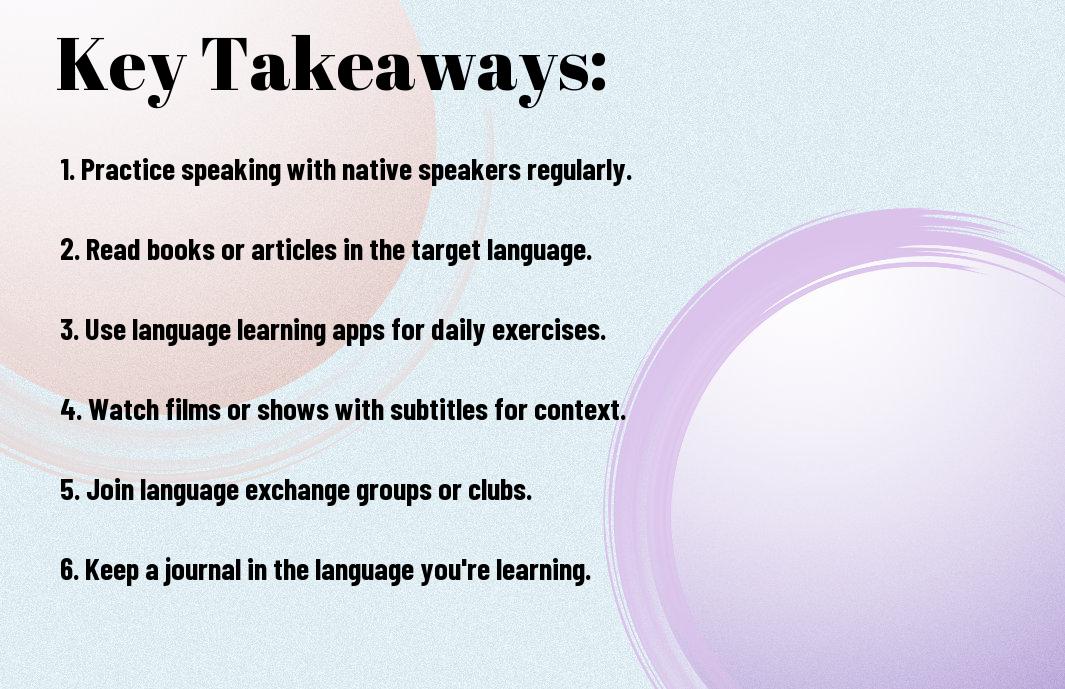
To maintain language proficiency over time, consider the following points:

  • Engage in regular practice by setting aside time each day or week to speak, write, or listen to the target language, which helps to prevent language erosion.
  • Immerse yourself in authentic materials such as books, movies, and news in the target language to stay up-to-date with modern expressions and vocabulary.
  • Seek out language exchange opportunities with native speakers or fellow learners to practice conversational skills and receive feedback on pronunciation and grammar.

Maintaining Vocabulary

The key to maintaining vocabulary is consistent practice and exposure to new words. You can achieve this by incorporating vocabulary-building activities into your daily routine, such as reading and learning new words, using flashcards, and utilizing language learning apps.

Reading and Learning New Words

Besides being an enjoyable activity, reading is an effective way to learn new words and expand your vocabulary. You can start by reading books, articles, and news in the language you want to maintain, and make a note of unfamiliar words to look up later.

Using Flashcards and Language Learning Apps

Among the various tools available to help you maintain vocabulary, flashcards and language learning apps are particularly useful. You can use them to quiz yourself on new words, track your progress, and stay motivated to continue learning.

Hence, as you explore the world of flashcards and language learning apps, you will find that they offer a range of features to help you maintain your vocabulary. You can create digital flashcards, play word games, and even engage in conversations with native speakers, all of which will help you to stay engaged and committed to maintaining your language skills over time.
Improving Grammar and Sentence Structure

Any attempt to improve your language skills must begin with a focus on grammar and sentence structure. You will find that mastering these fundamentals is crucial to effective communication, and will serve as the foundation upon which your language skills are built.

Practicing Writing and Speaking

Prior to developing a strong command of language, you must practice writing and speaking regularly. You will need to write and speak as much as possible, using your language skills in context to reinforce your learning and identify areas for improvement.

Focusing on Clarity and Conciseness

Similar to speaking, your writing should prioritize clarity and conciseness. You should strive to convey your ideas in a straightforward and efficient manner, avoiding unnecessary complexity and jargon that can confuse your audience.

Even as you focus on clarity and conciseness, you will need to balance simplicity with nuance and depth. You can achieve this by varying your sentence structure and using vocabulary that is precise and evocative, allowing you to convey subtle shades of meaning and tone in your writing and speaking.

Staying Engaged with Language

Many language learners find that staying engaged with the language is key to keeping their skills sharp. You can achieve this by incorporating the language into your daily routine, whether through reading, writing, or speaking.

Watching Movies and TV Shows in the Target Language

Above all, watching movies and TV shows in the target language can be a great way to stay engaged. You can start with subtitles in your native language and gradually switch to subtitles in the target language as you become more comfortable.

Listening to Music and Podcasts

The most effective way to improve your listening skills is to listen to music and podcasts in the target language. You can find a wide range of podcasts on various topics, from news to entertainment, and music in different genres.

Language learning through music and podcasts can be particularly helpful as you can listen to them during your daily commute or while doing chores. You can also try to sing along to your favorite songs or summarize the main points of a podcast episode to reinforce your understanding of the language and improve your pronunciation and comprehension skills.

Overcoming Language Barriers

Your ability to overcome language barriers will depend on your willingness to practice and immerse yourself in the language. You must be proactive in seeking out opportunities to engage with native speakers and use the language in real-life situations.

Finding Language Exchange Partners

Around every corner, there are opportunities to find language exchange partners, whether through local language meetups or online platforms. You can search for people who share your interest in language learning and practice with them regularly.

Using Online Resources and Language Learning Communities

Beside the numerous language learning apps and websites, there are many online communities dedicated to language learners. You can join these communities to connect with other learners, get feedback on your language skills, and stay motivated.

Due to the vast array of online resources available, you can access language learning materials and practice with native speakers from the comfort of your own home. You can use online platforms to take language courses, watch videos, and engage in conversations with others, all of which will help you to improve your language skills over time.

Setting Goals and Tracking Progress

Despite the challenges of maintaining language skills, you can stay on track by setting achievable goals. You can find inspiration on how to do this by visiting How do polyglots maintain their knowledge over time? to learn from experienced language learners.

Creating a Language Learning Schedule

Above all, your schedule should be realistic and tailored to your needs. You should allocate specific times for language practice, whether it’s reading, writing, or speaking, to ensure consistent progress.

Monitoring Progress and Adjusting Goals

Learning to assess your own progress is vital. You will need to evaluate your language skills regularly to identify areas that require improvement and adjust your goals accordingly.

Adjusting your approach as you learn is a normal part of the process. As you monitor your progress, you will identify what works best for you and what doesn’t, allowing you to make informed decisions about your language learning journey and make adjustments to stay on track and achieve your goals.

Staying Motivated

Unlike many other skills, language skills can be maintained with consistent practice. You can find helpful tips on how to keep your language skills sharp and stay motivated to continue learning.

Finding Language Learning Buddies

Alike many learners, you will find that having a language learning buddy can be beneficial in staying motivated and engaged in the learning process.

Rewarding Yourself for Achievements

Besides the sense of accomplishment, you can reward yourself for achieving your language learning goals, which will help you stay motivated and encouraged to continue.

This approach will help you to create a positive association with language learning and make the process more enjoyable, as you will have something to look forward to after reaching your milestones, and you will be able to track your progress and celebrate your successes.

To wrap up

On the whole, you have now acquired the necessary tools to maintain your language skills over time. By applying these methods consistently, you will be able to improve your proficiency and keep your language sharp. Your dedication to practicing regularly and seeking out new challenges will ultimately determine your success, so stay committed and you will see lasting results in your language abilities.

FAQ

Q: What are the most effective ways to maintain language skills over an extended period?

A: To keep language skills sharp, it’s vital to practice consistently. This can involve activities such as reading books or articles in the target language, engaging in conversations with native speakers, watching TV shows or movies without subtitles, and using language learning apps that offer interactive exercises and quizzes. Setting aside a specific time each day for language practice helps in maintaining and improving skills over time.

Q: How can I stay motivated to continue practicing a language when I’m not actively using it in my daily life?

A: Staying motivated involves setting achievable goals, whether it’s improving vocabulary, enhancing comprehension, or mastering a specific dialect. Finding a language learning buddy or joining a language exchange community can provide additional motivation, as it allows for social interaction and exchange. Moreover, celebrating small milestones and rewarding oneself for progress made can help maintain enthusiasm and commitment to the learning process.

Q: Are there any specific activities that can help in sharpening both speaking and listening skills simultaneously?

A: Yes, activities like listening to podcasts or audiobooks in the target language and then summarizing what was heard can significantly improve both speaking and listening skills. Another effective method is to engage in role-playing scenarios, either with a language exchange partner or solo, where one speaks based on a prompt or scenario. Recording oneself and then listening to the recording to identify areas for improvement is also a valuable technique for enhancing both speaking and listening abilities.


How does immersion in a language environment aid in language acquisition

Your language acquisition can significantly benefit from immersing yourself in a language environment. Surrounding yourself with native speakers, authentic conversations, and cultural nuances allows you to absorb language effortlessly. Research shows that immersion enhances fluency, comprehension, and pronunciation, as your brain adapts to thinking and processing information in the new language. By fully immersing yourself, you can accelerate your language learning journey and reach proficiency faster than traditional methods. Embrace the language environment, and watch your language skills flourish!

Key Takeaways:

  • Increased Exposure: Immersion in a language environment provides increased exposure to the language through daily interactions, which aids in language acquisition.
  • Contextual Learning: Being surrounded by native speakers helps learners understand the language in its cultural and contextual context, leading to a deeper understanding and quicker acquisition.
  • Forced Practice: In an immersive environment, individuals are forced to practice the language in order to communicate effectively, leading to faster improvement and fluency.

The Power of Immersion

Surrounding Yourself with the Language

Before delving into the benefits of immersion in a language environment, it’s crucial to understand the impact of surrounding yourself with the language. When you immerse yourself in an environment where the target language is spoken daily, you are constantly exposed to its sounds, rhythms, and nuances. This exposure helps your brain acclimate to the language more naturally.

Creating an Environment for Language Acquisition

The key to effective language acquisition lies in creating an environment that fosters continuous learning. One way to do this is by incorporating the language into your daily activities. By listening to music, watching movies, or reading books in the target language, you are reinforcing your learning in a practical and engaging way. Surrounding yourself with native speakers and practicing conversations can also significantly enhance your proficiency.

Understanding that creating an environment conducive to language acquisition involves not only passive exposure but also active engagement is crucial. To truly internalize a language, you must actively participate in conversations, practice writing and reading, and immerse yourself in cultural experiences that require you to use the language in real-life scenarios. This dynamic approach ensures that you not only grasp the language’s technical aspects but also its cultural subtleties and nuances.

Language Exposure and Brain Development

Neuroplasticity and Language Learning

Now, let’s explore into the fascinating world of neuroplasticity and how it impacts your language learning journey. Your brain has an incredible ability to adapt and change in response to new experiences, a phenomenon known as neuroplasticity. When you immerse yourself in a language environment, exposing your brain to a constant stream of new sounds, words, and grammatical structures, you are vitally rewiring your brain to accommodate this new language.

With each conversation you have, each sentence you read, and each word you hear, your brain forms new connections and strengthens existing ones related to the language you are learning. This process of neural networking is crucial for language acquisition, as it helps solidify your understanding and fluency in the new language over time.

The Role of Context in Language Processing

Processing language in context is key to truly grasping its nuances and meaning. When you hear a word or phrase in isolation, it can be challenging to fully comprehend its significance. However, when that same word or phrase is used in a sentence or conversation, you are provided with valuable context that aids in your understanding.

It is through exposure to language in various contexts – whether through conversations, books, movies, or everyday interactions – that you begin to develop a deeper grasp of the language. Context helps you make connections between words, decipher idiomatic expressions, and infer meaning from subtle cues like tone of voice and body language.

Interactive Opportunities for Language Practice

Conversational Partners and Language Exchange

To truly immerse yourself in a language environment and advance your language skills, finding conversational partners and participating in language exchanges can be incredibly beneficial. By engaging in conversations with native speakers or fellow learners, you have the opportunity to practice your speaking and listening skills in a real-life context. These interactions can help you improve your fluency, vocabulary, and cultural understanding, allowing you to become more confident in using the language.

Engaging with Native Speakers and Cultural Events

The immersion experience becomes even richer when you actively engage with native speakers and participate in cultural events. By attending local gatherings, festivals, or performances, you get to experience the language in its natural setting and gain insights into the cultural nuances that influence communication. These experiences provide a unique opportunity to not only practice the language but also deepen your understanding of the customs, traditions, and values associated with it.

Partnerships with native speakers can offer a more personalized and in-depth exploration of the language and culture. By forming connections with individuals who can provide guidance, support, and authentic language practice, you can accelerate your learning journey and develop a profound appreciation for the linguistic and cultural diversity that surrounds you.

Authentic Materials and Real-Life Contexts

Using Authentic Texts, Videos, and Audio Materials

For language learners, exposure to authentic texts, videos, and audio materials is invaluable. When you engage with real-life content in the language you are learning, you not only improve your vocabulary and grammar but also gain a deeper understanding of cultural nuances and context. Authentic materials help you connect the words and phrases you learn in a textbook to how they are actually used in everyday conversations, films, music, news broadcasts, and more.

By incorporating authentic materials into your language learning routine, you can enhance your listening comprehension, improve your speaking skills, and develop a more natural and fluent communication style. Whether you are reading a newspaper article, watching a movie without subtitles, or listening to a podcast in the target language, these real-world resources provide you with exposure to the language as it is truly spoken and written, ultimately accelerating your language acquisition process.

Immersing Yourself in Real-Life Situations and Scenarios

On the other hand, immersing yourself in real-life situations and scenarios allows you to put your language skills to the test in a practical and immersive way. Whether you are traveling to a country where the language is spoken, participating in language exchange meetups, or simply practicing conversations with native speakers, immersing yourself in authentic contexts provides you with the opportunity to apply what you have learned in a meaningful and interactive manner.

With each new real-life interaction, you gain confidence in your language abilities, improve your pronunciation, and increase your cultural understanding. From ordering food at a local restaurant to navigating public transportation or engaging in social interactions, these real-world experiences not only reinforce your language skills but also expose you to the nuances of communication that textbooks alone cannot capture. Embrace these opportunities for immersion, and you will see significant progress in your language acquisition journey.

The Importance of Consistency and Repetition

Regular Exposure to the Language Environment

After immersing yourself in a language environment, the key to language acquisition lies in consistent and repeated exposure to the language. Just like learning any new skill, the more you are exposed to the language, the more familiar and comfortable you become with it. Regular exposure helps you pick up on nuances, tones, and structures that are necessary for fluency.

Building Habits and Routines for Language Acquisition

Regular exposure alone is not enough to fully grasp a new language. You need to actively build habits and routines that incorporate the language into your daily life. By incorporating language learning into your daily routines, such as listening to podcasts during your commute, reading in the language before bed, or practicing conversations with native speakers regularly, you strengthen your language skills consistently over time.

Plus, building habits and routines for language acquisition helps reinforce what you have learned and solidifies your language skills. By making language learning a part of your daily life, you are more likely to stay motivated and dedicated to the process, ultimately leading to faster and more effective language acquisition.

Overcoming Barriers and Challenges

Dealing with Language Anxiety and Fear

Fear can be a major barrier when immersing yourself in a new language environment. You might worry about making mistakes, not being understood, or feeling embarrassed. However, it’s important to remember that making mistakes is a natural part of the learning process. Embrace these mistakes as learning opportunities and stepping stones toward fluency. Instead of letting fear hold you back, use it as a motivator to push yourself out of your comfort zone and grow.

Strategies for Staying Motivated and Focused

Fear of failure or feeling overwhelmed can sometimes dampen your motivation to continue learning a new language. To combat this, try breaking down your language learning goals into smaller, manageable tasks. Celebrate small victories along the way to keep your motivation levels high. Additionally, surrounding yourself with supportive peers or language partners can provide encouragement and help you stay focused on your language acquisition journey.

Strategies such as setting realistic goals, tracking your progress, and rewarding yourself for milestones achieved can help maintain your motivation over the long term. Remember that language acquisition is a gradual process, and staying committed to your learning journey will ultimately lead to success.

To wrap up

Upon reflecting on how immersion in a language environment aids in language acquisition, you can see the undeniable benefits of being surrounded by the language you are trying to learn. By constantly hearing it spoken, engaging with native speakers, and navigating real-life situations where that language is required, you are forcing your brain to adapt and learn in a way that cannot be replicated in a classroom setting. This active participation in the language not only helps you grasp the grammar and vocabulary but also fosters a deeper understanding of the cultural nuances and idiomatic expressions that are crucial to truly mastering a language.

So, if you are looking to enhance your language skills and achieve fluency, consider immersing yourself in an environment where that language is spoken daily. By living, working, or studying in a place where you are forced to communicate in the target language, you are setting yourself up for accelerated learning and a more profound connection to the language and culture. Recall, language acquisition is not just about memorizing words and rules; it’s about truly experiencing and engaging with the language in a meaningful way, and immersion provides the ideal opportunity for that.

Q: How does immersion in a language environment aid in language acquisition?

A: Immersion in a language environment provides exposure to the language in real-life contexts, allowing learners to practice listening, speaking, reading, and writing skills in a natural setting. This constant exposure and practice help improve language fluency and proficiency.

Q: What are the benefits of immersion in a language environment for language acquisition?

A: Immersion in a language environment helps learners develop cultural understanding, improve pronunciation, and enhance vocabulary retention. It also boosts confidence in using the language and fosters a deeper appreciation for the culture associated with the language.

Q: How can one create an immersion experience in a language environment?

A: Creating an immersion experience involves surrounding oneself with the target language as much as possible. This can be achieved by listening to music, watching movies or TV shows, reading books, interacting with native speakers, and participating in language exchange programs. The key is to consistently engage with the language in various contexts.

What role does grammar play in mastering a new language

There’s a pivotal role that grammar plays in your journey to mastering a new language. Understanding the rules and structure of grammar not only helps you construct meaningful sentences but also allows you to effectively communicate thoughts and ideas. By grasping grammar, you cultivate a strong foundation for language proficiency, enabling you to navigate conversations with clarity and precision. Embrace the intricacies of grammar as a tool to unlock the full potential of your linguistic abilities.

Key Takeaways:

  • Grammar is the backbone: Understanding grammar rules is crucial in mastering a new language as it provides the structure for meaningful communication.
  • Ensures clarity and accuracy: Proper grammar usage helps in conveying thoughts accurately and clearly, minimizing misunderstandings in conversations.
  • Boosts confidence: Proficiency in grammar gives language learners confidence in expressing themselves fluently and effectively in the target language.

The Foundation of Language

Grammar as the Building Blocks

For you to master a new language, you must understand that grammar serves as the foundation of any language. Just like building a house requires a strong foundation, mastering a language requires a solid understanding of grammar. Grammar provides the structure and rules that govern how words are put together to form sentences. By learning grammar, you will be able to construct meaningful and coherent sentences in the new language.

When you grasp the basic grammar rules, such as verb conjugation, sentence structure, and word order, you will be equipped with the building blocks needed to communicate effectively in the new language. While grammar may seem daunting at first, remember that it is imperative for you to progress and become fluent in the language.

The Importance of Syntax and Semantics

For you to truly master a new language, you must also understand the importance of syntax and semantics. Syntax refers to the arrangement of words in a sentence to convey meaning, while semantics focuses on the meaning of words and how they contribute to the overall understanding of a sentence. By grasping syntax and semantics, you will be able to express your thoughts clearly and accurately in the new language.

The way words are organized in a sentence can completely change the meaning of what you are trying to say. By paying attention to syntax and semantics, you will avoid misunderstandings and effectively convey your message to others. Understanding how syntax and semantics work together will make your language learning journey smoother and more successful.

The Role of Grammar in Communication

Clearly, grammar plays a crucial role in communication when mastering a new language. It serves as the foundation for effectively conveying your thoughts and ideas to others. By understanding the rules of grammar, you can structure your sentences in a way that makes sense and is coherent to the listener or reader.

Effective Expression of Ideas

An necessary aspect of grammar in communication is the effective expression of ideas. When you have a strong grasp of grammar, you can articulate your thoughts clearly and succinctly. Knowing how to use different tenses, word order, and sentence structure allows you to express yourself accurately, making it easier for others to understand you.

Avoiding Miscommunication

Miscommunication can easily arise when grammar rules are not followed correctly. Incorrect verb conjugation, misuse of punctuation, or improper word choice can lead to misunderstandings. By mastering grammar, you can minimize the risk of miscommunication and ensure that your message is conveyed accurately.

Miscommunication can hinder effective communication and create confusion between you and the listener. By paying attention to grammar rules, you can avoid potential pitfalls that may lead to misinterpretation of your intended meaning.

Grammar and Vocabulary Acquisition

All language learners have pondered the importance of grammar rules in the process of mastering a new language. Some argue that grammar rules serve as the backbone of a language, facilitating better understanding and communication. On the other hand, there are those who believe in a more natural approach, focusing on vocabulary acquisition and immersion. If you’re still unsure about the role grammar plays in your language learning journey, you can explore different perspectives on How important are grammar rules when learning a new language?

How Grammar Aids in Learning New Words

An vital aspect of grammar in language learning is its role in helping you understand and remember new words. Grammar rules provide a framework within which new vocabulary can be learned and applied correctly. For example, knowing the grammatical rules related to verb conjugation can help you understand how different words are used in various contexts, thus expanding your vocabulary more effectively.

The Interplay between Grammar and Lexicon

The relationship between grammar and vocabulary is symbiotic. While grammar rules offer the structure for language usage, vocabulary enriches the language with meaning. The interplay between grammar and lexicon is crucial for achieving fluency in a new language. By grasping grammar principles, you can better comprehend the nuances of vocabulary usage, and by expanding your lexicon, you enhance your ability to apply grammar rules accurately. This dynamic interaction between grammar and vocabulary is fundamental in your language acquisition journey.

Another important aspect to consider is that grammar provides the rules that govern how words are combined to form meaningful sentences. Without a solid understanding of grammar, it can be challenging to convey your thoughts accurately or comprehend the messages conveyed by others. Therefore, mastering grammar alongside vocabulary acquisition is vital for becoming proficient in a new language.

The Impact of Grammar on Reading and Writing Skills

Despite the challenges that grammar rules may present, mastering them is crucial for enhancing your reading and writing skills in a new language. Understanding grammar plays a significant role in both decoding and encoding text, which are important aspects of language acquisition.

Decoding and Encoding Text

Encoding text involves your ability to express your thoughts and ideas clearly in writing. By applying grammar rules correctly, you can construct sentences that effectively convey your message. Understanding the structure of a language, such as word order and verb conjugation, is vital for producing coherent written text.

Improving Comprehension and Fluency

Grammar also plays a crucial role in improving your comprehension and fluency when reading in a new language. By grasping grammar rules, you can better understand the relationships between words in a sentence and interpret the meaning of the text more accurately. This, in turn, enhances your reading fluency and overall language proficiency.

To enhance your reading and writing skills in a new language, it is important to dedicate time and effort to mastering grammar rules. By consistently practicing and applying these rules in your language learning journey, you will gradually improve your ability to decode and encode text effectively, as well as enhance your comprehension and fluency in the language.

Grammar and Cultural Nuances

Unlike The Importance of Grammar in English Language, where grammar is mainly viewed as a structural component of language, mastering grammar in a new language goes beyond just rules and syntax. It also involves understanding the cultural nuances that are embedded in the language.

Idiomatic Expressions and Colloquialisms

For a language learner, grasping idiomatic expressions and colloquialisms is crucial for effective communication. These expressions are unique to each language and often carry different meanings than their literal translations. By mastering these nuances, you not only blend in better with native speakers but also gain insights into the cultural context and humor of the language.

Cultural References and Allusions

For language mastery, it’s vital to probe into the cultural references and allusions present in the language. Understanding these references not only improves your language skills but also broadens your cultural knowledge. It enables you to connect more deeply with native speakers and facilitates a more nuanced understanding of the language.

Expressions that carry cultural significance may not have direct equivalents in your native language, so learning them expands your cultural literacy and enhances your ability to communicate effectively in a foreign language.

Overcoming Grammar Challenges

Common Pitfalls and Errors

To master a new language, you must be aware of common pitfalls and errors that learners often face when it comes to grammar. One of the most frequent mistakes is trying to translate directly from your native language, leading to awkward phrasing and incorrect word order. Additionally, incorrect verb conjugations and misuse of articles are common issues that can hinder your language learning progress.

Strategies for Improvement

For overcoming these challenges, it is important to immerse yourself in the language as much as possible. Practice regularly with native speakers or language exchange partners to get real-time feedback on your grammar usage. Additionally, utilizing language learning apps and resources that focus on grammar exercises can help you reinforce your understanding and application of grammar rules.

An effective strategy for improving your grammar skills is to break down complex grammar rules into smaller, more manageable parts. Instead of trying to learn everything at once, focus on one grammar concept at a time and practice it until you feel comfortable. This approach can prevent overwhelm and help you gradually build your grammatical proficiency.

Understanding

Understanding the importance of grammar in mastering a new language is crucial. Grammar serves as the foundation of a language, providing you with the structure and rules needed to effectively communicate. By identifying common pitfalls, implementing strategies for improvement, and breaking down complex grammar concepts, you can overcome grammar challenges and enhance your language learning journey.

Summing up

As a reminder, grammar plays a crucial role in mastering a new language. It provides you with the rules and structure necessary to communicate effectively and understand the language in its entirety. By familiarizing yourself with grammar rules, you can enhance your language skills and become more proficient in speaking, writing, and comprehending a new language.

Q: Why is grammar important when mastering a new language?

A: Grammar is crucial in language learning as it provides the structure and rules needed to form correct sentences and communicate effectively.

Q: How can grammar help in improving language skills?

A: Understanding grammar helps learners to construct sentences correctly, convey their thoughts accurately, and enhance their overall language proficiency.

Q: What are the consequences of neglecting grammar in language learning?

A: Neglecting grammar can lead to confusion, miscommunication, and inaccuracies in language usage, hindering the ability to fully grasp and master a new language.

How important is pronunciation in language learning, and what are the best ways to improve it

There’s a pivotal factor in language learning that often gets overlooked but plays a crucial role in communication – pronunciation. Your ability to pronounce words correctly can significantly impact your overall language fluency and understanding. In this blog post, we will research into why pronunciation is crucial in language learning and explore some of the best strategies to enhance your pronunciation skills. By implementing these tips, you can boost your confidence and improve your communication effectiveness in any language you are learning.

Key Takeaways:

  • Pronunciation is crucial in language learning: Proper pronunciation helps in clear communication and understanding in a second language.
  • Practice regularly: Consistent practice is key to improving pronunciation, whether through language immersion, audio resources, or working with a language tutor.
  • Focus on individual sounds: Pay attention to specific phonemes and practice their pronunciation to refine your overall language skills.

The Significance of Pronunciation in Language Learning

Why Pronunciation Matters

Significance is placed on pronunciation in language learning because it is crucial for effective communication. Proper pronunciation not only enhances your language skills but also makes it easier for native speakers to understand you. When you speak with accurate pronunciation, you convey your message clearly and confidently, which can lead to more meaningful interactions and connections with others.

The Impact of Poor Pronunciation on Communication

The impact of poor pronunciation on communication cannot be underestimated. When your pronunciation is off, it can lead to misunderstandings and confusion. It may hinder your ability to express yourself effectively and might even affect your confidence in using the language. Incorrect pronunciation can also create barriers in your communication with native speakers, making it harder for them to comprehend your message.

Another consequence of poor pronunciation is that it may affect how you are perceived by others. Native speakers may find it challenging to take you seriously or may assume that you are less proficient in the language if your pronunciation is not accurate. This could potentially limit your opportunities for advancement in your language learning journey.

Common Challenges in Mastering Pronunciation

Some language learners may encounter various challenges when it comes to mastering pronunciation. These obstacles can hinder your progress and make it difficult to communicate effectively in a target language. Understanding and addressing these challenges will help you improve your pronunciation skills and build confidence in your language learning journey.

Phonological Differences Between Languages

Common challenges in mastering pronunciation stem from the phonological differences between your native language and the language you are learning. Sounds that exist in one language may not exist in another, making it challenging to produce these new sounds accurately. For example, the pronunciation of tones in tonal languages like Mandarin Chinese or the guttural sounds in Arabic can be particularly challenging for learners whose native language lacks similar sounds.

Individual Speech Patterns and Habits

Pronunciation difficulties can also arise from individual speech patterns and habits that you have developed in your native language. Your brain may subconsciously try to apply the pronunciation rules of your first language to the new language you are learning, leading to inaccuracies. Overcoming these habits requires conscious effort and practice to retrain your mouth and ears to recognize and produce new sounds accurately.

Another aspect that can affect your pronunciation is your comfort level with making mistakes. Fear of embarrassment and self-consciousness can hinder your willingness to practice speaking out loud and experiment with new sounds. Embracing a growth mindset and understanding that making mistakes is a natural part of the language learning process can help you overcome this barrier.

Fear of Embarrassment and Self-Consciousness

Individuals may feel self-conscious about their pronunciation, worrying about being judged or laughed at by others. This fear of making mistakes can lead to a reluctance to practice speaking and a lack of confidence in your language skills. Remember that everyone makes pronunciation errors when learning a new language, and embracing these mistakes as opportunities for growth can help you progress more effectively.

Plus, seeking feedback from teachers, language partners, or language learning communities can provide valuable insights and encouragement to help you improve your pronunciation skills with confidence.

Effective Strategies for Improving Pronunciation

Listen and Imitate: The Power of Audio Models

On your journey to improving pronunciation, listening to native speakers and imitating their speech patterns is a powerful way to enhance your own pronunciation skills. Audio models provide you with a clear example of how words should sound, helping you grasp the nuances of pronunciation that may not be evident from written materials alone. By actively listening and mimicking these models, you can train your ear to recognize subtle differences in sounds and improve your own articulation.

Practice with a Language Exchange Partner or Tutor

Models to further enhance your pronunciation skills, practicing with a language exchange partner or tutor can provide invaluable feedback and guidance. Engaging in conversations with native speakers allows you to practice real-life scenarios and receive immediate corrections on your pronunciation. This interactive approach not only helps you refine your pronunciation but also boosts your confidence in speaking the language fluently.

Understanding the importance of regular practice, working with a language exchange partner or tutor can offer personalized support and insights into your specific pronunciation challenges. Through consistent practice and feedback, you can target areas for improvement and make noticeable progress in perfecting your pronunciation.

Record Yourself: Identifying Areas for Improvement

Effective pronunciation requires self-awareness and the ability to identify areas that need improvement. Recording yourself speaking in the target language allows you to listen back and pinpoint areas where your pronunciation may fall short. By comparing your recordings to native speakers or language resources, you can recognize patterns of mispronunciation and focus your efforts on refining those specific sounds or intonations.

Audio feedback from self-recordings can provide valuable insights into your progress and help you track improvements in your pronunciation over time. Utilize this self-assessment tool regularly to fine-tune your pronunciation skills and tailor your practice sessions for maximum impact.

The Role of Technology in Pronunciation Practice

Once again, technology proves to be a valuable tool in language learning, especially when it comes to improving pronunciation. With a variety of apps, online resources, and speech recognition software available, you have many options to enhance your pronunciation skills effectively.

Language Learning Apps with Pronunciation Features

On your language learning journey, consider utilizing apps that offer pronunciation features. These apps often incorporate voice recognition technology to provide feedback on your pronunciation accuracy. They may also include interactive exercises and drills specifically designed to help you improve your speaking skills.

Online Resources for Pronunciation Exercises and Drills

On your quest for better pronunciation, you can access a plethora of online resources that offer pronunciation exercises and drills. These resources range from websites with audio examples of native speakers pronouncing words to platforms with interactive exercises that allow you to practice and receive instant feedback on your pronunciation.

Apps such as Duolingo and Babbel offer pronunciation exercises and drills to help you fine-tune your speaking skills. These tools make practicing pronunciation engaging and interactive, allowing you to improve gradually over time.

Speech Recognition Software for Feedback

Feedback is crucial when working on your pronunciation, and speech recognition software can provide valuable insights into your language skills. Programs like Rosetta Stone and Pimsleur incorporate speech recognition technology to analyze your pronunciation and offer feedback on areas for improvement. This instant feedback can be instrumental in refining your pronunciation habits.

For instance, using speech recognition software, you can differentiate between subtle pronunciation nuances and work on perfecting your accent through targeted exercises. The real-time feedback allows you to track your progress and adjust your pronunciation practice accordingly.

Building Confidence in Pronunciation

All language learners face the challenge of improving their pronunciation at some point in their journey. You might have come across discussions like “How important is it to you to improve your pronunciation…” on forums, reflecting the common concern many learners share. Building confidence in pronunciation involves embracing your learning process and focusing on gradual improvement rather than striving for perfection.

Focus on Intelligibility Over Perfection

With pronunciation, the goal should be to aim for intelligibility rather than flawless pronunciation. It’s natural to have an accent, as long as you can communicate your message effectively. Don’t let the pursuit of perfection hinder your progress. Embrace your unique way of speaking as part of your language journey.

Developing a Growth Mindset

Intelligibility in pronunciation comes from consistent practice and a growth mindset. Rather than viewing pronunciation as a fixed trait, see it as a skill that can be developed over time. Celebrate the improvements you make, no matter how small they may seem at first. Bear in mind, every step forward is a step towards clearer communication.

Another crucial aspect of developing a growth mindset in pronunciation is to welcome constructive feedback. Instead of feeling discouraged by corrections, see them as opportunities to refine your pronunciation further. Embrace the process of learning and see each correction as a step towards improvement.

Celebrating Small Victories and Progress

Pronunciation improvement is a journey filled with small victories and progress that should be acknowledged and celebrated. Every time you master a tricky sound or receive a compliment on your pronunciation, take a moment to appreciate how far you’ve come. These moments of success are vital in boosting your confidence and motivation to continue improving.

Victories might include successfully ordering a meal in a foreign language without being misunderstood or engaging in a conversation where your pronunciation is clear. Each of these accomplishments builds your confidence and encourages you to keep honing your pronunciation skills. Bear in mind, it’s the small steps that lead to significant progress in your language learning journey.

Overcoming Common Pronunciation Obstacles

Your language learning journey may encounter some pronunciation obstacles along the way. To gain a deeper understanding of the importance of pronunciation in language learning, check out How important is pronunciation and accent when learning a new language on Quora. Here are some common hurdles you may face and tips to overcome them.

Dealing with Silent Letters and Diphthongs

Obstacles like silent letters and diphthongs can present challenges in pronunciation. When faced with silent letters, remember to pay attention to native speakers and mimic their pronunciation. For diphthongs, practice saying them slowly and then gradually increase your speed. Listening to audio resources and practicing with language partners can also help you master these tricky sounds.

Mastering Rhythm and Stress Patterns

The rhythm and stress patterns in a language play a crucial role in effective communication. The way words are stressed in sentences can change the meaning or tone of a conversation. To master these patterns, immerse yourself in the language through music, movies, and podcasts. By listening attentively to native speakers and practicing speaking with the correct stress and intonation, you’ll enhance your overall pronunciation skills.

Another obstacle that you may encounter in language learning is conquering accents and intonation. Accents can vary greatly from region to region, affecting how words are pronounced and the musicality of the language. Intonation, the rise and fall of pitch in speech, also plays a significant role in conveying emotions and intentions in communication. To conquer these challenges, expose yourself to a variety of accents through listening to different dialects, engaging with native speakers, and practicing speaking with a focus on intonation. By embracing these differences and actively working on your accent and intonation, you can sharpen your pronunciation skills and enhance your overall language proficiency.

With these strategies and a positive attitude towards overcoming pronunciation obstacles, you can make significant progress in improving your language skills. Remember that practice and persistence are key in refining your pronunciation and sounding more like a native speaker. Embrace the journey of learning a new language, and celebrate each step forward in your linguistic development.

Summing up

With these considerations in mind, it is evident that pronunciation plays a crucial role in language learning. Improving your pronunciation can greatly enhance your ability to communicate effectively and be understood by native speakers. To enhance your pronunciation skills, practicing regularly, listening to native speakers, and utilizing technology such as language learning apps can be highly beneficial.

Q: Why is pronunciation important in language learning?

A: Proper pronunciation is crucial for effective communication in a foreign language. It helps you be understood by native speakers and improves your listening comprehension skills.

Q: What are the benefits of improving pronunciation in language learning?

A: Improved pronunciation can boost your confidence when speaking the language, enhance your overall language skills, and make it easier for you to connect with native speakers and immerse yourself in the culture.

Q: What are the best ways to improve pronunciation in language learning?

A: Some effective ways to improve pronunciation include practicing regularly, listening to native speakers, using language learning apps with speech recognition features, working with a language tutor, and participating in language exchange programs.

How does learning a language with a different script (e.g., Arabic, Chinese) differ from learning a language with a familiar script

You commence on an exciting linguistic journey when learning a language with a different script like Arabic or Chinese. Unlike familiar scripts such as Latin or Cyrillic, mastering a new script involves understanding unique characters or symbols. This challenge adds a layer of complexity to language learning, requiring greater focus on visual memory and recognition. Discover the fascinating differences and rewards of delving into a language with a script that is entirely new to you.

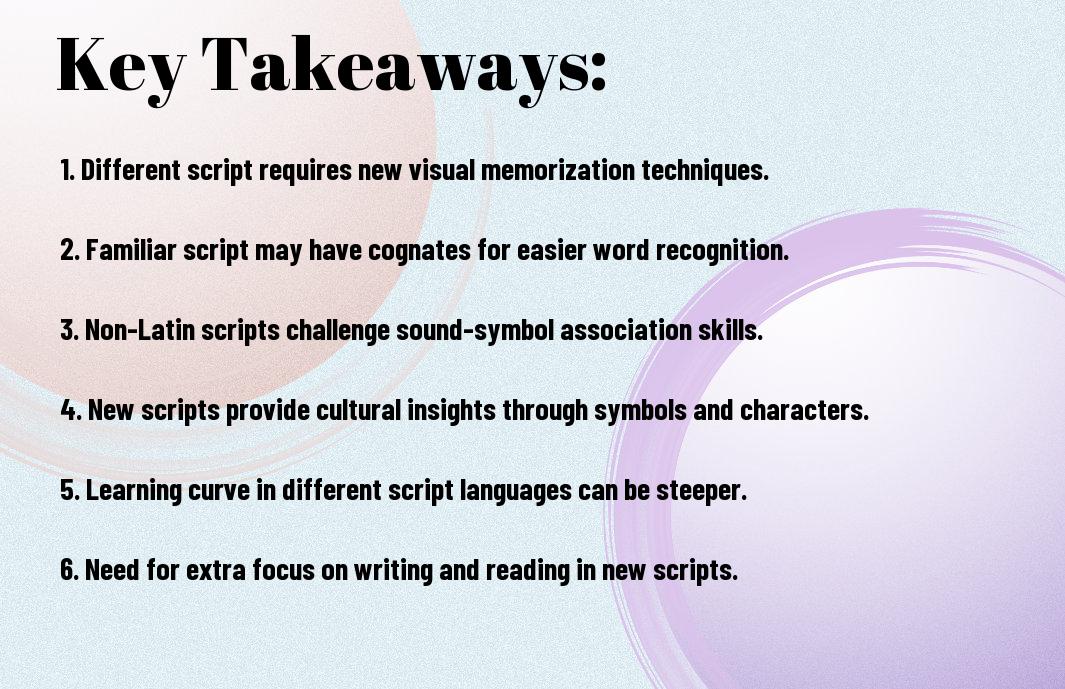
Key Takeaways:

  • Visual and Spatial Skills: Learning a language with a different script, such as Arabic or Chinese, requires developing new visual and spatial skills to recognize and recall unfamiliar characters or symbols.
  • Memory and Recall: Memorization plays a significant role when learning a language with a different script, as learners need to remember how each character is written and its corresponding meaning, which can be more challenging than learning a language with a familiar script.
  • Cultural Understanding: Learning a language with a different script provides insight into the culture and history of the language, allowing learners to connect more deeply with the language and its speakers.

The Challenges of Unfamiliar Scripts

Deciphering New Characters

The process of learning a language with a different script, such as Arabic or Chinese, presents unique challenges that can feel overwhelming at first. Deciphering new characters in these scripts requires a different mental approach compared to languages using familiar alphabets. When faced with unfamiliar characters, you may find it difficult to associate sounds with symbols, making the learning process more intricate.

Overcoming Visual Barriers

The visual aspect of unfamiliar scripts can be daunting as well. Unlike familiar scripts where letters may have some resemblance to sounds, characters in languages like Arabic or Chinese can appear complex and unrelated to their pronunciation. You may need to rely heavily on visual memory and pattern recognition to distinguish between characters, adding an extra layer of complexity to the learning process.

Barriers: However, as you persist in practicing and immersing yourself in the language, you will gradually become more adept at recognizing and recalling these new characters. Over time, the visual barriers that once seemed insurmountable will start to diminish, and you will find yourself becoming more comfortable with the script.

Language Acquisition Strategies

Focus on Phonetics and Phonology

Assuming you are learning a language with a different script such as Arabic or Chinese, one of the key language acquisition strategies is to focus on phonetics and phonology. This involves paying close attention to the sounds of the language and understanding how they are produced. Since these languages may have sounds that do not exist in your native language, it is crucial to practice and perfect your pronunciation to communicate effectively.

Building Vocabulary through Context

Strategies for learning a language with a different script also involve building vocabulary through context. When learning a language like Arabic or Chinese, where characters or symbols represent words, it can be helpful to understand the context in which these words are used. By immersing yourself in conversations, reading texts, and listening to native speakers, you can pick up new vocabulary more effectively.

This approach allows you to grasp not only the meaning of individual words but also how they are used in different contexts. By understanding the context in which words are used, you can build a more comprehensive vocabulary and improve your language skills overall.

Script-Specific Learning Techniques

Your understanding of different language scripts can greatly impact your language learning journey. It’s important to debunk the myth that unfamiliar scripts are insurmountable challenges. Check out Why Languages With Different Scripts Aren’t As Scary… to gain confidence in approaching new writing systems.

Arabic: Mastering the Abjad System

ScriptSpecifically for Arabic, tackling the Abjad system, where letters are primarily consonants with added diacritical marks for vowels, can seem daunting at first. Focus on learning the shapes and sounds of individual letters and practice writing them repeatedly to enhance your recognition and recall. Additionally, engaging with Arabic media like movies, music, and literature can help you immerse yourself in the script and improve your overall understanding.

Chinese: Tackling Tones and Characters

Any language learner exploring into Chinese faces the unique challenge of tones and characters. With four distinct tones that can change the meaning of words, mastering pronunciation is crucial. Practice speaking with native speakers or tutors to refine your tonal accuracy. In terms of characters, start with basic radicals and common characters before progressing to more complex ones. Flashcards and writing practice are excellent tools to reinforce character recognition and retention.

With a patient and consistent approach, learning languages with different scripts can be a rewarding and enriching experience. Remember that understanding the specific nuances of each script and utilizing tailored learning techniques can accelerate your progress and boost your confidence in mastering these diverse linguistic systems.

The Cognitive Benefits of Learning a New Script

Enhanced Visual Processing

Script learning with a different alphabet or characters can significantly enhance your visual processing skills. When you investigate into a language with a unique script like Arabic or Chinese, your brain is exposed to new symbols and shapes that require you to interpret and recognize them in a different way. This process challenges your brain to adapt and improve its ability to process visual information, leading to enhanced overall visual processing skills.

Improved Memory and Attention

Learning a language with a different script can also lead to improved memory and attention. The act of memorizing and recognizing new characters or symbols engages your brain in a way that strengthens your memory retention. This exercise in memory recall can help enhance your overall cognitive function and attention span.

For instance, when you learn Chinese characters, your brain is constantly challenged to remember and distinguish between thousands of intricate symbols. This mental workout not only improves your memory but also boosts your ability to focus and pay attention to details.

Cultural Immersion and Script Learning

Reading Authentic Materials

Authentic immersion in a new language involves exposure to genuine materials written in that language. When learning a language with a different script, such as Arabic or Chinese, engaging with authentic materials becomes even more crucial. Reading texts in their original script not only allows you to practice your language skills but also immerses you in the cultural nuances embedded within the script itself. By exploring traditional manuscripts, contemporary literature, or online articles in the language’s script, you can deepen your understanding of the language’s origins and cultural context.

Engaging with Native Speakers

The key to mastering a new script as part of learning a language lies in engaging with native speakers. Language is not just a system of symbols but a living entity shaped by its speakers’ unique expressions and interactions. Through conversations with native speakers, you can observe how the script intertwines with the spoken language, gaining insights into the natural flow and cadence of communication. Your interactions will not only enhance your script recognition but also provide you with a deeper appreciation of the cultural norms and values that inform the language’s script.

The dynamic exchange with native speakers will enrich your language learning journey, helping you build confidence in reading and writing the script through real-world practice. As you engage with native speakers, you’ll not only refine your language skills but also develop a deeper connection to the cultural heritage embedded in the script of the language you’re learning.

Technology and Language Learning Tools

For a language learner tackling a script that is completely different from their native language, technology can be a game-changer. Language learning apps and software offer interactive ways to practice writing and reading characters in scripts like Arabic or Chinese. These apps often include features like stroke order demonstrations, pronunciation guides, and interactive quizzes to enhance your learning experience.

Language Learning Apps and Software

Language learning apps and software provide a structured approach to learning a new script. They offer a variety of exercises and activities to help you familiarize yourself with the characters and their meanings. Some apps even use spaced repetition algorithms to optimize your memorization process, ensuring that you retain what you’ve learned for the long term.

Online Resources for Script Practice

Technology has made it easier than ever to find online resources specifically tailored to help you practice unfamiliar scripts. Websites and apps offer various exercises, games, and practice sheets that focus on improving your script recognition and writing skills. These resources allow you to practice at your own pace and track your progress over time, making the learning journey more efficient and enjoyable.

To fully immerse yourself in a new script, online resources dedicated to script practice can be invaluable. These resources often provide detailed explanations of character formation and stroke order, helping you master the writing system with precision. Additionally, interactive online exercises allow you to practice writing characters repeatedly until you feel confident in your script proficiency.

Final Words

Conclusively, learning a language with a different script such as Arabic or Chinese can present unique challenges compared to learning a language with a familiar script like English or French. The unfamiliar characters and writing systems may require extra effort and practice to master, but the rewards of learning a new language are vast.

Embrace the opportunity to expand your cultural horizons and enhance your cognitive abilities by delving into a language with a different script. With perseverance and dedication, you can unlock the door to a whole new world of communication and understanding. So, don’t hesitate to begin on this enriching journey of language learning, no matter how different the script may seem at first glance.

Q: How does learning a language with a different script (e.g., Arabic, Chinese) differ from learning a language with a familiar script?

A: Learning a language with a different script can be more challenging than learning a language with a familiar script because you not only have to learn the vocabulary and grammar of the language, but you also have to learn an entirely new writing system.

Q: What are some challenges of learning a language with a different script?

A: Some challenges of learning a language with a different script include memorizing new characters or symbols, understanding the rules of the writing system, and practicing writing the characters correctly.

Q: How can I overcome the challenges of learning a language with a different script?

A: To overcome the challenges of learning a language with a different script, it’s important to practice writing the characters regularly, use flashcards to memorize the characters, and immerse yourself in the language by listening to native speakers and reading texts in the target language.

Skip to content