Language

How does learning a new language impact one’s understanding of their native language

Language holds the key to unlocking a deeper comprehension of the world around you. As you commence on the journey of learning a new language, you open the door to a new realm of linguistic exploration that can revolutionize how you perceive and grasp the intricacies of your native tongue. The process of acquiring a new language magnifies your awareness of grammar rules, sentence structures, and even cultural nuances present in your first language, shedding light on its complexities and enhancing your overall linguistic aptitude.

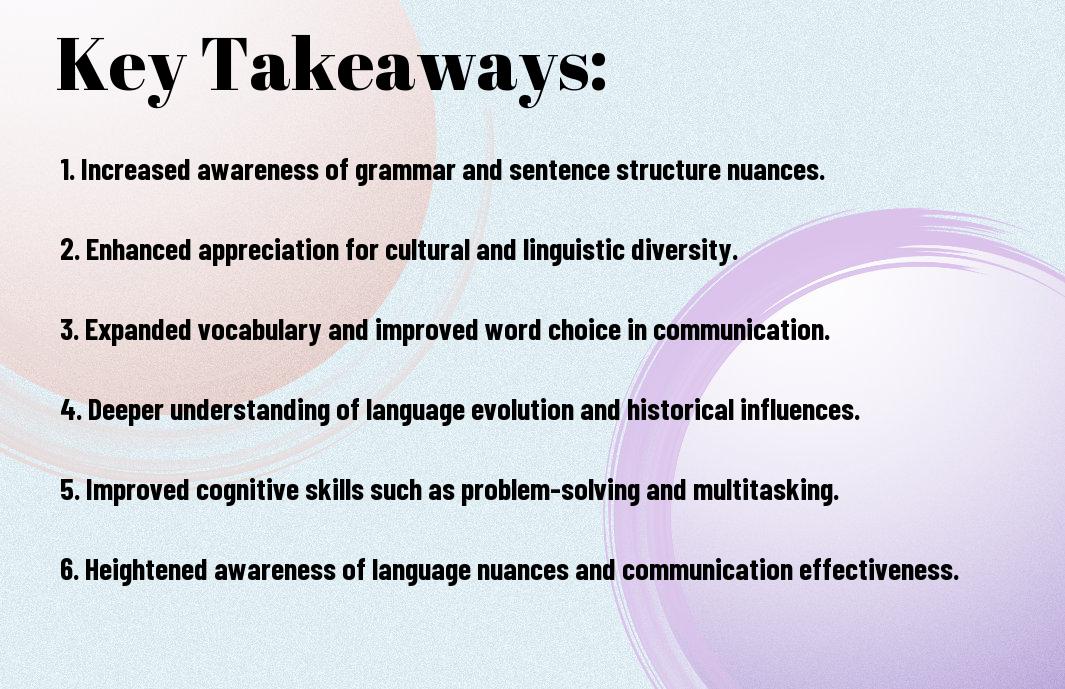
Key Takeaways:

  • Improves linguistic awareness: Learning a new language can enhance one’s understanding of the structure and grammar of their native language.
  • Expands vocabulary: The process of learning new words and expressions in a different language can lead to a deeper appreciation and utilization of vocabulary in one’s native language.
  • Enhances communication skills: Mastering a new language can improve one’s ability to convey thoughts and ideas effectively in their native language as well, as it sharpens overall language skills.
The Interconnectedness of Language

Language as a Web of Associations

For you, language is not just a set of words and syntax rules. It is a complex web of associations, where each word carries with it a nuanced meaning shaped by cultural, historical, and personal experiences. When you commence on learning a new language, you start to unravel this intricate web, discovering how words interconnect and relate to one another.

How New Language Acquisition Affects Native Language Patterns

With each new language you learn, you not only expand your linguistic repertoire but also gain a fresh perspective on your native language. This new lens allows you to notice subtleties and nuances in your mother tongue that you might have previously overlooked. It can lead to a deeper appreciation of the beauty and complexity of language.

It is fascinating to observe how learning a new language can influence the way you use your native language. You may find yourself incorporating unique expressions or sentence structures from the new language into your speech or writing. This cross-pollination of languages can enrich your communication skills and make you a more versatile and adaptable communicator.

The Linguistic Lens

Perspective Shift: Seeing Native Language in a New Light

Now, as you commence on the journey of learning a new language, you will find that your perspective on your native language begins to shift. Suddenly, you become more aware of the grammar rules, pronunciation nuances, and even cultural connotations that were previously second nature to you. This newfound awareness allows you to view your native language through a different lens, appreciating its complexities and subtleties in ways you never did before.

Enhanced Metalinguistic Awareness

On your language learning journey, you will develop enhanced metalinguistic awareness, which is the ability to consciously think about and understand the rules and structures of language. This awareness not only helps you grasp the mechanics of the new language you are learning but also deepens your understanding of your native language. You start noticing patterns, making connections, and recognizing the intricacies of grammar and syntax that you might have previously taken for granted.

In light of this enhanced metalinguistic awareness, you begin to see your native language through a more analytical and critical lens. You appreciate the beauty of its construction, marvel at its flexibility, and understand its nuances in a way that enriches your overall linguistic competence.

Cognitive Benefits

Improved Memory and Attention

Not only does learning a new language expand your communication skills, but it also enhances your cognitive abilities. One of the key benefits is the improvement in memory and attention. When you learn a new language, your brain is constantly switching between languages, which requires you to actively pay attention to the nuances of each. This cognitive demand strengthens your attention span and ability to concentrate.

Enhanced Problem-Solving Abilities

Attention! Learning a new language can also lead to enhanced problem-solving abilities. As you navigate the complexities of a different linguistic system, your brain develops new neural pathways that are crucial for problem-solving and critical thinking. This mental agility can be transferred to various aspects of your life, enabling you to approach challenges with a fresh perspective and innovative solutions.

This cognitive flexibility gained from learning a new language can be immensely valuable in your personal and professional life. It allows you to adapt to new situations quickly, think creatively, and consider multiple perspectives when facing obstacles. Embracing the challenges of language acquisition can truly transform how you approach problem-solving in all areas of your life.

Cultural Insights

Unpacking Cultural Nuances in Native Language

For any language learner, delving into a new language provides a unique perspective on their native language’s cultural nuances. As you explore the intricacies of another language, you become more aware of how culture and language are intertwined. This deeper understanding can lead you to discover subtleties in your native language that you may have previously overlooked.

Broadening Cultural Perspectives through Language Learning

Insights gained from learning a new language not only enhance your understanding of your native language but also offer a gateway to broadening your cultural perspectives. By immersing yourself in another language’s structure, expressions, and idioms, you gain a deeper appreciation for different cultural norms and ways of thinking. This exposure can help you challenge your assumptions and develop a more inclusive mindset.

Cultural experiences gained through language learning go beyond mere vocabulary and grammar rules. They immerse you in a new way of seeing the world, promoting empathy, tolerance, and a deeper appreciation for diversity. Through this lens, you can navigate cross-cultural interactions with sensitivity and understanding, enriching both your personal and professional relationships.

The Role of Context

Many language learners find that delving into a new language can shed light on the nuances of their native tongue. As you commence on this linguistic journey, you may come to realize the profound impact of context on language comprehension and use. According to The Power of Mother Tongue: Its Impact on Language Learning and Understanding, understanding the role of context is crucial in grasping the intricate web of meanings embedded within a language.

How Context Shapes Language Meaning and Use

Context plays a pivotal role in shaping the meaning and usage of language. The way words are understood and interpreted can vary significantly depending on the surrounding context. When learning a new language, you become more attuned to the subtle shifts in meaning that arise from different contexts. This heightened awareness not only enhances your grasp of the new language but also deepens your appreciation for the intricate layers of meaning present in your native language.

The Impact of Context on Native Language Comprehension

Context not only influences how you interpret a new language but also how you comprehend your native tongue. Your understanding of familiar words and expressions can evolve as you become more cognizant of the contextual cues that shape their usage. For instance, you may start noticing the various connotations and shades of meaning that a single word can have based on the context in which it is used. This newfound awareness enriches your relationship with your native language, offering fresh insights into its subtleties and complexities.

The Dynamics of Language Transfer

Positive Transfer: When New Language Skills Enhance Native Language

Skills you acquire while learning a new language can often positively impact your understanding and proficiency in your native language. This phenomenon, known as positive transfer, occurs when the knowledge or skills gained in one language influence or enhance your abilities in another. For example, if you learn a new language that has a different grammatical structure than your native language, you may develop a deeper understanding of grammar concepts that could improve your communication skills in both languages.

Negative Transfer: Overcoming Interference from New Language

Skills you learn in a new language may also bring about challenges in your native language due to negative transfer, where interference from the new language affects your linguistic performance. This interference can manifest in various ways, such as using incorrect word order or pronunciation based on the rules of the new language. However, being aware of these potential challenges and actively working to overcome them can ultimately strengthen your language skills in both languages.

From recognizing common pitfalls to practicing specific exercises targeting areas of interference, overcoming negative transfer requires a proactive approach to language learning. By identifying areas where the new language may impede your native language abilities, you can focus on strategies to mitigate these challenges and enhance your overall linguistic proficiency.

Summing up

Following this exploration into how learning a new language impacts your understanding of your native language, it is clear that the process offers numerous benefits beyond just linguistic proficiency. By delving into a new language, you gain a deeper insight into the structure and nuances of your native language, enhancing your appreciation for its complexities and intricacies. Additionally, learning a new language encourages you to reflect on cultural differences and opens your mind to new ways of expression, ultimately broadening your worldview and fostering a deeper connection to your own language and culture.

Q: How does learning a new language impact one’s understanding of their native language?

A: Learning a new language can enhance one’s understanding of their native language by increasing awareness of grammar rules, vocabulary usage, and sentence structure. It forces individuals to think more critically about language and how it is used, leading to a deeper appreciation and understanding of their native language.

Q: Can learning a new language improve communication skills in one’s native language?

A: Yes, learning a new language can improve communication skills in one’s native language. By learning how another language functions and the nuances of communication in that language, individuals can apply similar concepts to their native language, resulting in improved speaking, writing, and listening abilities.

Q: Does learning a new language help individuals understand different cultural perspectives in their native language?

A: Absolutely, learning a new language exposes individuals to different cultural perspectives, customs, and traditions. This exposure can lead to a greater understanding and appreciation of diversity, which can then be applied to gain new insights and interpretations of one’s native language and culture.

What are the differences between learning a language for conversational purposes versus academic purposes

You may be launching on a language learning journey, but do you know the distinctions between studying a language for everyday conversations versus academic pursuits? Understanding these variations can significantly impact your learning approach and goals. In this insightful exploration, we research into the nuances of learning a language for conversational fluency as opposed to academic rigor, offering you valuable insights to shape your language learning experience.

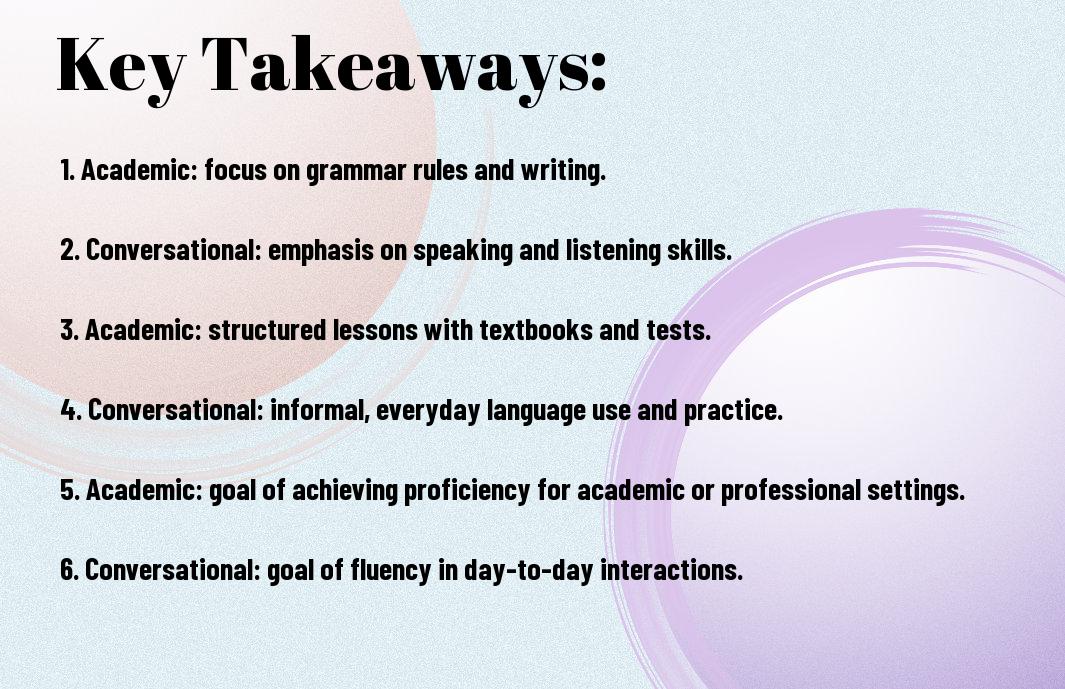
Key Takeaways:

  • Focus on practical vocabulary: When learning a language for conversational purposes, the focus is on everyday vocabulary and expressions that will help in communicating effectively in social situations.
  • Emphasis on grammar and formal structure: Learning a language for academic purposes involves a deeper investigate grammar rules, sentence structure, and formal language usage to convey complex ideas and concepts.
  • Interaction and fluency: Conversational language learning prioritizes speaking and listening skills to improve fluency and communication skills, while academic language learning may entail reading and writing skills for academic purposes such as research or essays.

Defining Language Learning Goals

Conversational Purposes: Social Interaction and Travel

With conversational language learning goals, your primary focus is on developing the ability to communicate effectively in everyday situations. This means being able to engage in small talk, make new friends, and navigate social interactions with ease when traveling to different countries. Your aim is to pick up the language skills necessary to comfortably order food at a local cafe, ask for directions, or strike up a conversation with locals.

Academic Purposes: Research, Study, and Career Advancement

One of the key differences in setting language learning goals for academic purposes is the emphasis on comprehension, writing, and reading skills rather than solely on speaking abilities. When learning a language for academic reasons, your goal might be to understand scholarly articles, conduct research in a foreign language, or even pursue a degree in a bilingual program. You’re likely to focus on grammar rules, vocabulary expansion, and the ability to express complex ideas in writing.

Career advancement can also be a driving force behind academic language learning goals. Whether you’re aiming to work for an international organization, conduct business in a foreign market, or collaborate with colleagues from different linguistic backgrounds, mastering a language for professional purposes can open up a world of opportunities for you.

Language Acquisition Strategies

Now, when it comes to learning a language for conversational purposes versus academic purposes, the strategies you employ can make a significant difference in your proficiency. If you’re curious about the distinctions between conversational and academic English, you can dive deeper into it by reading more on How is academic English different from conversational English.

Immersion and Interaction for Conversational Fluency

Conversational language acquisition often relies heavily on immersion and regular interaction. By surrounding yourself with native speakers or immersing yourself in the language through movies, music, and daily conversations, you naturally pick up the rhythm, nuances, and colloquial expressions that make casual conversations flow more naturally. Interacting with others in the language helps you practice listening, speaking, and understanding in real-time, enabling you to adapt and respond fluidly in various situations.

Analytical and Critical Thinking for Academic Excellence

With academic language learning, the focus shifts towards analytical and critical thinking skills. In an academic setting, you need to investigate deeper into the structure of the language, understand complex grammar rules, and analyze texts with a critical eye to extract and present information effectively. This involves not only mastering the vocabulary but also honing your skills in reasoning, comprehension, and argumentation to excel in academic discussions, debates, and writing assignments.

With academic language learning, you are encouraged to question, evaluate, and express your thoughts with precision and clarity. This analytical approach helps you grasp the intricate details of the language, enabling you to engage with academic material in a more profound and meaningful way.

Language Skills Focus

Your understanding of language skills can greatly differ depending on your ultimate goals. If you want to probe deeper into the nuances of Social vs Academic English, you can check out Social vs Academic English: What is the difference? Part 1 for an in-depth analysis.

Conversational Purposes: Emphasis on Speaking and Listening

Skills focused on conversational purposes in language learning predominantly revolve around honing your speaking and listening abilities. The primary goal is to facilitate effective communication in real-life scenarios, such as everyday conversations, social interactions, and informal settings.

Academic Purposes: Emphasis on Reading and Writing

When pursuing language learning for academic purposes, the emphasis shifts towards refining your reading and writing proficiencies. This approach is crucial for comprehending complex texts, conducting research, writing essays, and engaging in academic discourse.

Emphasis: Academic language learners often strive to enhance their reading comprehension skills to tackle scholarly articles, textbooks, and other academic materials. Furthermore, polished writing skills are vital for academic success, enabling you to articulate your thoughts effectively through essays, reports, and research papers.

Language Learning Materials and Resources

Conversational Purposes: Authentic Materials and Real-Life Contexts

Resources for learning a language for conversational purposes often focus on authentic materials and real-life contexts. This includes listening to native speakers through podcasts, watching movies or TV shows in the target language, and engaging in conversations with language partners. These resources provide you with exposure to natural language usage and help you develop a sense of the rhythm and flow of the language.

Academic Purposes: Scholarly Articles, Textbooks, and Research Papers

Contexts that involve learning a language for academic purposes typically revolve around scholarly articles, textbooks, and research papers. These materials are more structured and formal, emphasizing grammar rules, vocabulary building, and complex sentence structures. When learning a language for academic reasons, you may find yourself delving into the intricacies of language and focusing on writing essays or conducting research in the target language.

For instance, when studying a language like French for academic purposes, you may explore French literature, dissect grammar rules, and analyze the nuances of the language through academic texts. These resources provide you with a deeper understanding of the language’s structure and usage, preparing you for academic pursuits such as writing analytical essays or engaging in scholarly discussions.

Time Commitment and Study Schedules

Conversational Purposes: Flexible and Spontaneous Learning

After deciding to learn a language for conversational purposes, you’ll find that your approach to studying can be more flexible and spontaneous. Conversational learning allows you to focus on practical speaking skills, which means you can tailor your study sessions to fit your daily routine. This flexibility enables you to practice the language whenever you have a spare moment, whether it’s during your commute, while cooking, or before bed.

Academic Purposes: Structured and Rigorous Study Plans

Purposes When learning a language for academic purposes, your study schedule tends to be more structured and rigorous. Academic language learning typically involves following a syllabus, completing assignments, and preparing for exams. This structured approach requires dedicated study sessions and adherence to a prescribed curriculum to ensure comprehensive coverage of the language’s grammar, vocabulary, and cultural nuances.

Plus, academic language learning often involves setting specific goals and timelines to track your progress and proficiency levels. This methodical approach helps you stay on track and monitor your advancement in the language systematically.

Language Learning Environments

Unlike other subjects, learning a language involves immersing yourself in various environments to practice and improve your skills. Whether you’re learning for conversational or academic purposes, the environments you engage in play a crucial role in your language development.

Conversational Purposes: Language Exchange Partners and Informal Settings

Informal settings are key for language learners focused on conversational purposes. Engaging with language exchange partners or practicing with native speakers in a casual setting allows you to pick up on colloquial expressions, slang, and cultural nuances that are imperative for fluid conversations. Coffee shops, language exchange meet-ups, and online language forums are great platforms for such interactions. These environments offer a relaxed atmosphere for you to practice speaking and listening, helping you become more comfortable and confident in real-life conversations.

Academic Purposes: Classroom Instruction and Formal Education

For those learning a language for academic purposes, classroom instruction and formal education settings are vital. Enrolling in language courses at educational institutions or attending structured language classes provide a systematic approach to learning grammar rules, vocabulary, and academic writing skills. These environments offer a more structured curriculum with assessments and evaluations to track your progress. Additionally, interacting with classmates and instructors in a formal setting can help you deepen your understanding of the language’s complexities and academic applications.

Formal education environments often focus on building a strong foundation in the language, emphasizing reading comprehension, writing proficiency, and grammatical accuracy. These settings are well-suited for individuals looking to pursue higher levels of language proficiency for academic or professional reasons.

Conclusion

With these considerations in mind, it is important to recognize the distinct differences between learning a language for conversational purposes versus academic purposes. When learning a language for conversation, your focus is on practical communication skills, such as everyday vocabulary and common phrases. On the other hand, academic language learning may require a deeper understanding of grammar rules, complex vocabulary, and writing conventions.

Ultimately, whether you are learning a language for everyday conversations or academic pursuits, both approaches have their unique benefits and challenges. By understanding your purpose for learning a language, you can tailor your studies to best suit your needs and goals. Embrace the journey of language learning, and remember that each new word or phrase you master brings you one step closer to fluency.

Q: What are the differences between learning a language for conversational purposes versus academic purposes?

A: When learning a language for conversational purposes, the focus is on practical communication skills such as speaking and listening, while academic language learning emphasizes reading and writing skills, grammar rules, and vocabulary building.

Q: How does the approach differ when learning a language for conversational purposes versus academic purposes?

A: Conversational language learning often involves immersion through speaking with native speakers, practicing real-life scenarios, and focusing on everyday language usage. Academic language learning typically follows a structured curriculum, utilizes textbooks, and involves assessments such as exams and essays to measure proficiency.

Q: What are the benefits of learning a language for conversational purposes versus academic purposes?

A: Learning a language for conversational purposes can help build confidence in speaking and understanding the language in real-life situations, while learning for academic purposes can provide a deeper understanding of grammar rules, vocabulary nuances, and literary texts in that language.

What are the best practices for developing listening skills in a new language

Just imagine being able to effortlessly pick up on conversations in a new language, understanding native speakers with ease. To achieve this level of language proficiency, honing your listening skills is key. In this guide, you will discover the best practices recommended by language experts to help you develop your listening abilities in a new language. By incorporating these strategies into your language learning routine, you will be on your way to becoming a proficient listener in no time.

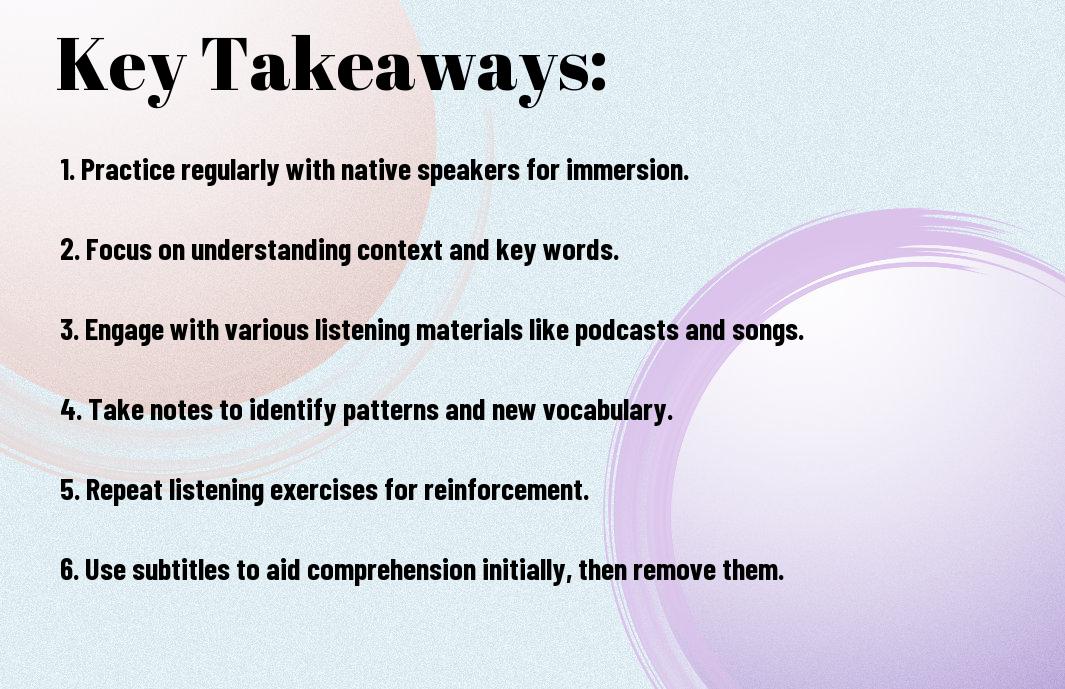
Key Takeaways:

  • Consistent Practice: Regular and consistent practice is necessary for developing listening skills in a new language.
  • Exposure to Authentic Material: Listening to authentic materials such as podcasts, movies, and music can help improve comprehension and pronunciation.
  • Active Listening: Engage in active listening by taking notes, repeating phrases, and practicing speaking in response to what you hear.

Setting the Foundation

Before entering into the specifics of developing your listening skills in a new language, it’s important to establish a strong foundation for your learning journey. Check out this resource on How to Improve Your Listening Skills as a Language Learner for some valuable insights and strategies to get you started.

Identifying Your Learning Style

The first step in developing your listening skills is identifying your unique learning style. Are you someone who learns best through visual aids, hands-on experiences, or auditory cues? Understanding how you absorb information most effectively can help you tailor your language learning approach to suit your preferences and maximize your progress.

Creating a Language Learning Environment

For creating a conducive language learning environment, consider immersing yourself in the language as much as possible. Surround yourself with resources in your target language, such as books, music, movies, and podcasts. Additionally, seek out language exchange partners or online communities where you can practice listening and speaking with native speakers. By integrating the language into your daily life, you can make significant strides in improving your listening skills.

Style and consistency are key when it comes to developing your listening skills in a new language. Find what works best for you and make a concerted effort to engage with the language regularly. The more you expose yourself to the language, the more comfortable and proficient you will become in listening and understanding it.

Building Blocks of Listening

Phonetics and Phonology

Some of the imperative building blocks of developing listening skills in a new language are understanding phonetics and phonology. The ability to recognize and reproduce the sounds of a language is crucial for comprehension. By familiarizing yourself with the pronunciation rules and patterns of the language, you can improve your listening skills significantly. Pay attention to the different sounds and intonations used in the language, and practice mimicking them to enhance your understanding.

Grammar and Sentence Structure

To further strengthen your listening abilities, you need to grasp the grammar and sentence structure of the language. The way sentences are constructed, the use of tenses, and the order of words all play a vital role in how you interpret spoken language. By developing a solid foundation in grammar, you can better comprehend conversations and follow along more easily.

With a firm understanding of grammar and sentence structure, you can anticipate the flow of conversations and fill in gaps more effectively. This predictive ability will help you catch key information and contextual clues while listening to a new language.

Vocabulary Acquisition

With an extensive vocabulary, you can enhance your listening skills by understanding a wider range of words and expressions used in conversations. Building your vocabulary is an ongoing process that involves learning and practicing new words regularly. Make use of flashcards, language learning apps, and vocabulary lists to expand your word bank and improve your comprehension.

Structure your vocabulary learning around different themes or topics to make it more relevant and engaging. By associating words with specific contexts, you can better remember and utilize them in conversations, which will ultimately boost your listening skills in the new language.

Active Listening Strategies

For effective language learning, it is vital to develop your listening skills actively. This involves not just hearing the words being spoken but actively engaging with the content to understand and absorb the language. Here are some strategies to enhance your active listening abilities.

Focused Attention

Listening with focused attention means concentrating solely on the speaker and the message they are conveying. Eliminate distractions, such as background noise or electronic devices, and give your full focus to the speaker. This practice allows you to better comprehend the language being spoken and pick up on nuances in tone and pronunciation.

Note-Taking Techniques

Effective note-taking can significantly improve your retention and understanding of the language. Techniques like jotting down keywords, main ideas, or important details while listening can help you remember and review the information later. This practice reinforces your memory and aids in connecting spoken words to written form.

It is crucial to develop a shorthand system that works for you, allowing you to capture vital points quickly without getting bogged down in transcribing every word.

Summarizing and Paraphrasing

Summarizing and paraphrasing what you have heard is an excellent way to check your understanding and reinforce your grasp of the language. After listening to a passage or conversation, try to condense the key points in your own words. This process not only helps you internalize the information but also improves your ability to express ideas in the new language.

The practice of summarizing and paraphrasing encourages active engagement with the language and enhances your listening comprehension skills over time.

Immersion and Authentic Materials

Your journey to developing strong listening skills in a new language can be greatly enhanced through immersion and the use of authentic materials. By immersing yourself in the language and exposing yourself to materials created by native speakers, you can improve your comprehension and fluency significantly.

Listening to Native Speakers

For the most authentic language experience, make it a habit to listen to native speakers. Whether it’s watching movies, listening to music, or engaging in conversations with native speakers, exposing yourself to the natural cadence and pronunciation of the language will help you tune your ear to the nuances of speech.

Podcasts, Audiobooks, and Videos

The use of podcasts, audiobooks, and videos in the target language can be invaluable in improving your listening skills. These resources provide you with real-life content and different accents, helping you train your ear to understand various speech patterns and vocabulary. You can listen to these materials during your daily commute, while exercising, or as part of your bedtime routine.

It’s also beneficial to choose content that aligns with your interests, as this will keep you engaged and motivated to continue listening regularly.

Music and Song Lyrics

An enjoyable way to enhance your listening skills is by listening to music in the language you are learning and following along with the lyrics. Music offers a rhythmic and melodic way to absorb the language, and by reading and understanding the lyrics, you can improve your vocabulary and comprehension.

To fully immerse yourself in the language, try translating the lyrics into your native language and then back into the target language. This exercise can help you grasp the intended meaning behind the words and phrases used in the songs.

Overcoming Common Challenges

Once again, developing listening skills in a new language comes with its fair share of challenges. Here are some common obstacles you may encounter and tips on how to overcome them.

Dealing with Accents and Dialects

With the vast array of accents and dialects present in the world, it’s natural to find it difficult to understand native speakers of a new language. One way to tackle this challenge is by exposing yourself to various accents through movies, TV shows, podcasts, and music in the target language. By immersing yourself in different accents, you can train your ear to become more attuned to the nuances of pronunciation.

Managing Background Noise and Distractions

One common difficulty in developing listening skills is dealing with background noise and distractions. If you find yourself struggling to focus during listening practice, try to create a quiet and conducive environment for learning. Find a noise-free space where you can fully concentrate on the audio materials. Additionally, using noise-canceling headphones can help minimize external distractions and enhance your listening experience.

This subsection elaborates on the importance of creating a conducive learning environment for improving your listening skills. By removing distractions and focusing solely on the audio material, you can better train your ears to pick up nuances in pronunciation, intonation, and vocabulary.

Building Confidence in Your Listening Skills

For many language learners, lack of confidence in their listening abilities can be a significant barrier to progress. To build confidence in your listening skills, start by setting achievable goals for regular listening practice. Choose materials that suit your current proficiency level and gradually challenge yourself with more complex content as you improve. Consistent practice and exposure to the language will help you gain confidence in your listening abilities over time.

Confidence plays a crucial role in language learning, especially when it comes to developing listening skills. By setting realistic goals, staying dedicated to practice, and celebrating small victories along the way, you can boost your confidence and become a more adept listener in your target language.

Practice and Reinforcement

Many language experts agree that consistent practice is key to developing strong listening skills in a new language. Regular listening exercises can help you improve your comprehension and speed of understanding.

Regular Listening Exercises

Any opportunity to incorporate listening practice into your daily routine is beneficial. Whether you choose to listen to podcasts during your commute, music in the background while you work, or audiobooks before bed, exposing yourself to the language regularly is crucial. Additionally, using language learning apps that offer listening exercises can provide targeted practice to help you improve specific aspects of your listening skills.

Conversational Partners and Language Exchange

The best way to enhance your listening skills is by engaging in conversations with fluent speakers of the language. Utilizing conversational partners or language exchange programs can provide you with real-world listening practice in a supportive environment. By actively listening to and engaging with native speakers, you can improve your comprehension, vocabulary, and overall fluency in the language.

The benefit of conversational partners and language exchange programs is the opportunity they provide for you to practice listening in a natural, conversational setting. This can help you become more comfortable with the cadence and rhythm of the language, as well as expose you to different accents and speech patterns.

Self-Assessment and Progress Tracking

Partners

Self-assessment tools can be valuable for tracking your progress in developing listening skills. By regularly evaluating your listening comprehension through quizzes, practice exercises, or even recording yourself speaking and listening back, you can identify areas for improvement and track your growth over time. Setting specific goals for your listening skills and monitoring your progress can help keep you motivated and focused on your language learning journey.

Self-Assessment and Progress Tracking

Exchange

Tracking your listening skills development allows you to see how far you’ve come and where you still need to improve. It provides a tangible way to measure your progress and can highlight the effectiveness of different learning strategies. Regularly assessing and tracking your listening skills can help you stay engaged and motivated as you work towards achieving fluency in the language.

To wrap up

Presently, you have learned about the best practices for developing listening skills in a new language. By focusing on active listening, exposing yourself to authentic materials, practicing regularly, and using targeted techniques such as shadowing, you can improve your comprehension and fluency in a foreign language. To research deeper into the importance of listening skills, you may want to explore A Manifesto for Better Listening Skills In A Foreign Language.

Be mindful of, learning a new language is a journey that requires dedication and perseverance. Incorporating these best practices into your language learning routine will help you become a more effective listener and communicator in your target language. Embrace the process, stay consistent, and celebrate your progress along the way. Keep listening, keep learning, and you will see improvement over time. Bonne chance! (Good luck!)

FAQ

Q: What are the best practices for developing listening skills in a new language?

A: To improve listening skills in a new language, it’s important to listen to authentic materials such as podcasts, music, or TV shows in that language. Additionally, you can practice active listening by taking notes, focusing on specific sounds or accents, and trying to understand the context of what is being said.

Q: How can I make the most of language learning resources to enhance my listening skills?

A: Make use of a variety of resources such as language learning apps, online courses, and language exchange programs to expose yourself to different accents, dialects, and speaking speeds. Practice listening to materials at different difficulty levels to challenge yourself and gradually improve your comprehension skills.

Q: Are there any specific strategies I can use to effectively practice and improve my listening skills?

A: Some effective strategies for improving listening skills include listening to the same material multiple times to catch details you might have missed, engaging in conversations with native speakers to practice real-life listening scenarios, and using subtitles or transcripts to enhance your understanding of spoken language.

How important is it to learn the cultural context behind idioms and expressions in a new language

Many language learners often explore studying idioms and expressions in a new language without considering the cultural context behind them. However, understanding the cultural background of these linguistic nuances is crucial for truly grasping their meaning and using them appropriately in conversation. By delving into the cultural roots of idioms and expressions, you not only enhance your language skills but also gain insights into the history, values, and customs of the people who speak the language, ultimately deepening your connection to the new language and its speakers.

Key Takeaways:

  • Enhances Understanding: Learning the cultural context behind idioms and expressions in a new language can enhance your overall understanding of the language as it provides insight into the values, beliefs, and traditions of that culture.
  • Improves Communication: Understanding the cultural context of idioms and expressions can help you communicate more effectively with native speakers, as it enables you to use these phrases appropriately in conversation.
  • Fosters Cultural Awareness: By delving into the cultural background of idioms and expressions, you can gain a deeper appreciation for the diversity and uniqueness of different cultures, fostering cultural awareness and sensitivity.

The Importance of Cultural Context

A crucial aspect of learning a new language is understanding the cultural context behind idioms and expressions. When you probe into the origins and meanings of these linguistic elements, you gain valuable insights into the history, beliefs, and customs of the people who speak the language. This knowledge enriches your understanding of the language and helps you communicate more effectively with native speakers.

Idioms and Expressions as Cultural Signifiers

An idiomatic expression often carries a deeper cultural meaning that may not be apparent at first glance. By exploring the cultural context of these phrases, you uncover the underlying values and beliefs of a community. For example, the English expression “raining cats and dogs” may seem nonsensical if taken literally, but understanding its historical origins sheds light on the heavy downpours common in certain regions.

Misinterpretation and Miscommunication

To avoid misinterpretation and miscommunication in a new language, it is crucial to grasp the cultural nuances of idioms and expressions. Without this knowledge, you may inadvertently use a phrase inappropriately or fail to recognize when someone is employing a figure of speech. This can lead to confusion or unintentional offense in your interactions with native speakers.

With a solid understanding of the cultural context behind idioms and expressions, you not only improve your language skills but also deepen your appreciation for the rich tapestry of human communication. Embrace the opportunity to learn about different cultures through their unique linguistic nuances, and watch as your language proficiency and cultural awareness flourish together.

Language as Culture

Any language is deeply intertwined with the culture it originates from. When you probe into a new language, understanding its idioms and expressions can offer you a unique insight into the cultural context in which it is spoken. Idioms: A linguistic Journey Across Cultures, highlighted by Cultural Awareness, emphasizes the importance of grasping the cultural nuances behind idiomatic expressions.

The Role of History and Tradition

Language reflects the history and traditions of a community, shaping the way people communicate and express themselves. By learning the cultural background of idioms and expressions, you gain a deeper appreciation for the heritage of the language you are studying. Each idiom carries a story, often rooted in historical events or traditional practices, providing you with a window into the cultural evolution of a society.

Cultural References and Allusions

On your linguistic journey, encountering idioms that reference specific cultural elements can be fascinating. These references can range from folklore and mythology to historical figures and events. Understanding these allusions not only improves your language skills but also enriches your cultural literacy. It enables you to connect more deeply with native speakers and comprehend the subtle nuances of their communication.

Tradition plays a crucial role in shaping the idiomatic expressions of a language, preserving age-old customs and beliefs within the fabric of everyday speech. By exploring the cultural references embedded in idioms, you not only enhance your language proficiency but also gain a broader understanding of the traditions that have shaped a particular society over time.

Idioms and Expressions in Different Cultures

All languages are rich with idioms and expressions that reflect the culture they originate from. Understanding the cultural context behind these idiomatic expressions can greatly enhance your language learning experience. It not only helps you grasp the deeper meaning of the words but also gives you insight into the values, beliefs, and social norms of the people who speak that language. If you’re wondering why learning idioms is important, you can find more insights on Why is learning idioms important?.

Colorful Expressions in Latin American Spanish

With its vibrant and diverse cultures, Latin America is a treasure trove of colorful idiomatic expressions in Spanish. From Mexico to Argentina, each country has its own unique set of sayings that encapsulate the essence of daily life. Learning these expressions not only helps you communicate more effectively but also allows you to connect on a deeper level with native speakers. Whether it’s understanding the significance of “echar agua al mar” (to do something pointless) or the humor behind “estar en las nubes” (to be daydreaming), delving into the world of Latin American idioms adds a layer of richness to your language skills.

Proverbial Wisdom in African Cultures

One of the most fascinating aspects of African cultures is the wealth of proverbial wisdom passed down through generations. Proverbs play a significant role in conveying moral lessons, traditional values, and societal norms. Exploring African proverbs in languages like Swahili, Yoruba, or Xhosa not only exposes you to linguistic diversity but also provides a window into the collective wisdom of different tribes and communities. By unraveling the meanings behind proverbs such as “Haba na haba, hujaza kibaba” (Little by little, fills the measure), you can gain a deeper understanding of the cultural ethos that shapes communication in African societies.

Understanding idioms and expressions in different cultures goes beyond language proficiency—it allows you to appreciate the nuances of communication and the richness of human diversity. By immersing yourself in the colorful tapestry of idiomatic expressions from around the world, you not only enhance your language skills but also cultivate a deeper appreciation for the cultural heritage that shapes linguistic creativity.

The Challenges of Learning Idioms and Expressions

Linguistic and Cultural Barriers

On your journey to learning a new language, you may come across the challenge of idioms and expressions that seem perplexing or nonsensical. These linguistic hurdles can often be attributed to the unique cultural contexts in which they were born. Understanding idiomatic expressions requires not only a grasp of the language itself but also an insight into the cultural background that shaped them. Without this cultural knowledge, you may find yourself lost in translation, unable to decipher the true meaning behind these figurative phrases.

The Role of Context and Inference

The intricacies of idioms and expressions lie not only in their literal words but also in the context in which they are used. The way a particular phrase is employed in conversation or writing can greatly impact its intended meaning. This reliance on context poses a challenge to language learners, as it requires a deep understanding of the nuanced ways in which words can be woven together to convey subtle nuances and emotions.

Inference plays a crucial role in unraveling the complexities of idiomatic expressions. By carefully analyzing the context in which an idiom is used, you can infer the underlying message or sentiment that the speaker or writer intends to convey. This skill of inference is vital in piecing together the puzzle of idioms and expressions, allowing you to explore beneath the surface and grasp the true essence of the language.

Strategies for Mastering Idioms and Expressions

Immersion and Exposure

Exposure to a language and its cultural context is crucial when it comes to mastering idioms and expressions. Immersing yourself in the language through conversations, movies, music, and literature helps you pick up on common phrases and their meanings. The more you expose yourself to the language naturally used by native speakers, the better you will understand and use idioms and expressions in context.

Analyzing Cultural References

Idioms and expressions often stem from specific cultural references, making it important to analyze the context in which they are used. By delving into the history, traditions, and beliefs of a particular culture, you gain insight into the origins of idioms and expressions. Understanding the cultural references behind these linguistic elements not only helps you remember them better but also enables you to use them appropriately in conversations.

The analysis of cultural references behind idioms and expressions enhances your overall language proficiency by providing a deeper connection to the language you are learning. It allows you to appreciate the nuances and subtleties embedded within these linguistic components, leading to a more authentic and meaningful communication experience.

The Benefits of Learning Idioms and Expressions

Enhanced Communication and Connection

With your knowledge of idioms and expressions in a new language, you can enhance your communication skills and form deeper connections with native speakers. Idioms are often used in everyday conversations, and understanding them shows that you have a deeper understanding of the language and its nuances. This can help you to communicate more effectively and build rapport with others.

Deeper Cultural Understanding and Appreciation

The more idioms and expressions you learn in a new language, the better you grasp the cultural context in which they are used. This understanding allows you to appreciate the culture on a deeper level and gain insights into the beliefs, values, and traditions of the native speakers. It can also help you avoid misunderstandings or misinterpretations that may arise from literal translations of idiomatic expressions.

Communication is not only about words but also about cultural nuances and context. By familiarizing yourself with idioms and expressions in a new language, you are equipping yourself to engage more authentically with native speakers and truly immerse yourself in the language and culture.

Summing up

Learning the cultural context behind idioms and expressions in a new language is crucial for gaining a deeper understanding and appreciation of its speakers. By delving into the history, customs, and values tied to these linguistic quirks, you not only improve your language skills but also develop a more nuanced insight into the society where the language is spoken. Embracing the cultural context of idioms allows you to connect more authentically with native speakers and navigate social interactions with greater sensitivity.

So, next time you encounter a new idiom or expression in your language studies, take the time to explore its cultural significance. Your efforts will not only enhance your language proficiency but also enrich your overall learning experience by immersing you deeper into the customs and traditions of the language you are passionate about mastering.

Q: Why is it important to learn the cultural context behind idioms and expressions in a new language?

A: Understanding the cultural context behind idioms and expressions helps learners grasp the deeper meaning and nuances of the language. It allows them to communicate more effectively and avoid misunderstandings.

Q: How does learning the cultural context enhance language proficiency?

A: Cultural knowledge provides insight into the history, traditions, and values of a community, which are often reflected in idioms and expressions. By learning the context, learners can better relate to native speakers and feel more confident using the language.

Q: Can cultural misunderstandings arise from misinterpreting idioms and expressions?

A: Yes, misinterpreting idioms and expressions can lead to cultural misunderstandings or offense. Without understanding the context, a literal translation may not convey the intended meaning or could be taken the wrong way. This highlights the importance of cultural awareness in language learning.

How does learning a new language influence one’s worldview and cognitive processes

There’s a fascinating shift in your perceptions and thinking when you explore into learning a new language. It’s as if a whole new world opens up before your eyes, shaping how you see things around you. In this blog post, we will explore the profound impact that learning a new language can have on your worldview and cognitive processes, shedding light on the transformative journey that awaits you.

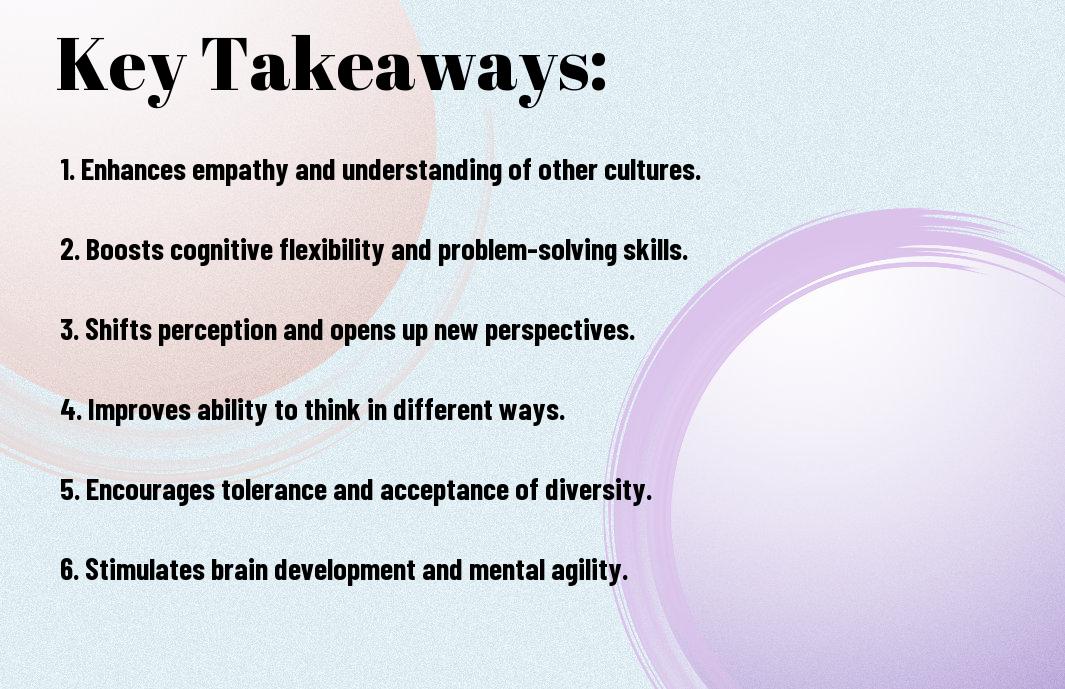
Key Takeaways:

  • Language shapes thought: learning a new language can broaden one’s perspective and influence how they perceive and interpret the world around them.
  • Cognitive flexibility: mastering a new language can enhance cognitive abilities such as problem-solving skills, multitasking, and decision-making.
  • Cultural understanding: acquiring a new language can lead to a deeper understanding and appreciation of different cultures, fostering empathy and tolerance.

The Cognitive Shift

Neuroplasticity and Language Acquisition

The process of learning a new language goes beyond just acquiring vocabulary and grammar rules; it actually reshapes your brain’s structure and functioning. An individual’s brain is remarkably adaptable, a quality known as neuroplasticity. When you immerse yourself in a new language, your brain forms new neural pathways and connections to accommodate this linguistic information.

Rewiring the Brain: A New Perspective

Neuroplasticity allows for the rewiring of the brain in response to new stimuli, such as learning a new language. This means that your brain can physically change in structure as you engage with and practice a new language. As you continue to learn and use the new language, these changes become more pronounced, leading to enhanced cognitive abilities and a broader worldview.

Acquisition of a new language can lead to improvements in cognitive functions such as problem-solving, multitasking, and even delaying the onset of dementia in later life. This cognitive shift not only enhances your linguistic abilities but also enriches your overall cognitive processes, contributing to a more profound and interconnected worldview.

Language and Perception

Some argue that the language you speak can significantly influence how you perceive the world around you. This idea is rooted in the Sapir-Whorf Hypothesis, which suggests that the structure and vocabulary of a language shape the thoughts and perceptions of its speakers.

The Sapir-Whorf Hypothesis: A Debate

SapirWhorf The Sapir-Whorf Hypothesis has sparked a long-standing debate in the field of linguistics and cognitive science. While some researchers believe that language determines how we think and perceive reality, others argue that it simply influences our thoughts and behaviors to a certain extent.

Color, Time, and Space: How Language Shapes Reality

To investigate deeper into how language influences perception, let’s consider how different languages categorize colors, express time, and conceptualize space. For example, some languages have more precise terms for colors, which could impact how speakers distinguish between shades and hues.

It is fascinating to explore how language can shape your perception of the world, influencing how you see colors, interpret time, and understand spatial relationships. By learning a new language, you may gain a different perspective on these fundamental aspects of reality, expanding your worldview and cognitive processes.

Cultural Immersion and Worldview

Not only does learning a new language grant you access to a different means of communication, but it also provides you with a gateway to understanding diverse cultures and broadening your worldview. Through cultural immersion, you not only learn vocabulary and grammar rules but also the social norms, values, and traditions that shape the way people from that culture view the world.

The Power of Contextual Learning

Cultural immersion allows you to absorb language in its natural habitat, surrounded by native speakers who embody the nuances of the culture. By experiencing firsthand how language is used in different contexts, you gain a deeper understanding of how culture influences communication styles, gestures, and even humor. This immersive experience not only enhances your language skills but also fosters a greater appreciation for diversity and encourages you to see the world from multiple perspectives.

Unconscious Bias and Cultural Assumptions

To understand the impact of unconscious bias and cultural assumptions, consider how language reflects societal norms and values. Your native language shapes your thought patterns and perception of the world, often leading to unconscious biases that influence your interactions with people from different cultures. By learning a new language, you become more aware of these biases and assumptions, allowing you to challenge and reshape your perspectives based on a deeper cultural understanding.

Assumptions and stereotypes can unintentionally impact your worldview and how you interpret the actions of others. Learning a new language can help you break down these barriers by exposing you to different cultural contexts and ways of expressing ideas. By actively engaging with a new language and culture, you can begin to unravel your unconscious biases and develop a more inclusive and open-minded perspective.

The Role of Emotions in Language Learning

Unlike other cognitive processes, language learning is deeply intertwined with emotions. Your emotional state can significantly impact your ability to learn a new language and influence how you perceive the world through that language.

Emotional Intelligence and Empathy

Role of emotional intelligence in language learning cannot be overstated. When you develop your emotional intelligence through learning a new language, you become more attuned to nuances in communication and better understand cultural cues. This heightened sensitivity fosters empathy, allowing you to connect more deeply with others, both linguistically and emotionally.

The Emotional Connection to Native Speakers

Speakers of a language are not merely conveyors of words but carriers of emotions, traditions, and cultural insights. When you establish an emotional connection with native speakers while learning a new language, you gain invaluable insights into their way of life, beliefs, and values. This emotional bond goes beyond words, enriching your language learning experience and broadening your worldview.

A strong emotional connection to native speakers can break down barriers and facilitate a deeper understanding of their language. It allows you to see the world through their eyes, leading to a more profound appreciation of their culture and a more authentic grasp of the language nuances. This emotional journey in language learning enriches your cognitive processes and broadens your perspectives in ways you never imagined.

The Impact on Critical Thinking

An Analytical Reasoning and Problem-Solving

For analytical reasoning and problem-solving, learning a new language can significantly enhance your cognitive processes. When you learn a new language, you are exposed to different language structures, grammar rules, and vocabulary. This exposure challenges your brain to think in new ways and find solutions to linguistic puzzles. As you grapple with unfamiliar words and sentence structures, your brain actively engages in analyzing and problem-solving, which in turn strengthens your critical thinking skills.

Enhanced Cognitive Flexibility

For enhanced cognitive flexibility, the process of learning a new language forces you to adapt to different linguistic contexts and cultural nuances. Your brain becomes adept at switching between languages, constantly making decisions on which language to use in specific situations. This constant toggling between languages enhances your cognitive flexibility, allowing you to think more creatively and consider multiple perspectives when approaching problems.

With improved cognitive flexibility from language learning, you become more adept at multitasking and adjusting to new environments. Your brain becomes more nimble in switching between tasks and considering various viewpoints, leading to more agile and adaptable thinking patterns. This cognitive flexibility gained from learning a new language can have a profound impact on your critical thinking abilities in various aspects of your life.

The Interplay between Language and Identity

Despite the complexity of the relationship between language and identity, it’s clear that the language you speak plays a significant role in shaping how you see yourself and how others perceive you. Language is not just a means of communication; it is a powerful tool for self-expression that reflects your cultural background, experiences, and beliefs.

Language as a Tool for Self-Expression

One of the key ways in which learning a new language can influence your worldview is through the different nuances and subtleties that each language carries. When you learn a new language, you not only gain the ability to communicate with a broader range of people, but you also gain access to a different way of thinking and expressing ideas. This can expand your perspective and allow you to see the world from a new vantage point, enriching your understanding of different cultures and ways of life.

Code-Switching and Identity Formation

On your journey of learning a new language, you may find yourself engaging in code-switching, the practice of alternating between two or more languages in conversation. Code-switching is not just a linguistic phenomenon; it is also deeply tied to identity formation. By code-switching, you can adapt your communication style to different contexts and social settings, showing different facets of your identity depending on who you are interacting with. This fluidity in language use can shape how you perceive yourself and how others perceive you, allowing you to navigate complex social situations and diverse cultural spaces with ease.

Another aspect of code-switching is its role in affirming and preserving cultural identities. By using multiple languages in your daily interactions, you can maintain a connection to your heritage and roots, reinforcing your sense of belonging and enriching your cultural identity. Code-switching becomes a way to bridge different aspects of your identity, creating a unique linguistic and cultural tapestry that reflects the richness of your background and experiences.

Conclusion

So, as you launch on the journey of learning a new language, remember that it is not just about acquiring words and grammar rules. It is about expanding your worldview, enhancing your cognitive processes, and forging connections between different languages and skills. According to a study by the National Centre for Languages, speaking multiple languages can influence your thinking patterns, problem-solving abilities, and decision-making skills. The more languages you learn, the more flexible and adaptable your mind becomes, allowing you to navigate through diverse cultural landscapes with ease. Check out more about this fascinating topic in the article Speaking your mind: links between languages and other skills.

Q: How does learning a new language influence one’s worldview?

A: Learning a new language can broaden one’s worldview by exposing them to different cultures, traditions, and ways of thinking. It allows individuals to see the world from different perspectives and enhances their empathy and understanding of diverse communities.

Q: How does learning a new language affect cognitive processes?

A: Learning a new language can improve cognitive processes such as problem-solving, multitasking, and memory. It challenges the brain to think in a new way, strengthens neural connections, and enhances overall cognitive function.

Q: What are some benefits of learning a new language on worldview and cognitive processes?

A: Some benefits of learning a new language include increased cultural awareness, improved communication skills, and enhanced creativity. It allows individuals to break down barriers, build connections with others, and stimulate mental agility and flexibility.

Skip to content