learn

How to Learn a Language by Yourself Successfully

You want to learn a new language, and you’re determined to do it on your own. Your motivation is strong, and you’re ready to put in the work. You’ll need a solid plan and the right tools to stay focused. Your journey will require discipline and practice, but with the right approach, you can achieve your goal and become proficient in your target language. You’ll start by setting realistic goals and creating a schedule that suits your lifestyle.

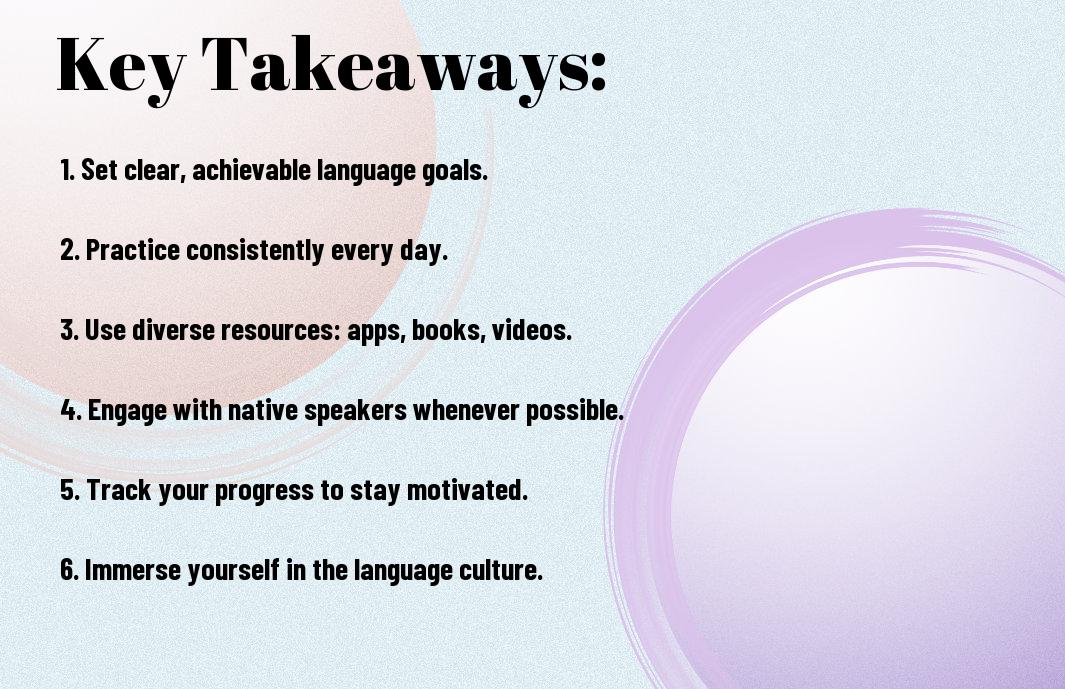
Key Takeaways:

To learn a language by yourself successfully, consider the following points:

  • Set Realistic Goals and define what you want to achieve, whether it’s basic conversation skills or advanced fluency, to help guide your learning process.
  • Establish a Study Routine that fits your schedule and lifestyle, ensuring consistent practice and progress in your language learning journey.
  • Utilize Language Learning Resources such as online courses, apps, and language exchange websites to access a variety of study materials and interactive tools.
  • Practice Active Listening and Speaking by engaging with native speakers, watching TV shows or movies, and listening to music in the target language to improve pronunciation and comprehension.
  • Immerse yourself in the Language Environment by reading books, articles, and news in the target language to expand your vocabulary and get familiar with different contexts and expressions.

Setting Goals

A clear plan is crucial to learn a language by yourself. You need to define what you want to achieve and how you will get there. Your goals will guide your learning process and help you stay motivated.

Defining Your Motivation

Against the backdrop of your daily life, you must identify why you want to learn a language. Your motivation will be the driving force behind your learning. You will be more likely to stick to your plan if you have a strong reason for learning.

Creating a Learning Schedule

At the outset, you should create a schedule that suits your lifestyle. You will need to allocate time for learning and stick to it. Your schedule should be realistic and achievable.

This schedule will be the backbone of your learning process. You will use it to plan your daily lessons, set deadlines, and track your progress. By following your schedule, you will make steady progress and stay on track to achieving your language learning goals. You will be able to manage your time effectively and make the most of your learning experience.
Language Fundamentals

Now that you’ve decided to learn a language by yourself, it’s time to focus on the basics. You’ll need to understand the building blocks of the language to progress effectively.

Learning the Alphabet and Pronunciation

Above all, you must start with the alphabet and pronunciation. You can find numerous resources online to help you learn the correct pronunciation of each letter and sound.

Basic Grammar and Vocabulary

Along with learning the alphabet, you’ll need to understand basic grammar and vocabulary. You can begin by learning common phrases, verb conjugations, and basic sentence structures.

It is crucial to practice regularly, using your newfound knowledge to construct simple sentences and engage in basic conversations. You can use flashcards, language learning apps, or watch videos to help you learn and practice your grammar and vocabulary skills, and as you progress, you’ll become more confident in your ability to communicate in your new language.

Language Acquisition Methods

For effective language learning, you’ll need to explore various methods. You can try different approaches to find what suits you best, and combine them for optimal results. Your goal is to find a method that keeps you motivated and engaged in the learning process.

Immersion Techniques

Along with traditional learning methods, immersion techniques can be highly effective. You can surround yourself with the language you’re trying to learn by watching TV shows and movies, listening to music, and speaking with native speakers. This will help you get used to the sound and rhythm of the language.

Language Learning Apps and Software

Across the wide range of language learning tools, you’ll find many apps and software that can aid your learning. You can use them to practice grammar, vocabulary, and pronunciation, and to track your progress. They often offer interactive exercises and quizzes to make learning more enjoyable.

Language learning apps and software provide you with flexibility and convenience, allowing you to learn at your own pace, whenever and wherever you want. You can access a vast amount of learning materials, from beginner to advanced levels, and tailor your learning to your needs and interests. This will help you stay focused and motivated on your path to language proficiency.

Practicing Language Skills

Keep in mind that practicing language skills is necessary to your progress. You can find valuable tips on how to teach yourself a language at How To Teach Yourself a Language: 10 Key Strategies For Success, which will guide you through the process.

Speaking and Listening Exercises

Around this time, you’ll want to focus on speaking and listening exercises to improve your pronunciation and comprehension. You can start by listening to podcasts or audiobooks in your target language and speaking with native speakers or language exchange partners.

Reading and Writing Activities

About now, you should be developing your reading and writing skills. You can start by reading simple texts, such as news articles or blogs, and writing short essays or journal entries in your target language.

Also, as you progress, you can move on to more complex texts, such as literature or academic papers, and write longer, more structured pieces, like short stories or even a diary. This will help you to develop your vocabulary, grammar, and style, and to express yourself more effectively in your target language.

Overcoming Challenges

Many language learners face obstacles on their journey to fluency. You will encounter setbacks, and your progress may slow down. But with persistence and the right mindset, you can overcome these hurdles and continue to improve your language skills.

Managing Motivation and Discipline

The key to successful language learning is establishing a routine and sticking to it. You need to set achievable goals and track your progress to stay motivated and disciplined in your learning journey.

Dealing with Language Learning Plateaus

Like learning any new skill, language acquisition has its ups and downs. Linguistic growth can be slow and frustrating at times, making you feel like you’re not improving.

Hence, when you hit a plateau, you should reassess your learning strategy and make necessary adjustments. You can try new study materials, practice with a language exchange partner, or focus on a specific area of difficulty. By doing so, you can break through the plateau and continue to make progress in your language learning journey.

Staying Motivated

All language learners face a challenge in staying motivated. You will encounter setbacks, but perseverance is key. Your goal is to make progress, no matter how small, every day.

Finding Language Learning Communities

With like-minded individuals, you can share your experiences and learn from theirs. You’ll find online forums, social media groups, and local meetups where you can practice your language skills and get support.

Tracking Progress and Celebrating Successes

Any progress you make is a step in the right direction. You can use a journal or a mobile app to track your progress and celebrate your achievements, no matter how small they seem.

In fact, tracking your progress helps you see how far you’ve come and motivates you to continue learning. You’ll be able to identify areas where you need improvement and focus on those, making your learning more efficient and effective. By celebrating your successes, you’ll stay positive and encouraged to keep moving forward with your language learning journey.

Final Words

With this in mind, you’ve got the tools to learn a language by yourself. You can find valuable advice on How do I teach myself a new language? : r/languagelearning. Stay focused, stick to your plan, and your progress will be steady. You will see improvement in your language skills, and that’s what keeps you moving forward. Your hard work and dedication will pay off, and you’ll become proficient in your target language.

FAQ

Q: What are the most effective methods for learning a language by myself?

A: To learn a language by yourself successfully, you should combine various learning methods. Start by setting achievable goals and creating a schedule to stay motivated and organized. Utilize online resources such as language learning apps, podcasts, and YouTube channels that offer a structured approach to language acquisition. Additionally, engage in active learning by practicing speaking and writing through tasks like journaling, speaking with native speakers, and participating in language exchange programs. Immersing yourself in the language by watching TV shows and movies, listening to music, and reading books in the target language can also significantly enhance your learning experience.

Q: How can I overcome the challenges of learning grammar and vocabulary on my own?

A: Overcoming the challenges of learning grammar and vocabulary requires consistent practice and the use of diverse learning tools. For grammar, focus on understanding the rules and then practice applying them through exercises found in textbooks or online. For vocabulary, use flashcards, either physical or through apps like Anki, to memorize new words. Learning vocabulary in context, such as through reading or listening to stories, can also help solidify new words in your memory. Furthermore, using spaced repetition, a technique where you review material at increasingly longer intervals, can be highly effective in retaining grammar rules and vocabulary over time.

Q: What role does consistency and self-motivation play in successfully learning a language by myself?

A: Consistency and self-motivation are key factors in learning a language by yourself. Establishing a daily routine, even if it’s just 15-20 minutes of practice, is more effective than practicing for long hours once a week. Self-motivation can be maintained by celebrating small achievements, finding a language learning community for support, and rewarding yourself upon reaching milestones. It’s also important to understand that learning a language is a marathon, not a sprint, and it’s normal to encounter plateaus. Staying positive and reminding yourself of your reasons for learning the language can help you stay motivated and committed to your goal.

How to Learn a Language Faster with Mnemonics

As you initiate on your language learning journey, you’ll discover that retaining new vocabulary and grammar rules can be a challenge. Your ability to learn a language quickly depends on your capacity to associate new information with something familiar. You can significantly accelerate your learning process by utilizing mnemonics, a powerful tool that helps you connect new words and phrases to your existing knowledge, making it easier to recall them later, and you will learn how to do it in this post.

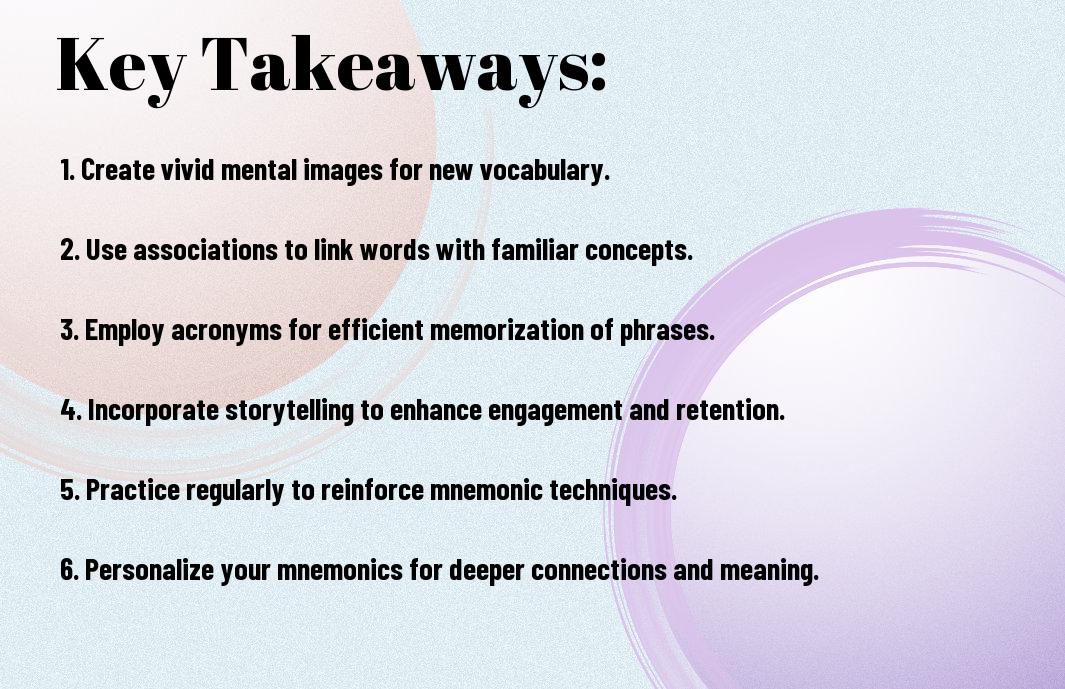
Key Takeaways:

  • Using mnemonic devices can significantly improve your ability to learn a language faster by associating new vocabulary with visual images or rhyming phrases that help you decode and encode information more efficiently.
  • Creating mental connections between new words and personal experiences or emotional events can enhance your retention and recall of the language, making the learning process more engaging and effective.
  • Implementing spaced repetition techniques with mnemonics can further boost your language learning progress by optimizing the review schedule and helping you focus on the most challenging vocabulary and grammar rules.

    Introduction to Language Learning with Mnemonics

    While learning a language can be a challenging task, using mnemonics can make it more efficient and enjoyable. You can create associations between new words and your existing knowledge to aid in recall. This technique enhances your ability to learn and retain new information, making your language learning journey more effective.

    subsection: The Power of Mnemonics in Language Learning

    About the time you start using mnemonics, you’ll notice a significant improvement in your language learning process. You can link new vocabulary to personal experiences, making it easier for you to recall words and phrases. This technique allows you to tap into your creative potential, making learning more engaging and fun.

    subsection: Benefits of Using Mnemonics for Language Acquisition

    On the subject of language acquisition, using mnemonics offers numerous benefits. You can improve your retention rates, reduce study time, and increase your confidence in using the target language. As you progress, you’ll find that mnemonics help you to internalize grammar rules and vocabulary more effectively.

    Also, as you continue to use mnemonics in your language learning, you’ll discover that it enhances your ability to think creatively and make connections between different pieces of information. You’ll be able to apply this skill to various aspects of language learning, such as pronunciation, reading comprehension, and conversation. By incorporating mnemonics into your study routine, you’ll be able to learn a language faster and more efficiently, achieving your goals in a shorter amount of time.

    Introduction to Mnemonics

    Any language learner can benefit from using mnemonics to improve their skills. You can use mnemonics to associate new words with something you already know, making it easier to learn and retain new information.

    subsection: Creating Effective Mnemonics for Vocabulary

    Vocabularily building is a key part of language learning, and you can create mnemonics to help you learn new words by associating them with a word or phrase in your native language.

    subsection: Using Associations and Visualizations

    Efficiently using associations and visualizations can help you create powerful mnemonics that stick in your mind, allowing you to recall new vocabulary and grammar rules with ease, as you practice using them to learn new language skills.

    This technique involves using vivid mental images to associate with new words or phrases, helping you to create a lasting connection in your mind, and as you practice using associations and visualizations, you will find that your ability to learn and retain new language information improves dramatically, allowing you to become proficient in the language you are learning.

    Learning with Mnemonics

    Many language learners have discovered that mnemonics can significantly improve their learning speed and retention. You can use mnemonics to associate new words with memories, making them easier to recall. By applying mnemonics to your language learning, you can enhance your vocabulary and comprehension.

    Practical Tips for Implementing Mnemonics in Daily Study

    Along with other study techniques, you can use mnemonics to aid your learning. Here are some tips:

    • Create mental images to Associate with new words

    Thou can improve your language skills by incorporating mnemonics into your daily study routine, making it more engaging and effective for you.

    Incorporating Mnemonics into Language Learning Routines

    Linguistically, you can use mnemonics to connect new language concepts to your existing knowledge. You can create flashcards or concept maps to visualize relationships between words and ideas, making it easier for you to learn and apply them in context.

    The key to successfully incorporating mnemonics into your language learning routine is to make them a consistent part of your study practice. You can start by identifying areas where you struggle the most, such as vocabulary or grammar, and creating mnemonics to help you overcome those challenges. As you continue to use mnemonics, you will find that your ability to learn and retain new language information improves, allowing you to progress faster in your language learning journey.

    Introduction to Mnemonics

    All language learners can benefit from using mnemonics to improve their skills. You can use associations, acronyms, and rhymes to help you learn and retain new vocabulary and grammar rules. This technique can be applied to any language, making it a valuable tool for your language learning journey.

    Overcoming Common Challenges with Mnemonics

    Above all, mnemonics can help you overcome common challenges such as forgetting new words or phrases. You can create mental associations to link new information to something you already know, making it easier to recall.

    Staying Motivated and Consistent

    On top of using mnemonics, you need to stay motivated and consistent in your practice. You can set achievable goals and track your progress to help you stay on track and see the results of your efforts.

    Indeed, staying motivated and consistent is key to seeing progress in your language learning. You can use mnemonics to make your practice sessions more engaging and fun, which will help you stay motivated to continue learning and improving your skills. You will be able to see the results of your efforts and feel a sense of accomplishment, which will keep you motivated to keep going.

    Mnemonics Fundamentals

    Unlike traditional learning methods, mnemonics can significantly accelerate your language learning journey. To understand how, you can visit What are mnemonics? And how to use mental techniques to learn a language for more insights.

    subsection: Advanced Techniques for Mnemonic Mastery

    Among the various strategies, you can use the following:

    1. Chain method
    2. Loci method
    Technique Description
    Chain method Associating words in a story
    Loci method Visualizing locations

    subsection: Exploring Different Types of Mnemonics

    About the types of mnemonics, you have:

    • Acronyms
    • Rhymes
    Type Example
    Acronyms ROY G BIV for colors
    Rhymes Thirty days hath September
    Chain method Associating words
    Loci method Visualizing locations
    Mind palace Imagining a familiar place

    Knowing the different types will help you choose the best one for your learning style.

    Also, as you explore mnemonics, you’ll find:

    • Acoustic mnemonics
    • Visual mnemonics
    Type Description
    Acoustic Using sound associations
    Visual Using image associations
    Kinesthetic Using physical associations
    Semantic Using meaning associations
    Mixed Combining multiple types

    Knowing these variations will enhance your ability to learn a language faster with mnemonics.

    Effective Mnemonic Techniques

    After understanding the basics of mnemonics, you can start applying them to your language learning journey, leveraging associations, acronyms, and visualizations to boost your memory and retention.

    subsection: Integrating Mnemonics with Other Language Learning Methods

    With careful planning, you can combine mnemonics with other language learning methods, such as flashcards, language apps, and conversation practice, to create a well-rounded learning approach that suits your needs and style.

    subsection: Maximizing Retention and Recall

    Similarly, sectioning your study sessions into manageable chunks and reviewing them regularly will help solidify new vocabulary and grammar rules in your long-term memory, making it easier to recall them when needed.

    In fact, as you practice using mnemonics to learn a language, you’ll find that your brain becomes more adept at creating connections between new and existing knowledge, allowing you to absorb and apply new information more efficiently, and ultimately, helping you to become a more proficient language learner.

    To wrap up

    So, you now have the tools to learn a language faster with mnemonics. You can apply these techniques to your language learning journey, enhancing your ability to absorb and retain new information. By using mnemonics, you will be able to improve your vocabulary and grammar skills, making your language learning process more efficient and effective. You will see significant progress in your language skills, and your efforts will be rewarded with improved communication abilities.

    FAQ

    Q: What is the most effective way to use mnemonics for language learning?

    A: The most effective way to use mnemonics for language learning is to create associations between new vocabulary words and something you already know, such as a word in your native language, a personal experience, or a visual image. For example, if you’re trying to learn the French word “pomme” (apple), you could imagine a pom-pom on an apple tree. The more outrageous and personalized the association, the better it will stick in your long-term memory. Consistency is key, so try to set aside time each day to practice using mnemonics to learn new vocabulary.

    Q: Can mnemonics be used for learning grammar rules in a foreign language?

    A: Yes, mnemonics can be a powerful tool for learning grammar rules in a foreign language. One technique is to create acronyms or rhymes that help you recall key grammar rules. For instance, you could use the acronym “DDS” to recall the sentence structure for the present tense in Spanish: “Debe” (subject), “Dominio” (verb), and “Sujeto” (object). Another approach is to visualize a diagram or chart that illustrates the grammar rule, such as a flowchart for verb conjugation. By using mnemonics to encode grammar rules, you can reduce your reliance on rote memorization and develop a deeper understanding of the language.

    Q: How can I use mnemonics to improve my pronunciation in a foreign language?

    A: Mnemonics can be used to improve your pronunciation in a foreign language by creating associations between the sounds and intonation patterns of the language and your own physical sensations or visualizations. For example, if you’re trying to learn the correct pronunciation of a vowel sound, you could associate it with a specific facial expression or mouth position. Another technique is to use music or rhythm to help you internalize the intonation patterns of the language. Try listening to native speakers and mimicking their intonation, or create your own rhymes or songs that encode the pronunciation patterns you want to practice. With consistent practice and review, you can use mnemonics to develop more accurate and natural-sounding pronunciation in your target language.

How to Learn a Language Through Pen Pal Programs

As you commence on your language learning journey, you’ll discover that practicing with a native speaker is imperative to improving your skills. Your ability to converse fluently will depend on your exposure to real-life conversations. You can achieve this by participating in pen pal programs, which connect you with language exchange partners from around the world. By doing so, you’ll be able to practice your writing and speaking skills, while also learning about different cultures and gaining valuable insights into your target language.

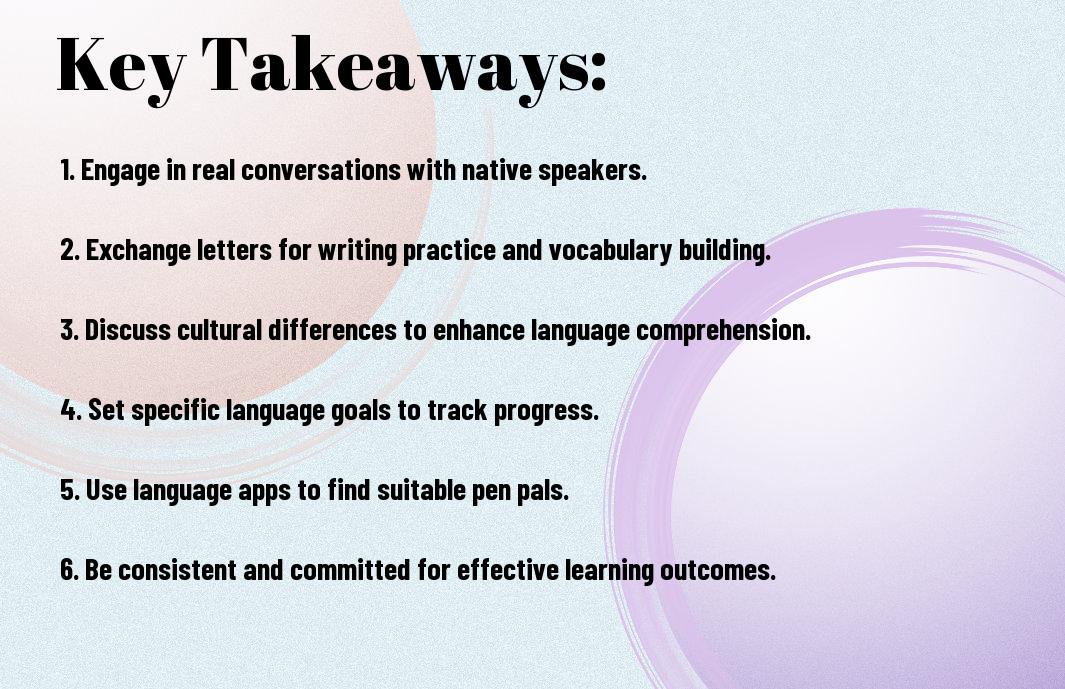
Key Takeaways:

To effectively learn a language through pen pal programs, consider the following points:

  • Establishing a consistent exchange of letters or emails with your pen pal is important to improve your writing and reading skills in the target language.
  • Practicing conversational language through pen pal programs can help you develop your listening and speaking skills, even if you’re not interacting in person, by discussing cultural differences and sharing personal experiences.
  • Using authentic materials and relevant topics in your pen pal exchanges can enhance your vocabulary and grammar skills, making the learning process more engaging and effective.

Benefits of Pen Pal Programs

While participating in a pen pal program, you will discover numerous advantages that can enhance your language learning experience. You will have the opportunity to practice your writing and speaking skills, gain insight into different cultures, and develop meaningful relationships with people from diverse backgrounds.

Improved Writing Skills

Any language learner can benefit from writing to a pen pal, as it allows you to practice your writing skills in a real-life setting, helping you to improve your grammar, vocabulary, and communication skills, which will make you a more confident writer.

Cultural Exchange and Awareness

Among the most significant benefits of pen pal programs is the cultural exchange and awareness you will gain, as you will be able to learn about your pen pal’s daily life, customs, and traditions, and share your own with them, broadening your understanding of the world.

Consequently, as you engage in cultural exchange with your pen pal, you will develop a deeper appreciation for the nuances of language and culture, and your interactions will become more meaningful and authentic, allowing you to build a stronger connection with your pen pal and gain a more comprehensive understanding of their way of life, which will enrich your language learning experience.

Choosing a Pen Pal Program

If you’re interested in learning a language through a pen pal program, you’ll need to select a program that suits your needs and goals. You can choose from various options, including online platforms, language exchange websites, and forums.

Online Platforms and Forums

Among the numerous options available, you’ll find online platforms and forums that connect you with native speakers of your target language. You can search for language learners with similar interests and practice your writing skills through email exchanges or online discussions.

Language Exchange Websites

At the forefront of language learning are websites dedicated to language exchange, where you can find a language partner and engage in language exchange activities, such as writing, speaking, or even video calls.

The language exchange websites often provide a range of tools and features to facilitate your language learning journey, including language lessons, vocabulary exercises, and pronunciation practice. You can browse profiles, find a suitable language partner, and start exchanging messages, which will help you improve your reading and writing skills in your target language, and your language partner can benefit from practicing their language skills with you.

Effective Communication

Keep in mind that effective communication is key to a successful pen pal experience. You will be exchanging letters or messages with someone from a different culture, so it’s necessary to be clear and respectful in your interactions.

Setting Clear Goals and Expectations

Adeptly, you can establish a strong foundation by setting clear goals and expectations with your pen pal, ensuring you both understand what you hope to achieve from the exchange.

Active Listening and Responding

Anyway, you will find that actively listening to your pen pal and responding thoughtfully is vital to building a strong connection, as it shows you value their thoughts and opinions.

Effective communication is a two-way street, and as you engage in active listening and responding, you will find that your pen pal relationship deepens, and your language skills improve significantly, allowing you to better understand your partner’s perspective and express your own thoughts more clearly.

Language Learning Tips

Not only will you improve your language skills, but you’ll also gain a new friend. Consider the following:

  • Practice regularly
  • Use authentic materials

You can find more information on Engaging English Language Learners with Virtual Pen Pals. The key to success lies in your dedication.

Consistency and Frequency

Albeit challenging, maintaining a consistent schedule is important for your progress. You should aim to practice with your pen pal at least once a week, using a variety of topics to keep your conversations engaging.

Immersion and Authentic Materials

Along with regular practice, immersing yourself in the language is vital. You can achieve this by using authentic materials such as news articles, videos, and social media posts.

Authentic materials will help you get used to the language as it’s spoken in real-life situations, allowing you to pick up on nuances and expressions that you might not learn through traditional textbooks. You’ll be able to understand different accents, dialects, and contexts, making your language skills more versatile and effective.

Overcoming Challenges

To succeed in a pen pal program, you will encounter obstacles that test your dedication. You must be prepared to face challenges and find ways to overcome them, ensuring your progress is not hindered.

Dealing with Language Barriers

Behind every language barrier lies an opportunity to learn and improve. You will encounter unfamiliar words and phrases, but this is a natural part of the learning process, and you can use tools like dictionaries or translation apps to help you understand.

Maintaining Motivation

Any successful language learner knows that motivation is key to achieving your goals. You need to stay motivated and engaged, celebrating your small victories along the way, which will help you stay on track and continue making progress.

Further, maintaining motivation requires setting achievable goals and tracking your progress, allowing you to see how far you’ve come and making adjustments as needed to stay on course, and by doing so, you will find that your enthusiasm and interest in the language will continue to grow, driving you to reach your full potential as a language learner.

Evaluation and Progress

Unlike other language learning methods, pen pal programs allow you to assess your progress in a more personal way, as you receive feedback from your partner and see improvements in your writing and comprehension skills over time.

Tracking Progress and Growth

Around the time you start noticing significant improvements, you can reflect on your journey and identify areas where you’ve made the most progress, helping you to stay motivated and focused on your goals.

Adjusting Strategies as Needed

Behind every successful language learner is a willingness to adapt and change their approach, and as you navigate your pen pal program, you’ll need to be flexible and adjust your strategies to ensure you’re getting the most out of the experience.

With this in mind, you’ll be able to refine your approach and make adjustments as needed, whether it’s changing the frequency of your letters or exploring new topics to discuss with your partner, allowing you to continue growing and improving your language skills in a way that’s tailored to your needs and learning style.

Final Words

From above, you now know the benefits of learning a language through pen pal programs. You can practice your writing and speaking skills with a native speaker, enhancing your language proficiency. To get started, you can visit Language exchange – InterPals Penpals to find a language partner. By following these steps, you will improve your language skills and gain a new friend, making your language learning journey enjoyable and effective for you.

FAQ

Q: What are the benefits of learning a language through pen pal programs?

A: Learning a language through pen pal programs offers several benefits, including improved writing and communication skills, cultural immersion, and the opportunity to practice language skills in a real-life setting. By exchanging letters or emails with a native speaker, you can gain a deeper understanding of the language and its nuances, as well as insights into the daily life and customs of the country where the language is spoken. Additionally, pen pal programs can be a fun and motivating way to learn a language, as you have the opportunity to interact with someone who is also interested in language exchange.

Q: How can I find a pen pal to practice a language with?

A: There are several ways to find a pen pal to practice a language with, including online language exchange websites, social media platforms, and language schools or language exchange events. Many online platforms, such as language learning apps and forums, offer pen pal matching services that connect you with a native speaker of the language you want to learn. You can also join language exchange groups on social media or attend language meetups in your area to find someone to practice with. When looking for a pen pal, consider factors such as language level, interests, and communication style to ensure a compatible match.

Q: What are some tips for effectively learning a language through a pen pal program?

A: To effectively learn a language through a pen pal program, it’s helpful to set clear goals and expectations with your pen pal, such as the frequency and topic of exchanges, and to be consistent in your communication. You should also try to use the target language as much as possible in your exchanges, even if you make mistakes, and ask your pen pal to correct you and provide feedback. Additionally, consider using a variety of language learning materials, such as language learning apps or textbooks, to supplement your pen pal exchanges and provide additional practice opportunities. By being consistent, persistent, and open to feedback, you can make the most of a pen pal program and achieve your language learning goals.

How to Learn Phrases for Real-Life Conversations

You want to improve your language skills to engage in everyday conversations with ease. Your goal is to express yourself clearly and confidently. Learning phrases for real-life conversations is an effective way to achieve this. You will discover how to build your vocabulary and practice your speaking skills, enabling you to communicate effectively in various situations, from casual conversations to formal discussions, and enhance your overall language proficiency.

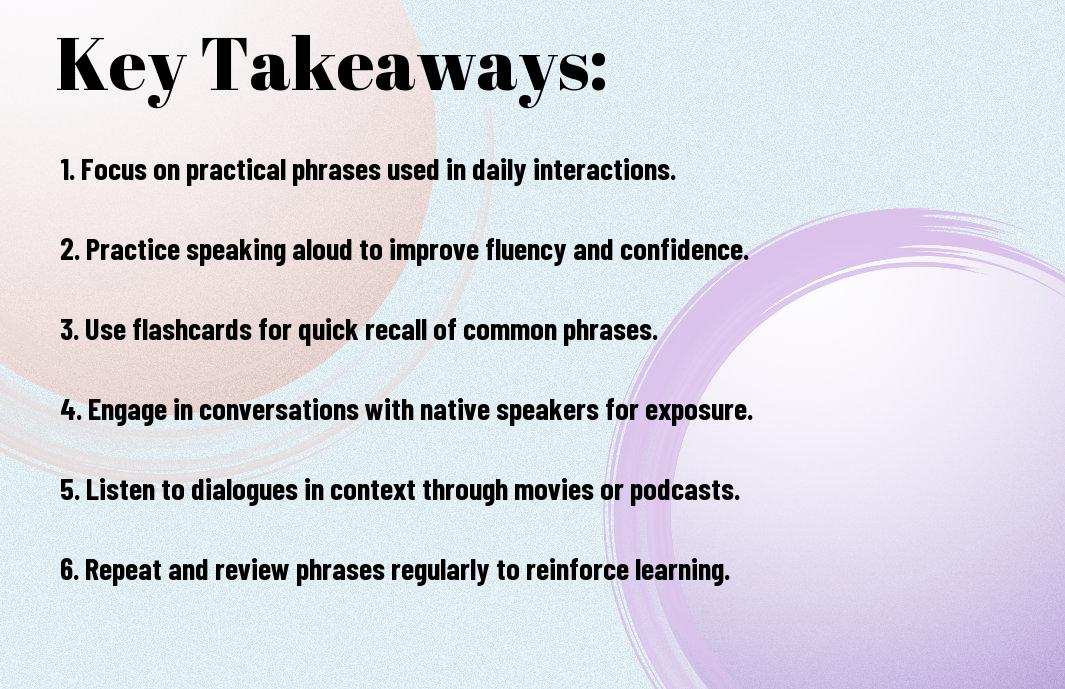
Key Takeaways:

To improve your ability to learn phrases for real-life conversations, consider the following points:

  • Focus on Contextual Learning, which involves studying phrases within the context of actual conversations to better understand their usage and application in different situations.
  • Develop a habit of Active Listening by paying close attention to how native speakers use phrases in everyday conversations, and try to mimic their pronunciation and intonation.
  • Practice Conversational Role-Playing to apply learned phrases in simulated conversations, helping you to build confidence and fluency in using new phrases in Real-Life Interactions.

Setting Goals

A well-defined goal is imperative for learning phrases in a foreign language, as it helps you stay focused and motivated throughout the learning process. You need to determine what you want to achieve and set specific, attainable objectives.

Identifying your language needs

Linguistic proficiency is key to effective communication, and you must assess your current level and identify areas that need improvement, considering the situations and contexts in which you will use the language.

Creating a realistic plan

Beneath the surface of language learning lies a complex process, and you should break down your goal into smaller, manageable tasks, allowing you to track progress and make adjustments as needed.

Your plan should be tailored to your learning style, schedule, and resources, taking into account the time and effort required to achieve your objectives, and you should establish a routine that includes regular practice and review to reinforce new language skills.

Choosing the Right Resources

Clearly, selecting the most effective tools is vital for learning phrases in real-life conversations. You will need to explore various options to find what works best for your learning style and goals.

Language learning apps and software

Right from the start, you should consider language learning apps and software that offer interactive lessons and exercises to help you learn phrases in context. You can try out a few to see which one suits your needs.

Phrasebooks and language exchange websites

Beneath the surface of traditional learning methods, you can find phrasebooks and language exchange websites that provide valuable resources for learning phrases. You can use these to supplement your learning and get feedback from native speakers.

Indeed, phrasebooks and language exchange websites can be extremely helpful in your journey to learn phrases for real-life conversations. You can use phrasebooks to learn common expressions and phrases, while language exchange websites connect you with native speakers who can help you practice your speaking skills and get feedback on your pronunciation and grammar.

Practicing Active Listening

All language learners can benefit from practicing active listening to improve their conversation skills. You will be able to pick up phrases and expressions more easily by paying attention to how native speakers communicate.

Paying attention to native speakers

Around every conversation, you have the chance to learn something new by observing how native speakers interact with each other. You can do this by watching TV shows, listening to podcasts, or engaging in conversations with native speakers.

Repeating and memorizing phrases

Actively repeating phrases out loud will help you memorize them more effectively. You can practice repeating phrases in front of a mirror or with a language exchange partner to get feedback on your pronunciation.

At this stage, you should focus on repeating phrases in context to help you understand how they are used in real-life conversations. You can try to recall phrases from your favorite TV show or movie and use them in your own conversations to make them sound more natural and authentic. As you practice, you will start to feel more confident in your ability to use phrases correctly and engage in meaningful conversations with native speakers.

Building Vocabulary

Keep in mind that learning phrases is not just about memorizing words, but also about understanding their context and usage in real-life conversations. You will need to learn how to use vocabulary in a way that sounds natural and fluent.

Learning idiomatic expressions

Prior to exploring into complex conversations, you should focus on learning idiomatic expressions that are commonly used in everyday dialogue. You will find that these expressions can help you convey your thoughts and ideas more effectively.

Expanding your phrase repertoire

Among the many ways to improve your conversation skills, learning new phrases and expressions is one of the most effective. You can start by learning phrases that are relevant to your daily life and interests, and then gradually move on to more complex topics.

The key to expanding your phrase repertoire is to practice consistently and engage in conversations with native speakers. You can also listen to podcasts, watch TV shows, and read books to get a better sense of how phrases are used in context. As you continue to learn and practice, you will find that your ability to express yourself in conversations will improve significantly, and you will be able to communicate more confidently and effectively.

Engaging in Conversations

Despite the challenges, engaging in conversations is a key part of learning phrases for real-life conversations. You will learn to express yourself and understand others, which will help you to improve your language skills and build confidence.

Finding language exchange partners

Above all, finding someone to practice with is important. You can look for language exchange partners online or in your local community, and practice speaking with them regularly to improve your conversation skills.

Starting with simple conversations

Below the surface of complex conversations, simple ones are the foundation. You start with basic phrases and gradually move to more complex ones, allowing you to build your skills and confidence.

This approach will help you to develop a strong foundation in conversational skills, and as you progress, you will be able to handle more complex conversations with ease, enabling you to express yourself effectively and understand others in various social situations, which is your ultimate goal when learning a new language.

Overcoming Challenges

To learn phrases for real-life conversations, you will inevitably face obstacles. You must be prepared to tackle these challenges head-on, using persistence and dedication to improve your language skills.

Dealing with language barriers

At times, you will encounter words or phrases that are difficult to understand or pronounce. Around these obstacles, you will find that practice and repetition are key to overcoming language barriers and becoming proficient in your target language.

Staying motivated and consistent

With a well-structured study plan, you will be able to stay on track and make steady progress in your language learning journey. You will find that setting achievable goals and tracking your progress helps to maintain your motivation and enthusiasm.

Indeed, staying motivated and consistent is vital to your success in learning phrases for real-life conversations. You will need to continuously challenge yourself to learn new phrases and engage in conversations with native speakers to improve your language skills and build confidence in your ability to communicate effectively.

Conclusion

As a reminder, you can effectively learn phrases for real-life conversations by practicing consistently. You will find numerous resources online, such as Basic English Learning: Phrases to Instantly Improve Your English, to help you improve your skills. By applying these tips, you will enhance your ability to engage in conversations with confidence and precision, ultimately achieving your language learning goals.

FAQ

Q: What is the best way to start learning phrases for real-life conversations?

A: To start learning phrases for real-life conversations, begin by identifying the situations you encounter most frequently, such as ordering food, asking for directions, or introducing yourself. Focus on learning phrases that are relevant to these situations, and practice them in context. You can use language learning apps, watch videos, or listen to podcasts that provide conversations and phrases for different scenarios. Start with basic phrases and gradually move on to more complex ones, and try to practice speaking and listening as much as possible to improve your pronunciation and comprehension.

Q: How can I improve my pronunciation when learning phrases for real-life conversations?

A: Improving your pronunciation when learning phrases for real-life conversations requires consistent practice and exposure to native speakers. Listen to how native speakers pronounce words and phrases, and try to mimic their intonation, rhythm, and stress patterns. You can practice speaking in front of a mirror, record yourself, or speak with a language exchange partner. Pay attention to the individual sounds, syllable stress, and word linking, as these are necessary for clear and accurate pronunciation. Additionally, practice speaking at a natural pace, rather than slowing down or speeding up, to sound more natural and fluent.

Q: Can I learn phrases for real-life conversations without being fluent in the language?

A: Yes, you can learn phrases for real-life conversations without being fluent in the language. Focus on learning phrases that are commonly used in everyday situations, and practice them in context. You can start with basic phrases like greetings, introductions, and basic questions, and gradually move on to more complex phrases. Use visual aids like flashcards, diagrams, or videos to help you associate phrases with their meanings, and practice speaking and listening as much as possible. Even with limited language proficiency, learning key phrases can help you navigate everyday situations and communicate effectively with native speakers, making your interactions more enjoyable and rewarding.

How to Learn Regional Languages of Your Country

As you navigate the diverse landscape of your country, you may find yourself surrounded by languages beyond the dominant one. Your curiosity about these regional languages is natural, and learning them can be a rewarding experience. You can start by exploring the languages spoken in your vicinity, and then look for resources to learn them, such as language classes or online tutorials. By doing so, you will not only broaden your understanding of your country’s cultural heritage, but also enhance your communication with people from diverse backgrounds.

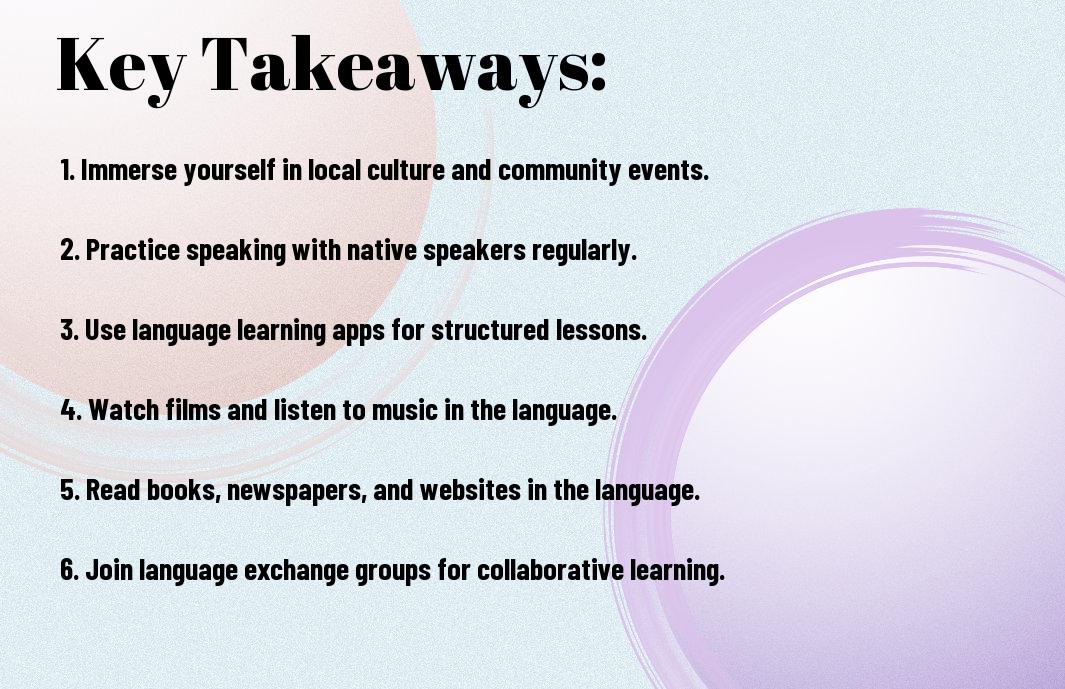
Key Takeaways:

  • Start by identifying the regional languages spoken in your country and understand their cultural significance to appreciate the diversity and richness they bring to the community.
  • Enroll in a language course or find a language exchange partner who is a native speaker of the regional language you want to learn, as this will help you improve pronunciation and get feedback on your progress.
  • Immerse yourself in the language environment by listening to music, watching movies, and reading books in the regional language to enhance comprehension and vocabulary.

Benefits of Learning Regional Languages

Before venturing into the process of learning regional languages, it’s crucial to consider the advantages it brings. Learning regional languages can broaden your understanding of your country’s diverse culture and history, allowing you to connect with people from different backgrounds.

Enhancing Cultural Experience

For instance, when you learn a regional language, you gain a deeper appreciation for the local customs, traditions, and way of life, enabling you to immerse yourself in the culture more fully.

Improving Communication Skills

At the heart of learning a regional language lies the ability to communicate effectively with people who speak it, allowing you to build stronger relationships and navigate everyday situations with ease.

Communication is a vital aspect of learning a regional language, as it enables you to express yourself and understand others in a more nuanced way, which can be particularly helpful in both personal and professional settings, and you will find that your interactions become more meaningful and productive as you become more proficient in the language.

Choosing the Right Language

Some countries have numerous regional languages, making it difficult to decide which one to learn. You can explore programs like the Eurasian Regional Language Program to discover the language that suits your interests. This will help you narrow down your options and choose a language that aligns with your goals.

Identifying Local Dialects

On the path to learning a regional language, you’ll encounter various dialects. You’ll need to identify the local dialects spoken in your desired region to focus your learning efforts. This will enable you to communicate effectively with native speakers and immerse yourself in the local culture.

Selecting Language Learning Resources

Along with choosing the right language, you’ll need to select suitable learning resources. You’ll find a plethora of language learning materials, including textbooks, language learning apps, and online courses. These resources will aid you in developing your language skills and staying motivated throughout your learning journey.

With a wealth of language learning resources at your disposal, you can create a personalized learning plan. You’ll be able to practice speaking, reading, and writing in your chosen language, and track your progress over time. As you continue to learn, you’ll become more confident in your ability to communicate in the regional language, and you’ll be able to connect with the local community on a deeper level. You’ll find that learning a regional language is a rewarding experience that broadens your understanding of the culture and its people.

Language Learning Methods

After deciding to learn a regional language, you will encounter various methods to achieve your goal. You can choose from immersive techniques, traditional classroom instruction, or self-study materials. Your approach will depend on your learning style, preferences, and available resources.

Immersive Learning Techniques

Methods such as language exchange programs, watching regional movies, and listening to local music can help you learn a language quickly. You will be surrounded by the language, allowing you to pick up its nuances and rhythms naturally.

Traditional Classroom Instruction

Immersing yourself in a classroom setting can provide structure and guidance as you learn a regional language. You will have the opportunity to interact with a teacher and fellow students, practicing your speaking and listening skills.

A traditional classroom setting offers a supportive environment where you can ask questions, clarify doubts, and track your progress. You will have access to textbooks, worksheets, and other learning materials, helping you build a strong foundation in the language. As you attend classes regularly, you will become more confident in your ability to communicate in the regional language.

Overcoming Language Barriers

Despite the challenges you may face, learning a regional language can be a rewarding experience. You will be able to connect with people from different backgrounds and understand their culture better. As you progress, you will become more confident in your ability to communicate effectively.

Managing Accent and Pronunciation

With consistent practice, you will be able to improve your accent and pronunciation. You can listen to native speakers, repeat phrases, and record yourself to track your progress. This will help you to develop a more authentic tone and intonation.

Building Vocabulary and Grammar

Parallel to learning new words, you will also need to understand the grammar rules of the language. You can start by learning basic phrases and sentences, and then gradually move on to more complex structures. This will help you to express yourself more accurately and effectively.

Another key aspect of building vocabulary and grammar is to immerse yourself in the language as much as possible. You can read books, watch movies, and engage in conversations with native speakers to improve your comprehension and retention. As you continue to learn, you will find that your vocabulary and grammar skills will improve significantly, enabling you to communicate with greater ease and confidence in your newly acquired language.

Practicing Language Skills

Once again, consistent practice is key to improving your language skills. You can start by speaking with native speakers, either in person or online, to get a feel for the language’s nuances and rhythm.

Conversing with Native Speakers

Skilfully, you can develop your speaking skills by engaging in conversations with native speakers, which will help you to pick up their accent, intonation, and vocabulary.

Engaging in Local Activities

Linguistically, you can improve your language skills by participating in local events, such as festivals, markets, or community gatherings, where you can interact with native speakers and practice your language skills in a real-life setting.

Even more effective is to take it a step further by joining local clubs or groups that align with your interests, allowing you to practice your language skills while doing something you enjoy, making the learning process more enjoyable and increasing your chances of retaining the language.

Staying Motivated

All learners face challenges when acquiring a new language, and your motivation may wane at times, but persistence is key to overcoming these obstacles and achieving your goals.

Setting Achievable Goals

Attainable objectives help you stay focused and driven, allowing you to track your progress and celebrate your successes, which in turn boosts your motivation to continue learning your regional language.

Joining Language Learning Communities

Accessible online forums and language exchange websites provide you with opportunities to practice your language skills and connect with fellow learners, helping you stay motivated and engaged in the learning process.

With these communities, you can find language exchange partners, participate in discussions, and learn from others who are also learning your target language, making the experience more enjoyable and helping you to stay committed to your goal of becoming proficient in your country’s regional language.

Summing up

Upon reflecting on the methods outlined, you will find that learning regional languages of your country is a straightforward process. You can start by immersing yourself in your target language, using online resources and speaking with native speakers. As you progress, you will become more comfortable with your new language, and your interactions with people from other regions will become more meaningful. By taking these steps, you will be able to appreciate your country’s linguistic diversity and connect with your fellow citizens on a deeper level.

FAQ

Q: What are the benefits of learning regional languages of my country?

A: Learning regional languages of your country can have numerous benefits, including enhanced communication with people from diverse backgrounds, improved job opportunities, and a deeper understanding of local cultures. It can also foster a sense of national unity and pride, as you develop a greater appreciation for the diversity and richness of your country’s linguistic heritage. Additionally, being proficient in regional languages can be a valuable skill in both personal and professional settings, allowing you to connect with people and access resources that may not be available otherwise.

Q: How can I start learning a regional language, and what resources are available to support my learning journey?

A: To start learning a regional language, you can begin by exploring online resources such as language learning apps, YouTube channels, and podcasts that offer lessons and tutorials. You can also look for language exchange programs, where you can practice speaking with native speakers and get feedback on your pronunciation and grammar. Furthermore, many regional languages have dedicated language schools, community centers, and cultural organizations that offer classes and workshops. You can also try to immerse yourself in the language by watching regional movies, listening to local music, and reading books and newspapers in the target language. With persistence and dedication, you can make steady progress and become proficient in the regional language of your choice.

Q: Are there any specific tips or strategies for learning regional languages, especially for those who are not familiar with the script or grammar?

A: Yes, there are several tips and strategies that can help you learn a regional language, even if you’re not familiar with the script or grammar. One approach is to start with the basics, such as learning the alphabet, common phrases, and vocabulary related to everyday life. You can also focus on developing your listening and speaking skills by practicing with native speakers, listening to podcasts or audio recordings, and speaking as much as possible. Additionally, you can use flashcards, language learning apps, and other tools to help you memorize new words and phrases. It’s also crucial to be patient and persistent, as learning a new language takes time and effort. You can also try to find a language partner or tutor who can guide you and provide feedback on your progress, helping you to stay motivated and overcome any challenges you may encounter.

Jhere Skip to content