Learning

How to Learn Languages Through Reading Books

You’re about to discover a powerful way to improve your language skills. By reading books in the language you want to learn, you’ll immerse yourself in new vocabulary, grammar, and sentence structures. Your comprehension and pronunciation will improve with each turn of the page. You’ll find that reading books becomes an enjoyable and effective way to learn a new language, and you’ll be motivated to continue your language learning journey.

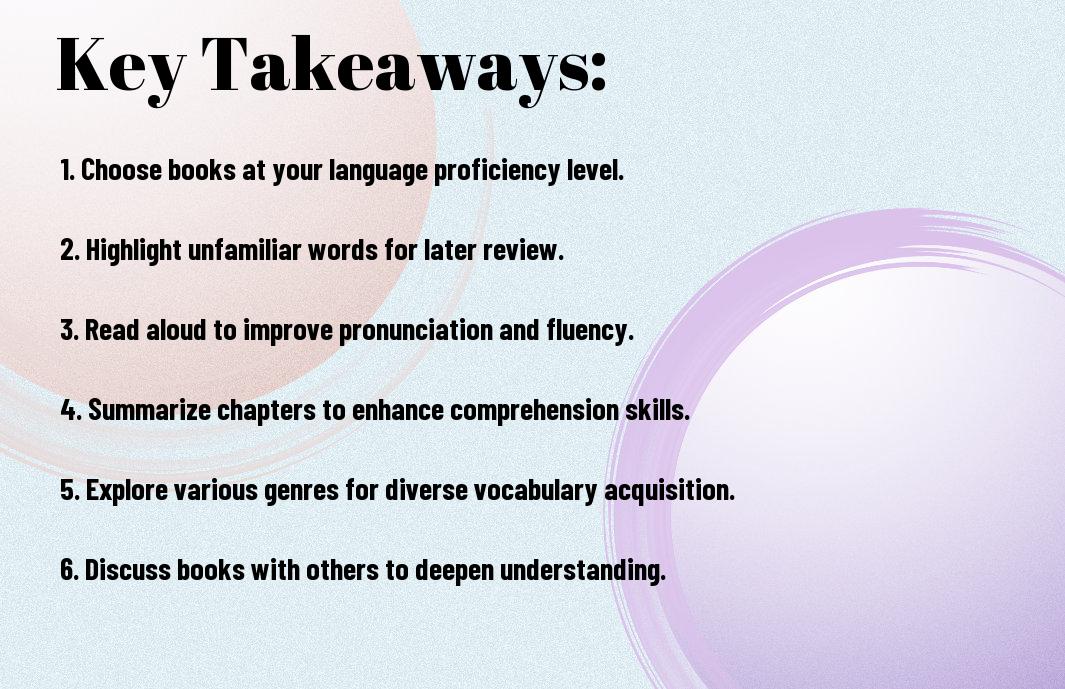
Key Takeaways:

To learn languages through reading books, consider the following points:

  • Start with simple texts and gradually move to more complex materials to build your reading confidence and comprehension skills.
  • Choose books with translations or bilingual editions to help you understand unfamiliar words and phrases.
  • Focus on vocabulary building by looking up unknown words and phrases, and try to use them in context to improve your language retention.
  • Practice active reading by taking notes, summarizing the plot, and discussing the book with others to enhance your language skills and stay engaged.
  • Incorporate language learning tools, such as dictionaries, flashcards, or language learning apps, to support your reading and learning process.

Benefits of Learning Languages Through Reading

While learning a language through reading books, you’ll discover numerous benefits. You can learn more about this method at 21 Century: Is It Still Possible To Learn A Language By Reading, and find out how it can improve your skills.

Improved Vocabulary

Languages are learned through exposure to new words, and reading books is an excellent way to achieve this, as you encounter various terms and phrases that expand your vocabulary.

Enhanced Grammar

Beside the advantages of vocabulary expansion, reading helps you understand grammar rules and sentence structures, making you a more proficient language user.

At this point, you should be aware that enhanced grammar is a key aspect of language learning, and reading books will help you internalize grammatical rules, allowing you to express yourself more effectively in your target language, and you will see improvement in your writing and speaking skills as you progress.
Choosing the Right Books

Now that you’re ready to start learning a language through reading, it’s time to select the books that suit your needs. You’ll want to find books that interest you and match your language level.

Selecting Authors and Genres

Besides your personal preferences, consider the authors and genres that will help you learn the language. You can start with simple texts and gradually move to more complex ones, exploring different genres to find what works best for you.

Considering Language Levels

Generally, your language level will determine the type of books you can handle. You should choose books with vocabulary and grammar that are not too daunting, allowing you to understand and enjoy the content.

Hence, as you assess your language level, you’ll be able to find books that challenge you without overwhelming you. You’ll look for texts that offer a balance between difficulty and comprehension, enabling you to learn and improve your language skills effectively. You can start with books that have simpler language and gradually move to more complex texts, ensuring a steady progress in your language learning journey.

Creating a Reading Routine

After establishing your reading goals, you’ll need to create a routine that works for you. Set aside time each day to read, even if it’s just 15-20 minutes. Consistency is key when it comes to language learning through reading.

Setting Goals and Schedules

Along with your routine, you’ll want to set achievable goals and schedules for your reading. Determine how many pages or chapters you’ll read each day, and stick to it. This will help you stay on track and make progress in your language learning journey.

Tracking Progress and Staying Motivated

One way to stay motivated is to track your progress. Keep a log of what you’ve read, note new vocabulary, and reflect on what you’ve learned. This will help you see how far you’ve come and encourage you to keep going.

Consequently, as you track your progress, you’ll begin to notice improvements in your language skills. You’ll start to understand more complex texts, and your vocabulary will expand. To stay motivated, reward yourself when you reach certain milestones, such as finishing a book or completing a challenging chapter. This will help you stay engaged and committed to your language learning goals, and you’ll find that reading becomes an enjoyable and rewarding experience.

Overcoming Language Barriers

All language learners face barriers when reading books in a foreign language. You will encounter unfamiliar vocabulary, complex grammar, and confusing expressions. However, with persistence and the right strategies, you can overcome these barriers and improve your language skills.

Using Dictionaries and Translations

One of the most effective ways to overcome language barriers is to use dictionaries and translations. You can look up unknown words, phrases, and expressions to understand their meanings and context, helping you to better comprehend the text.

Practicing Active Reading Techniques

With active reading techniques, you can engage more deeply with the text and improve your comprehension. You will learn to identify main ideas, make inferences, and draw conclusions, all of which will help you to become a more proficient language learner.

At this stage, you are ready to take your reading skills to the next level. As you practice active reading, you will find that your ability to understand and interpret complex texts improves dramatically, allowing you to tackle more challenging books and expand your language skills even further, and you will start to see significant progress in your language learning journey.

Engaging with the Material

Not only will reading books help you learn a new language, but it will also keep you engaged and motivated. You’ll start to look forward to your daily reading sessions, eager to find out what happens next in the story or to learn new facts and information.

Taking Notes and Summarizing

On the path to learning a language, taking notes and summarizing what you’ve read is imperative. You’ll be able to track your progress, identify areas where you need improvement, and solidify new vocabulary and grammar rules in your mind.

Discussing with Others and Joining Communities

With the help of online forums and social media, you can connect with other language learners and native speakers. You’ll be able to get feedback on your progress, ask questions, and stay motivated with the support of like-minded individuals.

With this support system in place, you’ll find that your language skills improve rapidly. You’ll be able to discuss the books you’ve read with others, sharing your thoughts and opinions, and learning from their insights and perspectives. This will not only help you improve your language skills, but also give you a deeper understanding of the material and its cultural context.

Measuring Progress and Setting New Goals

Despite the challenges you may face, tracking your progress is imperative to learning a language through reading books. You’ll be able to identify areas that need improvement and set achievable goals.

Evaluating Language Skills

On occasion, take a step back to assess your language skills. You’ll notice improvements in comprehension, vocabulary, and grammar, which will help you refine your reading strategy.

Adjusting Reading Strategies

About halfway through your learning journey, you may need to adjust your approach. You can try different genres, authors, or difficulty levels to keep your reading engaging and challenging.

In addition to adjusting your reading strategies, you’ll find that your learning pace and style may also evolve. As you become more comfortable with the language, you can tackle more complex texts, explore different topics, and develop a more nuanced understanding of the language, allowing you to refine your goals and continue making progress in your language learning journey.

To wrap up

As a reminder, you’ve learned that reading books is a simple yet effective way to improve your language skills. You’ve discovered how to choose the right books, set goals, and track your progress. By applying these tips, you’ll enhance your vocabulary, grammar, and comprehension. Your journey to mastering a new language will be enjoyable and rewarding, and you’ll become a proficient reader in no time, unlocking a world of knowledge and opportunities.

FAQ

Q: What are the benefits of learning languages through reading books?

A: Learning a language through reading books can be highly effective as it exposes you to a wide range of vocabulary, grammar, and sentence structures in context. As you read, you’ll encounter different writing styles, genres, and topics, which can help you develop a deeper understanding of the language and its nuances. Moreover, reading books can improve your comprehension, vocabulary, and pronunciation, allowing you to become more confident and fluent in the language. By starting with books that match your current level and interests, you can make steady progress and stay motivated in your language learning journey.

Q: How do I choose the right books for language learning through reading?

A: Choosing the right books is crucial for effective language learning through reading. Start by selecting books that align with your current language level, whether you’re a beginner, intermediate, or advanced learner. You can choose books from various genres, such as fiction, non-fiction, or a combination of both, depending on your interests. Look for books with simpler language and shorter sentences if you’re a beginner, and gradually move to more complex texts as your skills improve. You can also consider books with translations or bilingual editions to help you understand difficult passages. Additionally, join online book clubs or language learning communities to discuss your progress and get recommendations from fellow learners.

Q: What strategies can I use to get the most out of reading books for language learning?

A: To maximize your language learning through reading, use a combination of strategies. Begin by setting achievable goals, such as reading a certain number of pages or chapters per week. As you read, take notes on new vocabulary, idioms, and phrases, and look them up in a dictionary to understand their meanings and usage. You can also create flashcards or use language learning apps to help you memorize new words. Furthermore, practice active reading by summarizing the plot, identifying main characters, and analyzing the author’s writing style. Discussing what you’ve read with a language exchange partner or tutor can also help you improve your speaking and listening skills, while reinforcing your understanding of the language.

How to Set Realistic Language Learning Goals

As you begin on your language learning journey, you’ll need to define your objectives. Your goals will serve as a roadmap, guiding your progress and motivating you to stay on track. You’ll want to set targets that are achievable, yet challenging enough to prompt improvement. By doing so, you’ll be able to monitor your advancement and make adjustments as needed, ultimately leading to successful language acquisition. In this article, you’ll learn how to establish effective goals, tailored to your needs and abilities.

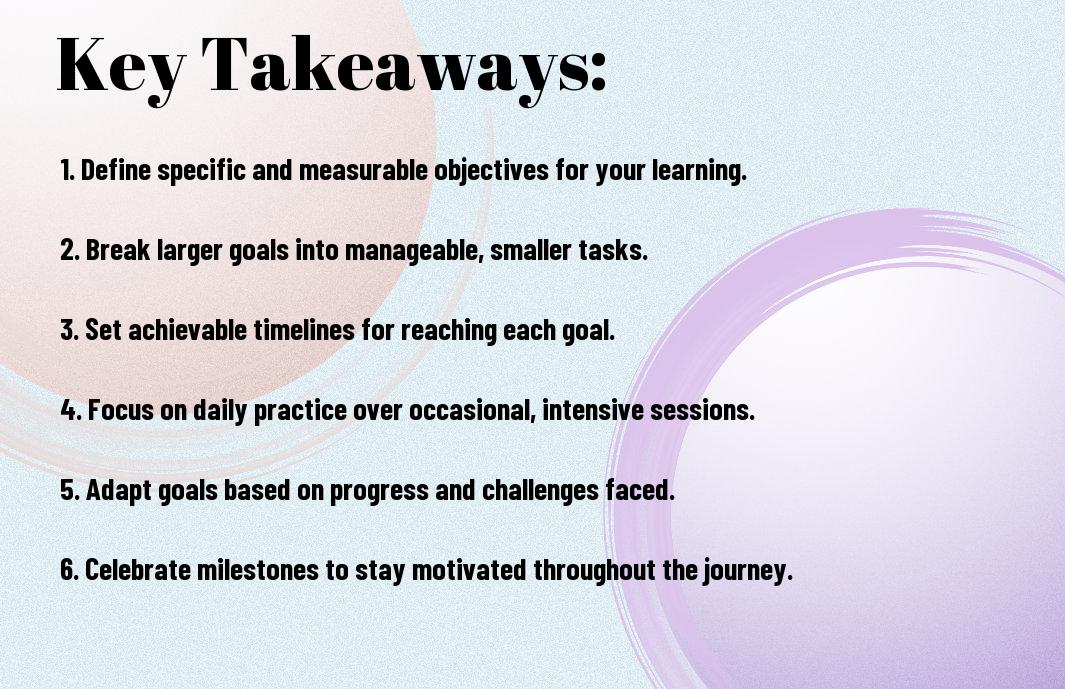
Key Takeaways:

To achieve success in language learning, it’s imperative to establish a clear plan. Here are the main points to consider:

  • Setting Specific objectives is vital for language learners, as it helps to maintain focus and direction throughout the learning process.
  • Establishing Measurable milestones enables learners to track their progress and make adjustments to their strategy as needed, ensuring they stay on track.
  • Creating a Flexible schedule allows learners to accommodate unexpected setbacks and make adjustments to their goals, promoting a more effective and sustainable learning experience.

Setting the Foundation

A well-structured approach to language learning begins with understanding your objectives, as outlined in What Are Your Language Learning Goals? – SmarterLanguage, to guide your progress.

Defining Realistic Goals

For instance, you should consider what you want to achieve and by when, to set a clear direction for your learning journey, ensuring your goals are specific and attainable.

Assessing Current Language Level

On the path to setting realistic goals, you need to evaluate your current language proficiency to determine where to start and how to proceed effectively.

Even as you assess your language level, you will find that understanding your strengths and weaknesses helps you to create a more tailored approach to learning, allowing you to focus on areas that need improvement and build upon your existing knowledge.

Identifying Motivation

Any language learner’s journey begins with understanding what drives them to learn a new language. Your motivation will serve as the foundation for your goals, helping you stay focused and motivated throughout the process.

Determining Why You Want to Learn a Language

Identifying your reasons for learning a language is important to setting realistic goals. You need to consider what sparked your interest in the language and what you hope to achieve by learning it.

Finding Your Inner Drive

Inner motivations such as personal satisfaction or cultural interest can be powerful drivers of your language learning journey. You should explore what internally motivates you to learn a language, as this will help you stay committed to your goals.

In fact, understanding your inner drive can help you overcome obstacles and stay motivated even when faced with challenging language learning tasks, allowing you to make steady progress towards your goals and ultimately achieve success in your language learning endeavor, as you will be driven by a genuine desire to learn and improve your language skills.

Breaking Down Goals

To achieve your language learning objectives, you need to break them down into manageable parts. This involves dividing your goals into short-term and long-term targets, allowing you to focus on specific tasks and track your progress.

Short-Term Objectives

At this stage, you identify what you want to accomplish in a short period, such as learning basic phrases or vocabulary within a few weeks. You can set daily or weekly targets, like practicing a language for 30 minutes each day.

Long-Term Aspirations

With a clear understanding of your short-term objectives, you can now set your long-term goals, such as becoming fluent in a language or passing a proficiency test. You should consider your motivation and available time when setting these goals.

Consequently, your long-term aspirations will serve as a guiding force, helping you stay motivated and committed to your language learning journey. As you progress, you can adjust your goals to reflect your improving skills and knowledge, ensuring you continue to challenge yourself and make steady progress towards becoming proficient in your target language.

Creating a Learning Plan

Now that you have set your language learning goals, it’s time to create a plan to achieve them. You will need to break down your long-term goals into smaller, manageable tasks to make steady progress.

Setting Achievable Milestones

About the time you start learning a language, you should identify key milestones that mark your progress. You will be able to track your advancement and stay motivated by setting these milestones.

Developing a Study Schedule

One of the most effective ways to learn a language is to establish a regular study routine. You should allocate a specific time each day or week to focus on language learning, ensuring consistent progress.

In addition to setting a study schedule, you will need to consider your learning style, availability, and goals when planning your routine. You should prioritize tasks such as vocabulary building, grammar practice, and speaking, and allocate sufficient time for each activity to optimize your learning experience.

Overcoming Obstacles

Many language learners encounter setbacks that hinder their progress, but with the right mindset, you can overcome these obstacles and stay on track with your language learning goals.

Anticipating Challenges

Along with setting realistic goals, you should also consider the potential challenges you may face, such as lack of motivation or limited practice time, and think about how you will address them.

Finding Solutions

Anticipating potential problems will help you develop strategies to overcome them, and you can start by identifying the resources you need to stay motivated and engaged in your language learning journey.

A key part of finding solutions is to break down larger challenges into smaller, manageable tasks, and you can do this by creating a schedule that allows you to practice consistently, even if it’s just for a few minutes each day, and by seeking out language exchange partners or online communities to support your learning.

Tracking Progress

Once again, setting realistic goals is not enough; you must also track your progress. You can find inspiration for tracking methods on forums like What are some good language learning goals you’ve set?, where language learners share their experiences.

Monitoring Your Improvement

One way to monitor your improvement is to keep a language learning journal, where you note your progress, setbacks, and lessons learned.

Adjusting Your Approach

Below the surface of tracking progress lies the need to adjust your approach as you learn and grow, making changes to optimize your language learning strategy.

Even as you make progress, you may find that certain methods or materials are not working for you, and it’s imperative to be willing to adjust your approach to stay on track and achieve your goals, considering what works best for your learning style and schedule.

Conclusion

Drawing together the pieces of language learning, you now have a clear roadmap to set realistic goals. You will be able to create a schedule and track your progress, helping you stay motivated. By setting achievable targets, you will make steady progress and improve your language skills. Your efforts will pay off, and you will become a proficient language learner, capable of communicating effectively in your desired language.

FAQ

Q: What are the key considerations when setting realistic language learning goals?

A: When setting realistic language learning goals, it’s important to consider your current language proficiency level, the amount of time you can dedicate to learning each day or week, and your motivation for learning the language. Be honest about your schedule and capabilities to avoid setting yourself up for disappointment. Break down your long-term goals into smaller, achievable milestones, and prioritize consistency over speed. This will help you stay motivated and track your progress effectively.

Q: How can I create a personalized language learning plan that suits my needs and goals?

A: To create a personalized language learning plan, start by identifying your strengths, weaknesses, and learning style. If you’re a visual learner, incorporate more videos and images into your study routine. If you prefer auditory learning, focus on podcasts and audio materials. Set specific, measurable objectives, such as improving your reading comprehension or enhancing your vocabulary within a certain timeframe. Use a planner, app, or spreadsheet to schedule your study sessions and track your progress. Regularly assess and adjust your plan as needed to ensure you’re on track to meet your goals.

Q: What strategies can I use to stay motivated and track progress towards my language learning goals?

A: Staying motivated and tracking progress is vital to achieving your language learning goals. One effective strategy is to find a language learning buddy or join a community of learners for support and accountability. Celebrate your achievements, no matter how small, to maintain a positive mindset. Use language learning apps or journals to monitor your progress, and adjust your goals as needed. Immerse yourself in the language by watching TV shows or movies, listening to music, or reading books in the target language. This will help you stay engaged and motivated, making the learning process more enjoyable and increasing your chances of success.

The Role of Technology in Modern Language Learning

As you commence on learning a new language, you’ll discover that technology plays a significant role in enhancing your learning experience. Your ability to access various resources and tools will help you stay engaged and motivated. With the plethora of language learning apps, online courses, and multimedia materials available, you can now personalize your learning journey to suit your needs and skills. You will find that technology helps you to practice, track your progress, and connect with native speakers, making language learning more efficient and enjoyable.

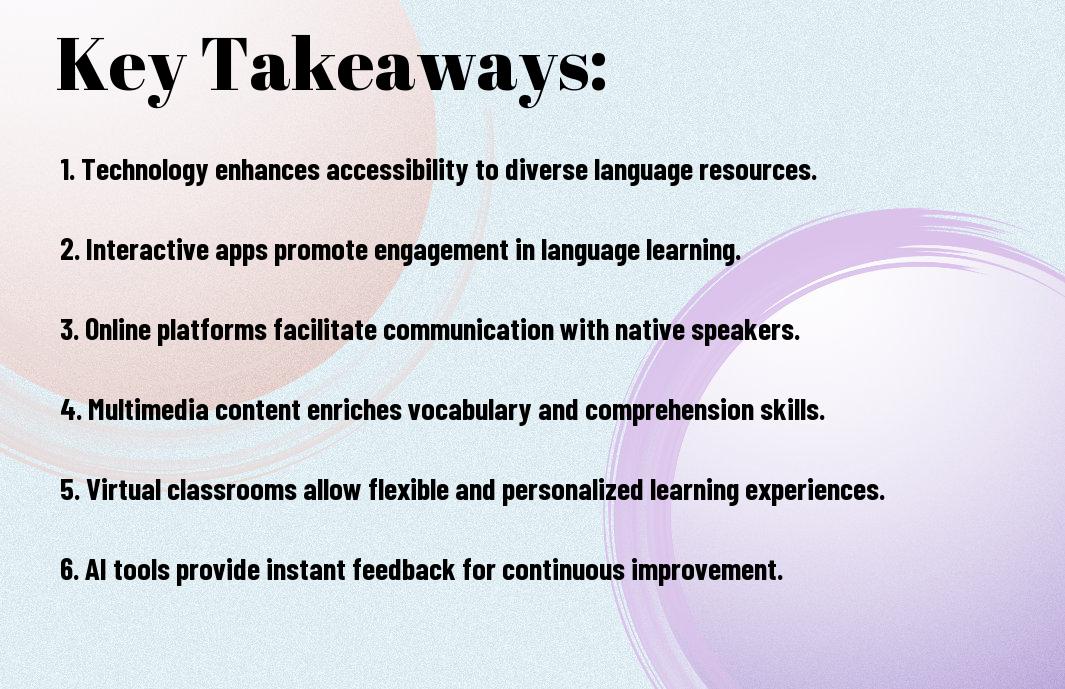
Key Takeaways:

  • The integration of technology in language learning has increased accessibility and flexibility for learners, allowing them to learn at their own pace and from any location.
  • Online platforms and mobile apps have made it possible for learners to engage in interactive lessons and virtual conversations, improving their pronunciation and communication skills.
  • The use of artificial intelligence and data analytics in language learning software enables personalized learning experiences, providing learners with tailored feedback and assessment to help them achieve their language goals.

The Evolution of Language Learning

While exploring the history of language learning, you will discover that it has undergone significant transformations over the years, influenced by various factors, including technological advancements, changing learner needs, and innovative teaching methods.

Traditional Methods

Approximately, you will find that traditional language learning methods relied heavily on textbooks, grammar rules, and language labs, which often resulted in a rigid and ineffective learning experience, limiting your ability to engage with the language in a more immersive and interactive way.

Technological Advancements

Emerging developments in technology have revolutionized the way you learn languages, providing access to a wide range of digital resources, including language learning apps, online courses, and virtual classrooms, which enable you to learn at your own pace and convenience.

Further, as you probe deeper into the world of technological advancements in language learning, you will find that these innovations offer personalized learning experiences, real-time feedback, and opportunities to interact with native speakers, making the learning process more engaging, effective, and enjoyable, allowing you to achieve your language learning goals more efficiently and confidently.

Digital Tools and Resources

Assuming you are looking to improve your language skills, you will find a plethora of digital tools and resources at your disposal, designed to cater to your unique learning needs and styles, enabling you to learn more efficiently.

Language Learning Apps

Any serious language learner can benefit from utilizing language learning apps, which provide you with an interactive and immersive experience, allowing you to practice your language skills on-the-go, and receive instant feedback on your progress.

Online Courses and Tutorials

Above all, online courses and tutorials offer you the flexibility to learn at your own pace, with access to a wide range of languages, courses, and instructors, helping you to stay motivated and engaged throughout your learning journey.

Hence, as you explore online courses and tutorials, you will discover that many platforms provide you with personalized learning plans, video lessons, and opportunities to practice speaking with native speakers, which can significantly enhance your language proficiency and fluency, ultimately helping you to achieve your language learning goals.

Virtual Classrooms and Communities

Despite the physical distance, virtual classrooms and communities enable you to connect with fellow language learners and instructors from around the world, fostering a sense of belonging and motivation in your language learning journey.

Online Collaboration Platforms

Through online collaboration platforms, you can engage in discussions, share resources, and participate in activities with your peers, allowing you to practice your language skills in a supportive and interactive environment.

Social Media and Language Exchange

About the role of social media in language learning, you can leverage platforms to find language exchange partners, join language learning groups, and access a wealth of language learning resources, facilitating your progress and enhancing your overall language learning experience.

Social media platforms provide you with an opportunity to practice your language skills in a real-world context, enabling you to engage with native speakers, share your thoughts and ideas, and get feedback on your language usage, which can help you improve your language proficiency and build your confidence in using the language.

Artificial Intelligence and Adaptive Learning

Your language learning journey can be significantly enhanced by leveraging artificial intelligence and adaptive learning. This technology enables you to learn at your own pace, receiving real-time feedback and adjusting the difficulty level according to your progress.

AI-Powered Language Tools

By utilizing AI-powered language tools, you can access a wide range of interactive lessons, exercises, and quizzes tailored to your needs and goals. These tools provide you with an immersive learning experience, helping you develop your language skills efficiently.

Personalized Learning Experiences

With the help of AI-driven algorithms, you can create a customized learning path that suits your learning style, interests, and abilities. This personalized approach allows you to focus on areas where you need improvement, maximizing your learning outcomes.

Consequently, you will find that your language skills improve rapidly as you engage with the content that resonates with you the most. Your progress is constantly monitored, and the AI system adapts to your learning patterns, ensuring that you stay motivated and engaged throughout your language learning journey, ultimately helping you achieve your goals more effectively.

Challenges and Limitations

Keep in mind that technology integration in language learning comes with its own set of challenges. You will encounter limitations, such as infrastructure and technical issues, that can hinder your progress.

Accessibility and Equity

For your consideration, uneven access to technology and internet connectivity can affect your ability to participate in online language learning activities, making it difficult to achieve your goals.

Effective Integration and Implementation

On the other hand, you need to consider how to effectively integrate technology into your language learning routine, ensuring that it supports your learning objectives and doesn’t become a distraction.

For instance, you can start by identifying your learning needs and goals, and then selecting the most suitable technological tools and resources to help you achieve them, such as language learning apps, online courses, or virtual language exchange platforms, and by doing so, you will be able to maximize the benefits of technology in your language learning journey.

Future Directions and Innovations

After exploring the current state of technology in language learning, you can look forward to exciting developments. For more information, visit The Role of Technology in Language Learning: Tools and Techniques to discover the latest research.

Emerging Trends and Technologies

Alongside existing technologies, you will encounter new innovations that enhance your learning experience, offering personalized and interactive lessons.

Potential Impact on Language Education

To fully leverage technology, you should consider how it can transform your language learning journey, making it more engaging and effective.

Potential applications of technology in language education are vast, and as you explore these opportunities, you will find that they can help you develop a more nuanced understanding of languages, allowing you to communicate more confidently and accurately, and you can apply this knowledge in various contexts, from personal to professional settings.

Conclusion

Considering all points, you can see that technology plays a significant role in modern language learning, enhancing your learning experience. You have access to various tools and resources that make learning more engaging and effective. Your ability to practice and improve your language skills is greatly increased, allowing you to achieve your goals more efficiently. As you continue to learn, you will find that technology is an invaluable aid in your language learning journey.

FAQ

Q: What impact has technology had on modern language learning, and how has it changed the way we approach language acquisition?

A: Technology has significantly impacted modern language learning, providing learners with unprecedented access to language resources, interactive tools, and opportunities for practice. With the rise of online platforms, mobile apps, and social media, learners can now engage with languages in more immersive and personalized ways. This shift has enabled a more self-directed and flexible approach to language learning, allowing individuals to learn at their own pace and according to their interests. Moreover, technology has facilitated connection with native speakers and language exchange partners worldwide, enhancing the potential for authentic language practice and cultural exchange.

Q: How do digital tools and platforms support language learners in developing their reading, writing, listening, and speaking skills?

A: Digital tools and platforms offer a wide range of activities and resources designed to target specific language skills. For reading, learners can access e-books, online newspapers, and blogs that cater to their level and interests. Writing skills are developed through interactive exercises, grammar guides, and prompts for creative writing. Listening and speaking skills are enhanced through podcasts, audiobooks, video lectures, and language exchange apps that allow for oral practice with native speakers or AI-powered chatbots. Additionally, multimedia resources such as videos and interactive quizzes provide engaging and dynamic ways to learn vocabulary and grammar, making the learning process more enjoyable and effective.

Q: What are some of the challenges associated with using technology for language learning, and how can learners overcome these challenges to achieve their goals?

A: Despite the numerous benefits, there are several challenges associated with using technology for language learning, including the potential for distraction, the need for self-motivation, and issues related to the quality and reliability of online resources. To overcome these challenges, learners should set clear goals and schedules, select high-quality, reputable learning platforms, and balance screen time with face-to-face interaction and physical activity. Moreover, engaging in a community of learners, whether online or offline, can provide support, motivation, and opportunities for practice. By being aware of these challenges and adopting strategies to manage them, learners can maximize the benefits of technology in their language learning journey and achieve significant progress in their target language.

How Learning a New Language Shapes Identity

As you initiate on the journey of acquiring a new language, you begin to unravel the intricacies of your own identity. Your sense of self is woven into the fabric of the words you speak, and the languages you know. Delving into the depths of linguistic expression, you may wonder, how does the language you speak influence your perception of yourself? For insight, you can explore How Much Does the Language We Speak Shape Our Identity, and discover the profound impact it has on your inner world, as your newfound language skilfully reshapes your thoughts, emotions, and ultimately, your very being.

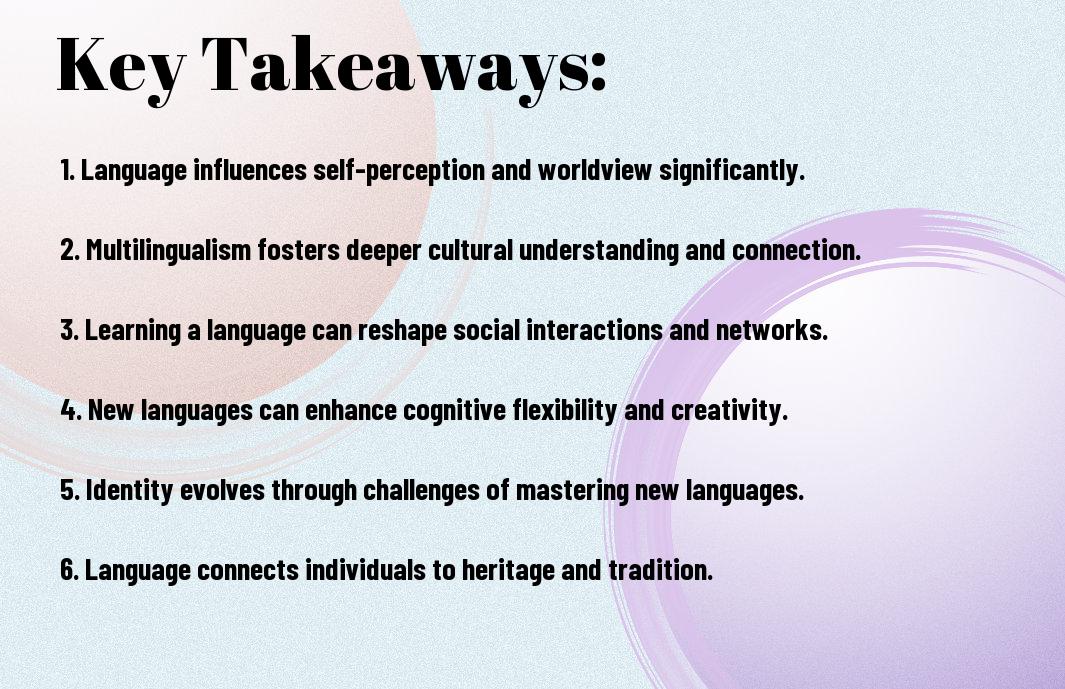
Key Takeaways:

  • Learning a new language can significantly influence an individual’s self-perception and identity formation, as it exposes them to new cultural norms and ways of thinking that can shape their worldview and behavior.
  • The process of acquiring a new language can lead to a shift in perspective, enabling individuals to see themselves and their place in the world from a different linguistic lens, and potentially altering their sense of belonging to a particular community or culture.
  • As individuals become proficient in a new language, they may experience a redefinition of self, as they navigate the complexities of communicating in a new linguistic context and form new social connections that can, in turn, impact their overall identity and personal growth.

The Linguistic Self

To research into language and identity, you must consider how your sense of self is intertwined with the words you speak. Your language shapes your perceptions, influences your thoughts, and molds your understanding of the world.

Language as a Reflection of Identity

Before you acquire a new language, your identity is already embedded in your native tongue, with its nuances and expressions that define your cultural background and personal experiences. Your language is a mirrored reflection of your soul, revealing your values, beliefs, and attitudes towards life.

The Impact of Language on Thought Patterns

At the heart of language lies the power to shape your thought patterns, as the words you use influence the way you think, categorize, and make sense of the world. Your language can expand or limit your cognitive horizons, depending on its grammatical structures, vocabulary, and idiomatic expressions.

Also, as you learn a new language, you begin to notice how your thoughts are reshaped by the linguistic frameworks you acquire, allowing you to perceive your surroundings from novel perspectives, and to develop a more nuanced understanding of yourself and your place in the world, as your linguistic self evolves and adapts to the new linguistic landscape.

Cultural Immersion

Any journey into a new language is a journey into the depths of your own identity, as you navigate the complexities of a foreign culture and find yourself reflected in its nuances. As you examine deeper into the language, you begin to uncover the intricacies of your own self, and the boundaries between your native and adopted cultures start to blur.

Acquiring a New Language as a Rite of Passage

Beneath the surface of language acquisition lies a transformative process, one that reshapes your perspective and redefines your sense of self. As you initiate on this journey, you are forced to confront your own limitations and biases, and to adapt to new ways of thinking and being.

Navigating Cultural Nuances and Norms

Above language lies a complex web of cultural norms and nuances, which you must learn to navigate in order to truly master the language. As you immerse yourself in the culture, you begin to develop a heightened sense of awareness, one that allows you to pick up on subtle cues and nuances that would have otherwise gone unnoticed.

Consequently, as you continue to navigate the complexities of cultural nuances and norms, you find that your sense of identity begins to shift and evolve. You start to see yourself as a multifaceted being, with multiple layers and dimensions, and your understanding of the world and your place within it becomes more nuanced and sophisticated. Your experiences, perceptions, and interactions with others are filtered through the lens of your new language, and you begin to develop a deeper appreciation for the richness and diversity of human culture, and the many ways in which it can shape and transform your sense of self.

Identity Formation

Now, as you launch on the journey of learning a new language, you begin to uncover the intricate dynamics of identity formation, where the boundaries of self and culture blur, and your sense of being evolves.

The Role of Language in Shaping Self-Perception

The more you immerse yourself in a new language, the more you become aware of the subtle ways it influences your thoughts, emotions, and perceptions, gradually reshaping your self-image and your place within the world.

Language and Belonging: Finding One’s Place

Like a thread weaving through the fabric of your existence, language connects you to a community, a culture, and a history, allowing you to find your footing in unfamiliar territory and to claim your space within a new social landscape.

Understanding the profound impact of language on your sense of belonging, you start to see how it facilitates your navigation of complex social dynamics, enabling you to forge meaningful connections with others and to cultivate a deeper appreciation for the cultural nuances that surround you, as you continue to grow and evolve in your newfound linguistic skin.

Language and Memory

For you, the process of language acquisition is intricately tied to the unfolding of your personal narrative, as the words and phrases you learn become an integral part of your identity and inform your perception of the world around you.

The Intersection of Language and Personal History

Across the landscape of your life, language has played a significant role in shaping your experiences, influencing the way you perceive and interpret the world, and informing your sense of self, as the nuances of language weaving a complex tapestry of meaning and significance.

How Language Influences Recall and Nostalgia

By virtue of its capacity to evoke powerful emotions and associations, language has the ability to transport you back to moments from your past, conjuring feelings of nostalgia and wistfulness, as the sounds and rhythms of a language become inextricably linked to your personal history.

Another notable aspect of the relationship between language and memory is the way in which your native language can influence your recollection of events, with certain words and phrases serving as triggers that unlock a floodgate of memories, allowing you to relive moments from your past with vivid clarity, and inviting you to reflect on the ways in which language has shaped your understanding of yourself and your place in the world.

The Bilingual Mind

Unlike the monolingual mind, your bilingual mind is a dynamic, ever-changing entity, shaped by the constant interplay between two languages, influencing your thoughts, emotions, and perceptions in profound ways.

Cognitive Benefits of Language Acquisition

Cognitively, you will develop enhanced executive control, as your brain navigates the complexities of multiple languages, allowing you to switch between them with greater ease and flexibility, ultimately improving your problem-solving skills and mental agility.

The Complexities of Multilingual Identity

Linguistically, your multilingual identity is a rich tapestry, woven from the threads of different languages, cultures, and experiences, shaping your sense of self and informing your interactions with the world around you, as you navigate the nuances of multiple linguistic and cultural contexts.

In addition, as you probe deeper into the complexities of your multilingual identity, you will begin to uncover the subtle ways in which language influences your thoughts, feelings, and behaviors, and how your multiple languages intersect and interact, creating a unique and ever-evolving sense of self, one that is both deeply personal and profoundly shaped by the languages you speak.

Societal Implications

Your new language becomes a part of your social fabric, influencing how you interact with others and perceive yourself within the community.

Language as a Social Construct

To understand the role of language in shaping identity, you must consider its social context, where language is constructed and negotiated among individuals and groups, reflecting and influencing societal norms and values.

The Politics of Language and Identity

After acquiring a new language, you begin to see how language and identity are intertwined, with language policies and practices often reinforcing social hierarchies and power dynamics, affecting how you position yourself within the social landscape.

Identity, in this sense, becomes a complex interplay of language, culture, and power, as you navigate the nuances of your new language and its associated cultural norms, values, and beliefs, which in turn shapes your sense of self and your place within the larger societal framework, inviting you to ponder the intricate relationships between language, identity, and the social world you inhabit.

Summing up

Summing up, as you research into a new language, you begin to unravel the intricacies of your own identity. Your sense of self evolves, like a tapestry woven with new threads of thought and expression. You find that your perceptions, values, and beliefs are reshaped, as the language seeps into your being, transforming your very understanding of the world and your place within it.

FAQ

Q: How does learning a new language influence one’s sense of identity?

A: Learning a new language has a profound impact on one’s sense of identity. As individuals acquire a new language, they are not only gaining a new means of communication but also adopting a new cultural perspective. This newfound understanding and connection to a different culture can broaden one’s worldview, allowing them to see things from multiple angles and fostering a more nuanced sense of self. Furthermore, being able to communicate in a new language can grant access to previously inaccessible communities and networks, potentially leading to new friendships, relationships, and a sense of belonging to these groups, which in turn can shape and expand one’s identity.

Q: Can learning a new language change one’s perception of their native culture and identity?

A: Yes, learning a new language can significantly alter one’s perception of their native culture and identity. Through the process of learning, individuals are often prompted to compare and contrast the new language and culture with their own, leading to a deeper understanding and appreciation of their native culture. This comparative analysis can highlight aspects of one’s native culture that were previously taken for granted, fostering a new sense of pride and connection to one’s heritage. Moreover, the experience of being an outsider in a new linguistic and cultural context can provide a unique perspective on one’s own identity, encouraging self-reflection and potentially leading to a reevaluation of one’s values, beliefs, and cultural practices.

Q: How does bilingualism or multilingualism affect one’s overall identity and sense of belonging in different cultural contexts?

A: Bilingualism or multilingualism can have a profound effect on one’s overall identity, particularly in terms of sense of belonging. Individuals who speak multiple languages often find themselves navigating between different cultural identities, depending on the context in which they are communicating. This navigational ability can lead to a flexible and adaptive sense of identity, as bilingual or multilingual individuals learn to switch between languages and cultural norms. This flexibility can be both empowering, as it allows for a deeper connection to multiple cultures, and challenging, as it may lead to feelings of not fully belonging to any one culture. Nonetheless, the ability to communicate across linguistic and cultural boundaries can enrich one’s identity, offering a unique position of cultural mediation and understanding, and often leading to a rich and multifaceted sense of self and belonging.

How to Avoid Burnout When Learning a Language

As you commence on your language learning journey, you’ll likely encounter moments of frustration and exhaustion. Your progress may slow, and you may feel like giving up. You’re not alone in this feeling – many language learners face burnout at some point. By recognizing the signs of burnout and taking proactive steps, you can maintain your motivation and continue making progress towards your language goals, ensuring a successful and enjoyable learning experience.

Key Takeaways:

To maintain a healthy and productive language learning journey, consider the following points:

  • Set realistic goals and prioritize your tasks to avoid overwhelming yourself with too much information at once, allowing for a steady and manageable progress.
  • Establish a consistent routine that incorporates regular breaks and time for relaxation, helping to prevent mental exhaustion and maintain motivation.
  • Focus on enjoyable activities, such as reading, writing, or conversing with native speakers, which can make the learning process more engaging and reduce the risk of burnout.

Setting Realistic Goals

The key to avoiding burnout when learning a language is to set realistic goals. You need to understand your learning capacity and set achievable targets. This will help you stay motivated and focused on your language learning journey. By setting realistic goals, you can track your progress and make adjustments as needed.

Breaking Down Language Barriers

After overcoming the initial hurdles, you’ll find that learning a language becomes more manageable. You’ll start to notice improvements in your comprehension and communication skills, which will help you stay engaged and motivated. Your progress will be a significant confidence booster, encouraging you to continue learning.

Creating Achievable Milestones

Meanwhile, milestones serve as a roadmap for your language learning journey. You can break down your long-term goals into smaller, achievable milestones, making it easier to track your progress. This approach helps you stay focused on what you need to accomplish, allowing you to make steady progress towards your goals.

Hence, creating achievable milestones is an necessary part of the language learning process. You can start by identifying specific skills you want to develop, such as conversational fluency or reading comprehension. Then, you can set milestones based on these skills, allowing you to measure your progress and adjust your strategy as needed. By doing so, you’ll be able to stay motivated and engaged throughout your language learning journey.

Establishing a Learning Routine

It is imperative to create a schedule that allows you to make consistent progress in your language learning journey. By allocating a specific time slot each day or week, you can ensure that you stay on track and make steady progress.

Scheduling Language Practice

Between your daily tasks and activities, you need to find a balance that allows you to dedicate time to language practice. You should identify the most suitable time of the day that works best for your learning style and schedule it accordingly.

Prioritizing Consistency

Above all, maintaining a consistent learning routine is vital to avoiding burnout. You must prioritize your language learning goals and make sure that you stick to your schedule, even on weekends or days off.

A key aspect of prioritizing consistency is to set achievable goals and celebrate your progress along the way. As you track your progress, you will be motivated to continue learning and stay committed to your routine, which will help you avoid burnout and achieve your language learning objectives.

Mindfulness and Self-Care

Keep your mental and physical well-being in check by prioritizing mindfulness and self-care when learning a language. This helps you stay focused and motivated, reducing the risk of burnout.

Recognizing Burnout Signs

Burning out can be detrimental to your language learning progress, so it’s imperative to identify the signs, such as fatigue, anxiety, and lack of motivation, and take action to prevent them from taking over your learning journey.

Practicing Relaxation Techniques

Practicing mindfulness techniques, such as meditation and deep breathing, can help you manage stress and maintain a healthy work-life balance, allowing you to approach language learning with a clear and focused mind.

SelfCare is imperative when practicing relaxation techniques, as you need to listen to your body and mind, and take regular breaks to recharge and refocus, enabling you to make steady progress in your language learning journey, and you can try various techniques, such as yoga or progressive muscle relaxation, to find what works best for you.

Language Learning Strategies

To avoid burnout, it’s important to have effective language learning strategies in place. You can achieve this by setting realistic goals, tracking your progress, and staying consistent. By doing so, you’ll be able to maintain motivation and make steady progress in your language learning journey.

Immersive Techniques

With the help of technology, you can surround yourself with the language you’re learning, making it easier to pick up. You can listen to music, watch TV shows or movies, and even change your phone settings to the target language, allowing you to learn passively throughout the day.

Active Learning Methods

About the most effective ways to learn a language, you’ll find that active learning methods are at the top of the list. You can practice speaking with a language exchange partner, engage in writing exercises, or participate in conversations with native speakers, all of which will help you improve your language skills quickly.

Also, as you explore active learning methods, you’ll discover that they not only improve your language skills but also help you stay motivated and engaged. You can try out different methods to find what works best for you, whether it’s taking a class, using language learning apps, or participating in language learning communities, and adjust your approach as you progress in your journey.

Building a Support Network

Not having a support network can make language learning a solitary and daunting task. You can build a network by finding language exchange partners, joining language learning communities, and connecting with fellow learners who share your goals and interests.

Finding Language Exchange Partners

To take your language skills to the next level, you can find language exchange partners who can practice with you, provide feedback, and help you stay motivated. You can find them through language learning apps, social media, or local language meetups.

Joining Language Learning Communities

Before you start your language learning journey, you can join online communities, forums, or social media groups dedicated to language learning. You can connect with other learners, ask questions, and learn from their experiences.

Considering the benefits of joining language learning communities, you can explore different options, such as online forums, social media groups, or local meetups, to find the ones that suit your needs and preferences. You can participate in discussions, share your progress, and get feedback from others, which can help you stay motivated and accountable throughout your language learning journey.

Overcoming Obstacles

All language learners face obstacles, and it’s how you overcome them that matters. You can find helpful tips on dealing with burnout by visiting Overwhelmed? 5 Ways to Deal with Language Learning Burnout to help you stay on track.

Dealing with Frustration

Across the language learning journey, you will encounter setbacks, but acknowledging your emotions is key to moving forward. You can take a break, reassess your goals, and adjust your strategy to overcome frustration.

Staying Motivated

Above all, maintaining motivation is crucial to achieving your language learning goals. You can celebrate small victories, set achievable milestones, and find a language learning buddy to help stay motivated.

Considering your motivations and goals, you can develop a personalized plan to stay motivated and engaged throughout the language learning process. You can explore different learning materials, join online communities, and track your progress to maintain a positive and motivated mindset, helping you to overcome obstacles and achieve your goals.

Summing up

With this in mind, you can now take control of your language learning journey and avoid burnout. You have the tools to set realistic goals, prioritize self-care, and maintain a balance between practice and rest. By being mindful of your limitations and taking regular breaks, you can preserve your motivation and make steady progress in learning your target language, ultimately achieving your goals and enjoying the process. Your dedication and awareness will help you stay on track.

FAQ

Q: What are the signs of burnout when learning a language, and how can I identify them early on?

A: Burnout when learning a language can manifest in various ways, including a lack of motivation, decreased interest in activities related to the language, and physical symptoms such as headaches or fatigue. To identify these signs early, pay attention to your mental and physical state. If you find yourself consistently feeling overwhelmed, struggling to concentrate, or experiencing a significant decrease in your usual enthusiasm for language learning, it may be a sign of burnout. Recognizing these signs early allows you to take proactive steps to address the issue before it severely impacts your learning progress.

Q: How can setting realistic goals help in preventing burnout when learning a language?

A: Setting realistic goals is a significant factor in preventing burnout when learning a language. By having achievable targets, you can maintain a sense of accomplishment and progress, which helps in keeping your motivation levels high. Unrealistic expectations can lead to frustration and disappointment, which are precursors to burnout. Break down your language learning journey into smaller, manageable milestones. This approach will not only make your goals feel less daunting but also provide you with a clear roadmap to follow, ensuring that you stay focused and motivated without overexerting yourself.

Q: What role does taking regular breaks play in avoiding burnout during the language learning process?

A: Taking regular breaks is important for avoiding burnout during the language learning process. Continuous study without adequate rest can lead to mental exhaustion, decreased productivity, and a higher risk of burnout. Regular breaks allow your mind to rest and rejuvenate, which can improve your focus and retention when you return to studying. Additionally, breaks can be used to engage in activities unrelated to language learning, providing an opportunity to relax and reduce stress. Incorporating breaks into your study routine can help maintain a healthy balance between learning and rest, ultimately supporting a sustainable and effective language learning journey.

Jhere Skip to content