As you consider learning a new language, you may wonder if your age will hinder your progress. However, with the right approach, you can overcome any obstacle and achieve your goal. Your ability to learn a language depends on your dedication and the strategies you employ. You will discover that learning a language can be a rewarding experience, and with our expert guidance, you will be well on your way to becoming proficient in no time, regardless of your age or background.
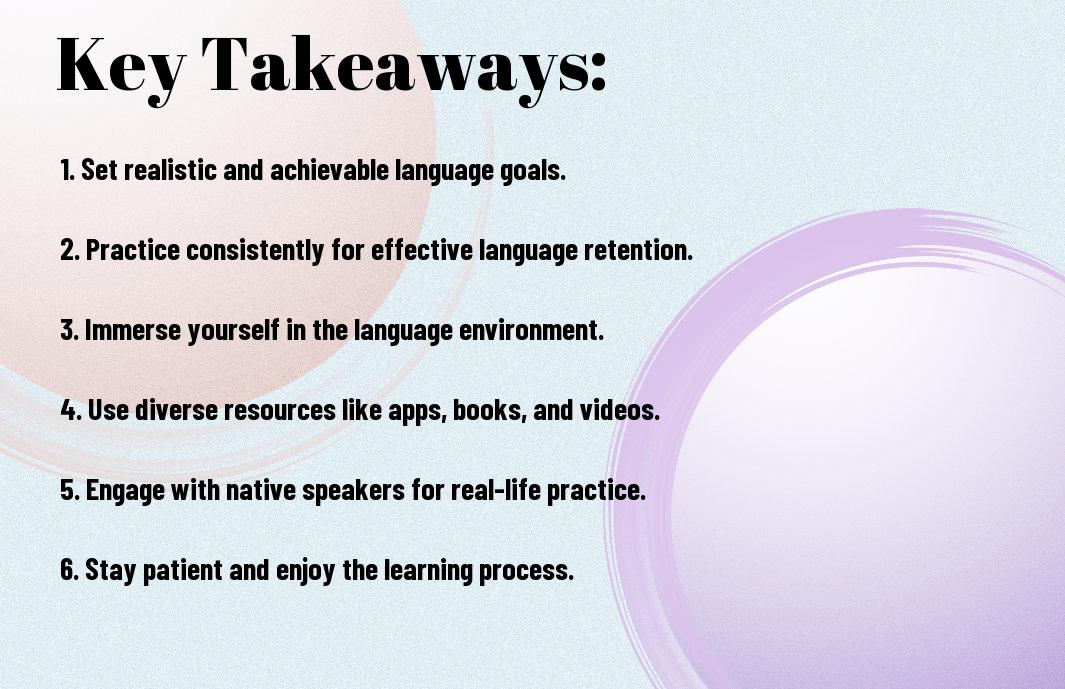
Key Takeaways:
- Setting realistic goals is vital for language learners of any age, as it helps to maintain motivation and track progress over time.
- Language learning at any age can be facilitated by immersion, which involves surrounding oneself with the language through various media, such as TV shows, music, and conversations with native speakers.
- Using language learning apps can be an effective way to learn a new language, as they offer interactive lessons, quizzes, and exercises tailored to individual learning styles and levels.
- Practice with a language exchange partner can significantly enhance language skills, especially speaking and listening, by providing opportunities for regular conversation and feedback.
- Embracing consistency is key to successful language learning, as regular practice helps to reinforce new language skills and build confidence in using the language in everyday situations.
Setting Goals
To get started with learning a language, you need to set realistic goals. You can find helpful tips on language learning at How to learn a language | 8 top tips and advice, which will guide you through the process.
Defining Your Motivation
Your motivation for learning a language is key to your success. You should identify what drives you to learn, whether it’s for travel, work, or personal growth, to help you stay focused and motivated.
Creating a Learning Schedule
Between your work and personal life, you need to find time to dedicate to language learning. You should create a schedule that suits your lifestyle, allowing you to make consistent progress.
Learning a language requires consistent practice, so it’s crucial to allocate specific timeslots for learning and stick to them. You can use a planner, calendar, or app to stay organized and on track, ensuring that you make language learning a regular part of your routine, which will help you achieve your goals more effectively.
Choosing the Right Resources
You will find that there are numerous resources available to help you learn a language, and selecting the right ones can make a significant difference in your learning journey. Consider your learning style, goals, and preferences when choosing resources.
Language Learning Apps
The variety of language learning apps available can be overwhelming, but many offer interactive and engaging lessons, making learning a language fun and accessible. You can try out different apps to see which one works best for you.
Language Exchange Programs
Across the globe, language exchange programs provide opportunities for you to practice speaking with native speakers, helping you improve your pronunciation and comprehension. You can find language exchange programs online or in-person, depending on your preferences.
Even if you are a beginner, language exchange programs can be highly beneficial, as they allow you to learn from native speakers and get feedback on your language skills. You can use these programs to practice speaking, writing, and listening, and you will see improvement in your language abilities over time, helping you to achieve your language learning goals.
Effective Learning Techniques
Now that you’re ready to start learning, explore 7 Tips To Learn Any Language From An Expert for valuable insights. You’ll discover new methods to enhance your language skills and stay motivated throughout your journey.
Immersion Method
Besides traditional classroom learning, surrounding yourself with the language you want to learn can be highly effective. You can watch TV shows or movies, listen to music, and try to speak with native speakers to immerse yourself in the language.
Spaced Repetition
With the help of flashcards and language learning apps, you can utilize spaced repetition to reinforce new vocabulary and grammar rules. You can review material at increasingly longer intervals to help solidify it in your long-term memory.
But what makes spaced repetition so effective is its ability to help you learn new information in a way that’s tailored to your individual needs. As you practice, you’ll find that you’re able to recall words and phrases more easily, and your language skills will improve at a steady pace. You’ll be able to track your progress and adjust your learning schedule accordingly, making the most of your study time.
Overcoming Obstacles
For anyone learning a language, obstacles are inevitable, but with the right mindset, you can overcome them and achieve your goals, and it’s imperative to identify the challenges you’ll face and develop strategies to tackle them, allowing you to stay focused on your language learning journey.
Managing Time Constraints
Beneath the surface of a busy schedule, you can find moments to practice your language skills, such as listening to podcasts or language lessons during your daily commute, and making the most of your time will help you stay on track and make consistent progress.
Dealing with Self-Doubt
Before you begin to feel discouraged, take a step back and assess your progress, celebrating your achievements and identifying areas for improvement, and you’ll see that you’re making progress, even if it doesn’t feel like it, and this will help you build confidence in your abilities.
Achieving fluency in a language takes time and effort, and it’s normal to experience self-doubt, but you can overcome it by setting realistic goals, practicing consistently, and seeking support from language exchange partners, tutors, or online communities, and as you progress, you’ll become more confident in your language skills and more motivated to continue learning.
Practicing Consistently
Keep your language learning on track by setting aside time each day to practice. Consistency is key to developing language skills and making progress. You can start with short sessions, even 10-15 minutes a day, and gradually increase as your schedule allows.
Setting Achievable Milestones
Against the odds of getting discouraged, you set specific, attainable goals for your language learning journey. Break down larger goals into smaller, manageable milestones, and celebrate your achievements along the way. This will help you stay focused and motivated.
Staying Motivated
Around the challenges you may face, find ways to stay engaged and motivated. You can use language learning apps, watch TV shows or movies in the target language, or speak with native speakers to keep your interest alive.
Another way to stay motivated is to track your progress and reflect on how far you’ve come. You can use a language learning journal to note your achievements, identify areas for improvement, and adjust your practice schedule accordingly. This will help you stay motivated and encouraged throughout your language learning journey.

Seeking Feedback and Support
All language learners benefit from seeking feedback and support. You can find valuable resources, such as The Best Ways to Learn a Language According to Research, to guide your learning journey.
Finding a Language Partner
Between language exchange websites and apps, you can easily find a language partner to practice with, helping you improve your speaking and listening skills.
Joining a Language Learning Community
Joining online forums or social media groups dedicated to language learning can connect you with fellow learners and native speakers, providing opportunities for feedback and support.
Understanding the importance of community in language learning, you can leverage these platforms to ask questions, share your progress, and learn from others, ultimately enhancing your language learning experience and staying motivated to reach your goals.
Final Words
On the whole, you have now acquired the top tips for learning languages at any age. You can apply your knowledge to enhance your language skills, and your dedication will yield impressive results. As you progress, you will discover that learning a language is a rewarding experience, and your efforts will enrich your personal and professional life, allowing you to connect with diverse cultures and communities, and broaden your perspectives, making your language learning journey a success.
FAQ
Q: What are the most effective ways to start learning a new language as an adult?
A: As an adult, you can start learning a new language by setting achievable goals and creating a study schedule. Immersion is key, so try to surround yourself with the language as much as possible through listening to music, watching TV shows or movies, and speaking with native speakers. Additionally, using language learning apps and enrolling in a course can provide structure and support. Consistency is important, even 15-20 minutes of study per day can be more effective than one or two long sessions per week.
Q: How can I overcome the fear of speaking a new language and improve my pronunciation?
A: Overcoming the fear of speaking a new language requires practice and patience. Start by speaking as much as you can, even if it’s just with yourself or a language exchange partner. Listen to native speakers and try to mimic their intonation and rhythm. Pronunciation can be improved by listening to and repeating words and phrases, and by recording yourself to identify areas that need improvement. You can also practice speaking with a tutor or language exchange partner, which can help you become more confident and comfortable with speaking in the new language.
Q: What role does consistency and motivation play in successfully learning a new language at any age?
A: Consistency and motivation are vital for successfully learning a new language at any age. Setting specific, achievable goals and tracking progress can help maintain motivation. Finding a study buddy or joining a language learning community can also provide support and encouragement. Additionally, celebrating small victories along the way and rewarding yourself for milestones reached can help keep you motivated and engaged in the learning process. Staying consistent with your study routine, even when it’s challenging, will help you make steady progress and eventually become proficient in the new language.
