As you launch on your language learning journey, you’ll discover a world of possibilities. Your newfound skills will open doors to diverse cultures, exciting travel experiences, and personal growth. You’ll find that learning a language is not just about memorizing rules and vocabulary, but about cultivating a hobby that will enrich your life. By making language learning a lifelong pursuit, you’ll challenge yourself, stimulate your mind, and unlock your full potential, leading to a more fulfilling and engaging life.
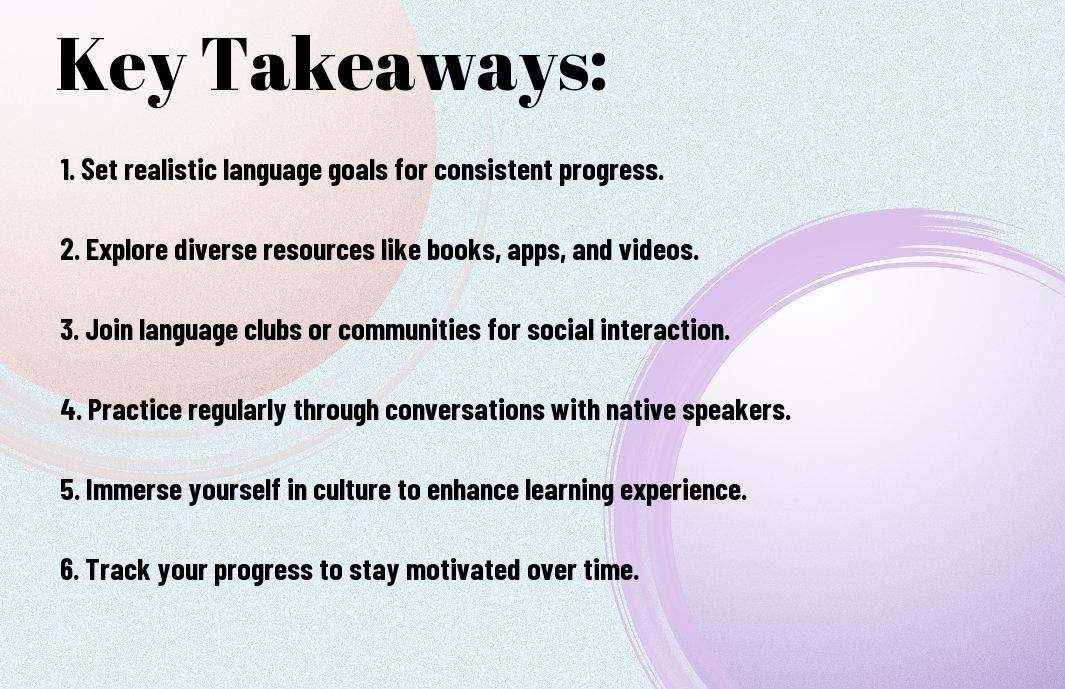
Key Takeaways:
To make language learning a lifelong hobby, consider the following points:
- Set achievable goals and track your progress to stay motivated and engaged in the learning process.
- Immerse yourself in the language culture by reading books, watching movies, and listening to music in the target language to gain a deeper understanding and appreciation.
- Find a language community or practice partner to share your experiences, get feedback, and learn from others, making the learning process more enjoyable and sustainable.
Setting Goals
Before you begin on your language learning journey, it’s imperative to set achievable goals. You can find inspiration for your goals by reading about Living Foreign Languages Through Hobbies, which can help you stay motivated and focused on your objectives.
Defining Motivation
Around the time you start learning a new language, you’ll need to define what motivates you to continue, whether it’s personal or professional reasons, and use this motivation to drive your learning process, helping you to stay engaged and interested in the language.
Creating a Learning Plan
The key to successful language learning is creating a well-structured plan, you’ll need to set realistic objectives, choose the right learning materials, and allocate sufficient time to practice and review, this will help you to track your progress and make adjustments as needed.
Another important aspect of creating a learning plan is to identify your learning style and preferences, you can use language learning apps, textbooks, or take classes, whatever method you choose, make sure it’s something you enjoy and that keeps you motivated to continue learning and improving your language skills.
Choosing Resources
Even as you launch on your language learning journey, you’ll find that selecting the right resources is vital to your progress. You’ll want to explore various options to find what works best for you, from language learning apps to traditional textbooks.
Language Learning Apps
Selecting the right language learning app can be a great way to get started, as you can choose from a wide range of options that cater to your learning style and goals. You can try out different apps to see which one you enjoy using the most.
Textbooks and Workbooks
Learning from textbooks and workbooks can provide a more structured approach to language learning, allowing you to follow a clear progression and track your progress. You can use them to supplement your app-based learning or as a standalone resource.
Textbooks are an excellent way to explore deeper into the language, covering grammar, vocabulary, and reading comprehension. As you work through your textbooks, you’ll be able to practice your writing and speaking skills, and you can even use them to prepare for language proficiency tests or certifications, helping you to stay motivated and focused on your goals.
Building Routine
Not having a routine can hinder your progress in language learning, but by establishing a schedule, you can make steady progress and turn it into a lifelong hobby.
Scheduling Study Time
Any spare moment can be utilized to practice your language skills, and by allocating a specific time slot each day, you can make language learning a part of your daily routine, allowing you to stay on track and achieve your goals.
Staying Consistent
Regularly sticking to your routine helps you develop a habit, and as you continue to practice, you will find that language learning becomes an integral part of your daily life, allowing you to make progress and stay motivated.
This approach enables you to track your progress, identify areas that need improvement, and make adjustments to your routine as needed, ensuring that you stay engaged and committed to your language learning journey, and your skills continue to improve over time, making it a lifelong hobby that brings you joy and fulfillment, as you explore new languages and cultures, and expand your understanding of the world, shaping your perspective and broadening your horizons, with you being in control of your learning path.
Practicing Language Skills
Many language learners find that consistent practice is key to improving their skills. You will need to set aside time each day to engage with the language, whether it’s through speaking, listening, reading, or writing.
Speaking and Listening
Almost any opportunity to speak and listen to the language will help you improve your skills. You can try watching TV shows or movies, listening to music, or speaking with native speakers to get started.
Reading and Writing
Similarly, practicing your reading and writing skills is crucial to becoming proficient in a language. You can start by reading simple texts and writing short paragraphs to build your confidence.
To take your reading and writing skills to the next level, you can try more complex texts and writing exercises. You will find that your vocabulary and grammar improve as you continue to practice, and you will be able to express yourself more effectively in the language.

Overcoming Challenges
To turn language learning into a lifelong hobby, you will inevitably face obstacles that test your motivation and dedication. You must be prepared to push through the tough times and stay committed to your goals.
Dealing with Frustration
Beside the moments of excitement, you will experience frustration when you encounter difficulties in learning a new language. Between the grammar rules and vocabulary, it’s normal to feel overwhelmed, but you can’t let that stop you from reaching your goals.
Finding Language Exchange Partners
By seeking out language exchange partners, you can practice your speaking skills and get feedback on your progress. You can find language exchange partners online or in person, and this will help you stay motivated and engaged in the learning process.
Consequently, having a language exchange partner will not only improve your language skills, but also give you a deeper understanding of the culture and way of life associated with the language you are learning. You will be able to ask your partner questions about their customs and traditions, and share your own with them, creating a rich and rewarding learning experience.
Maintaining Progress
Keep your language learning on track by making it a regular part of your routine. You’ll find that consistent practice helps solidify your skills and prevents burnout. As you progress, you’ll be able to identify areas where you need improvement and adjust your approach accordingly.
Tracking Progress
Against the backdrop of your busy schedule, finding ways to monitor your progress can be challenging. You’ll want to use tools like language learning apps or journals to track your achievements and stay motivated. This will help you see how far you’ve come and make informed decisions about your learning path.
Setting Realistic Expectations
Above all, it’s imperative to set achievable goals for your language learning journey. You should define what success means to you and create a plan to get there. This will help you stay focused and avoid frustration when faced with obstacles.
Another key aspect of setting realistic expectations is understanding that language learning is a marathon, not a sprint. You’ll have ups and downs, but by being patient and compassionate with yourself, you’ll be able to overcome challenges and celebrate your successes along the way. As you continue on your journey, you’ll find that your expectations evolve, and your goals become more refined, helping you to stay engaged and motivated in your pursuit of language mastery.
Summing up
Summing up, you’ve learned how to turn language learning into a lifelong hobby. As you continue on your journey, you’ll find that your skills improve and your appreciation for languages grows. For more tips, visit How to learn a language, be proficient in school and master a hobby with a routine to enhance your skills and make your hobby even more enjoyable, tailoring your approach to fit your unique needs and interests, helping you stay motivated and engaged.
FAQ
Q: What motivates individuals to turn language learning into a lifelong hobby?
A: Turning language learning into a lifelong hobby often begins with a spark of interest, which could be fueled by travel, work requirements, or a desire to connect with different cultures. As individuals progress in their language learning journey, they find that it not only enhances their understanding of the world but also provides a continuous challenge and a sense of achievement. This intrinsic motivation, coupled with the ability to explore new literature, communicate with native speakers, and broaden one’s perspective, transforms language learning into an engaging and enduring hobby.
Q: How can one maintain consistency and progression in language learning as a hobby?
A: Maintaining consistency and seeing progression in language learning as a hobby involves setting realistic goals, using a variety of learning materials, and incorporating language practice into daily routines. This can include dedicating a specific time each day to language learning, whether through apps, language exchange programs, reading books or news in the target language, or watching TV shows and movies without subtitles. Additionally, finding a language learning community or partner can provide support, encouragement, and opportunities for conversation, helping to keep the learning process enjoyable and prevent stagnation.
Q: What role does technology play in turning language learning into a lifelong hobby?
A: Technology has revolutionized the way individuals can approach language learning, making it more accessible, engaging, and efficient. With numerous language learning apps, online courses, and platforms available, learners can tailor their learning experience to suit their learning style, schedule, and goals. Technology also facilitates connection with native speakers through social media, language exchange websites, and online forums, providing invaluable opportunities for language practice and cultural immersion. Moreover, the internet offers a vast array of learning resources, including podcasts, YouTube channels, and blogs dedicated to language learning, which can keep the learning process fresh and exciting, supporting the transformation of language learning into a lifelong hobby.
