simon weiner

How to Learn a Language with Limited Time

You’re determined to learn a new language, but your schedule is tighter than a drum. You’ve got limited time, and you’re not sure where to start. You’ve likely asked yourself, check out the discussion on How to learn a language when you don’t have a time? In this post, you’ll discover practical tips to help you make the most of your time and start learning a new language, even with a busy schedule.

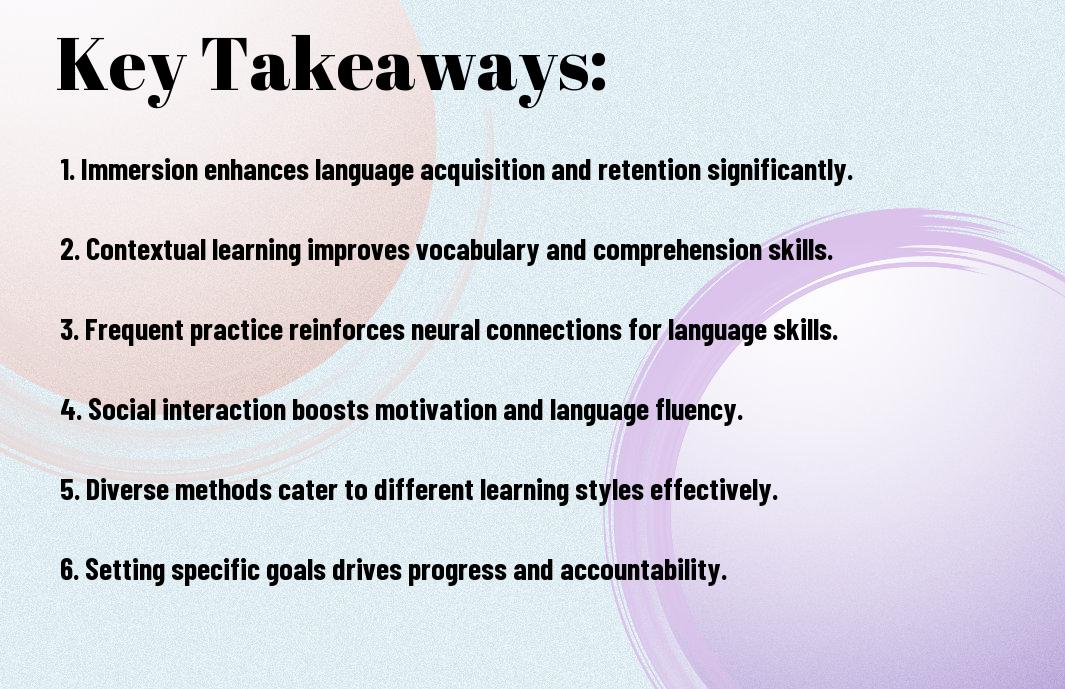
Key Takeaways:

To learn a language with limited time, consider the following points:

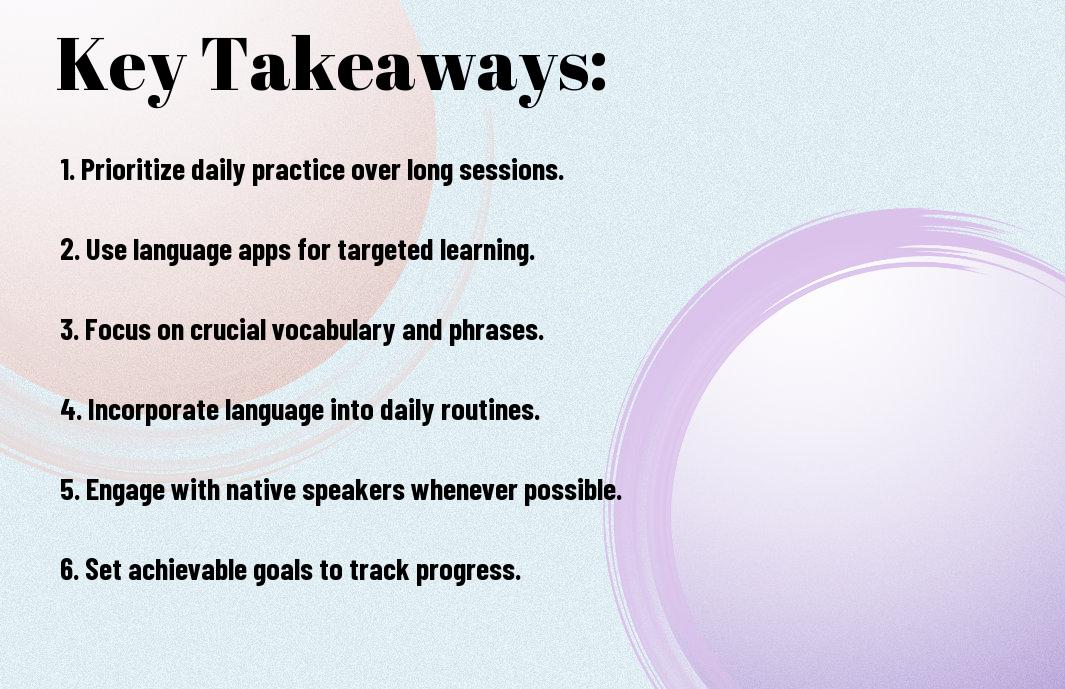
  • Set realistic goals and prioritize your language learning objectives to maximize your progress within the given time frame.
  • Focus on consistent practice, even if it’s just 15-20 minutes a day, to maintain momentum and make steady progress.
  • Utilize language learning apps and online resources that offer flexible and efficient learning tools to fit your busy schedule.
  • Immerse yourself in the target language by listening to music, watching TV shows or movies, and speaking with native speakers to improve your comprehension and speaking skills.
  • Develop a study routine that incorporates a variety of learning activities, such as reading, writing, and speaking, to stay engaged and motivated throughout the learning process.

Setting Goals

A key part of learning a language with limited time is setting achievable goals. You need to define what you want to accomplish and create a schedule to help you get there.

Defining Language Learning Objectives

Objectively, you should consider what you want to achieve with your language skills. You will focus on specific areas, such as reading, writing, or conversation, and set realistic targets for improvement.

Creating a Realistic Study Schedule

Around your daily routine, you will plan out dedicated time for language study. You will allocate specific timeslots for practice, ensuring consistency and progress.

At this stage, you are laying the foundation for your language learning journey. You will need to assess your availability, taking into account your work, family, and other commitments, to determine how much time you can dedicate to language study each day or week. This will help you create a schedule that is tailored to your lifestyle, allowing you to make steady progress towards your goals.
Language Learning Fundamentals

You start by setting realistic goals and understanding your motivation for learning a language, as this will help you stay focused and driven throughout the process, even with limited time.

Choosing the Right Language Learning Method

Following your initial decision, you’ll need to select a method that suits your learning style, whether it’s through classes, online courses, or self-study materials, to ensure you make the most of your limited time.

Essential Language Learning Tools

Upon beginning your language learning journey, you’ll find that having the right tools can make a significant difference, such as language learning apps, dictionaries, and flashcards, which can help you stay organized and efficient.

Language learning tools are your key to unlocking the doors of communication in your target language, and with the right ones, you can practice anytime, anywhere, making the most of the time you have, and helping you to track your progress and identify areas where you need to improve, allowing you to adjust your strategy and stay on track.

Time Management Techniques

Many language learners struggle to find time to study, but with effective time management, you can make the most of your limited time. You’ll need to assess your schedule and identify pockets of time that can be dedicated to language learning.

Prioritizing Study Time

Unlike other activities, prioritizing your language study time is key to making progress. You’ll need to weigh your commitments and allocate your time wisely, ensuring that your language learning goals are at the forefront of your daily routine.

Avoiding Distractions and Staying Focused

Diversions will inevitably arise, but you must learn to manage them. You’ll need to eliminate or minimize distractions, such as turning off your phone or finding a quiet study space, to stay focused on your language learning goals.

To stay on track, you’ll need to develop strategies to overcome procrastination and maintain motivation. You can do this by setting specific, achievable goals and rewarding yourself when you reach them, helping you to stay engaged and motivated throughout the learning process. By doing so, you’ll be able to make the most of your limited time and achieve your language learning objectives.

Immersion and Practice

Unlike other methods, immersion and practice will get you speaking your target language in no time, even with limited time on your hands. You’ll be surrounded by the language, picking it up through osmosis, and your skills will improve dramatically.

Surrounding Yourself with the Language

For maximum exposure, fill your daily routine with the language you’re trying to learn, whether it’s through music, TV shows, or social media, and your brain will start to absorb it naturally, making it easier for you to learn.

Engaging in Conversations and Activities

Before you know it, you’ll be longing to engage in conversations and activities that challenge your language skills, and you’ll be surprised at how quickly you pick up new vocabulary and grammar rules, and your confidence will grow with each passing day.

Further, as you engage in conversations and activities, you’ll find yourself thinking in your target language, and your ability to express yourself will become more fluid, allowing you to communicate effectively and connect with native speakers on a deeper level, making the learning process more enjoyable and rewarding for you.

Overcoming Obstacles

Despite the challenges you’ll face, learning a language with limited time is achievable. You’ll encounter setbacks, but with persistence and the right strategies, you can overcome them and stay on track.

Dealing with Motivation and Burnout

Around the time you feel like giving up, take a step back and reassess your goals. You need to find ways to recharge and refocus your energy to maintain your motivation.

Finding Language Learning Communities

With the help of online forums and social media, you can connect with fellow language learners who share your interests and goals. You’ll find support, guidance, and motivation in these communities.

It is likely that you’ll discover new language learning resources and techniques by engaging with these communities. You can participate in conversations, ask questions, and learn from others who are also navigating the language learning process, which will help you stay motivated and inspired to continue your language learning journey.

Staying Motivated

Not having enough time is a common excuse, but you can learn more about why you never have time for language learning (and how to make time) on Why You Never Have Time For Language Learning (and How to Make Time). This will help you stay focused on your goals.

Tracking Progress and Celebrating Milestones

Around every corner, you’ll find opportunities to track your progress and celebrate your milestones, keeping your motivation levels high as you learn a new language.

Rewarding Yourself for Achievements

Yours is the power to reward yourself for achieving your language learning goals, giving you the motivation to keep pushing forward, even when the going gets tough.

Another way to keep yourself motivated is to set tangible rewards for specific achievements, like reaching a certain level of fluency or finishing a difficult lesson. This will give you something to look forward to, and make the learning process more enjoyable and satisfying, as you see your hard work paying off. You can treat yourself to something you love, like a favorite meal or a fun activity, reinforcing the positive feelings associated with language learning. This will help you stay motivated and encouraged to continue learning, even with limited time.

Summing up

Considering all points, you’ve got the tools to learn a language even with a tight schedule. You’ll need to prioritize your time, set achievable goals, and immerse yourself in the language. Your progress will depend on your dedication and consistency. With persistence and the right approach, you can make significant strides in a short amount of time, and your new language skills will start to take shape, opening doors to new possibilities in your personal and professional life. You got this, now go make it happen.

FAQ

Q: What is the most effective way to learn a language when I have very limited time?

A: When you have limited time, it’s necessary to focus on the most common words and phrases used in everyday conversations. Start by learning basic greetings, introductions, and expressions of gratitude. Utilize language learning apps that offer bite-sized lessons, such as Duolingo or Babbel, which can be completed in just a few minutes a day. Additionally, listen to podcasts or language lessons during your daily commute or while doing chores to maximize your time.

Q: How can I stay motivated to learn a language when I can only dedicate a short amount of time each day?

A: Staying motivated is key to consistent progress, even with limited time. Set achievable goals for yourself, such as holding a 5-minute conversation with a native speaker by the end of the month. Celebrate small victories along the way, like mastering a new grammar rule or vocabulary set. Find a language exchange partner or join an online community to practice with others, which can make the learning process more enjoyable and interactive. Regularly track your progress to see how far you’ve come, which can be a potent motivator.

Q: Are there any specific language learning strategies that are particularly suited for individuals with limited time?

A: Yes, several strategies are particularly effective for those with limited time. The Pomodoro Technique, which involves studying in focused 25-minute increments followed by a 5-minute break, can help you stay focused and avoid burnout. Additionally, prioritize learning phrases and expressions that are relevant to your specific needs or interests, making your learning more efficient and engaging. Use flashcards to quickly memorize vocabulary, and try to learn in contexts where you can apply what you’ve learned immediately, such as speaking with a tutor or using language in real-life situations.

The Best Books for Learning New Languages

Key Takeaways:

To effectively learn a new language, it’s crucial to have the right resources. Here are the key points to consider when selecting the best books for language learning:

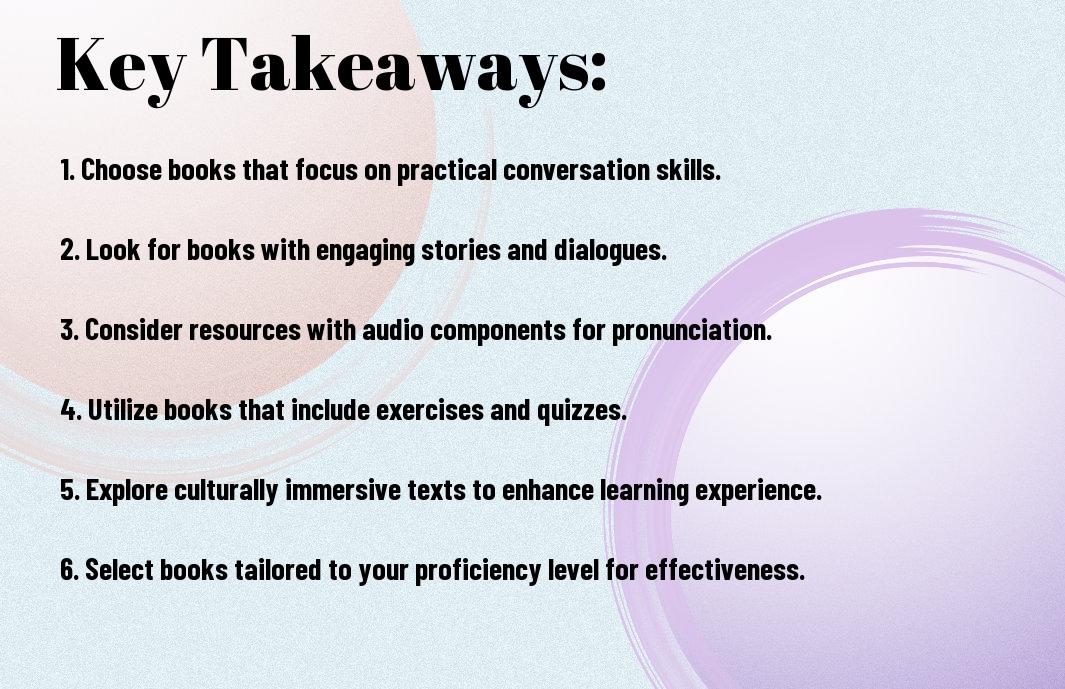
  • Language learning books should focus on grammar and vocabulary building, with exercises and examples to practice new skills.
  • Interactive books with audio and visual aids can enhance the learning experience and improve pronunciation and comprehension.
  • Immersive reading materials, such as novels and articles, can help learners get used to the nuances of the language and contextualize new words and phrases.
  • Specialized books that focus on specific skills, like writing or conversational language, can help learners improve in areas where they need the most practice.
  • Supplementary resources, such as language learning apps and online courses, can provide additional support and motivation for learners to stay on track with their language learning goals.

Language Learning Basics

Your journey to learning a new language begins with understanding the fundamentals. You’ll need to grasp the grammar, syntax, and vocabulary of the language to make progress.

Language Acquisition Methods

Prior to plunging into language learning, you should consider the various methods available. You can choose from immersive programs, language courses, or self-study materials to suit your learning style.

Language Learning Tips

To aid your language learning, consider the following tips:

  • set achievable goals
  • practice consistently
  • engage with native speakers

. Assume that dedicating time to language learning will yield significant improvements in your skills.

And as you probe deeper into the language, you’ll discover more tips to enhance your learning experience:

  • listen to podcasts
  • watch TV shows or movies in the target language
  • read books or articles

. Assume that with persistence and the right resources, you’ll become proficient in your desired language.

Book Recommendations

Some of the most effective books for learning new languages are those that offer a combination of grammar, vocabulary, and conversation practice. You will find a range of options to suit your learning style and goals.

Language Textbooks

Along with traditional language classes, textbooks provide a comprehensive approach to learning a new language, covering the basics of grammar, syntax, and vocabulary, allowing you to build a strong foundation in your target language.

Language Learning Guides

At the heart of language learning are guides that focus on specific skills, such as pronunciation, reading, or writing, helping you to improve your overall language proficiency and prepare for real-life situations.

And as you research deeper into language learning guides, you will discover that they often include valuable tips and strategies for overcoming common challenges, such as mastering difficult grammar rules or expanding your vocabulary, enabling you to stay motivated and focused on your language learning journey, and helping you to achieve your goals more effectively.

Language Specific Resources

All language learners will find a wealth of resources available to them, tailored to their specific needs and goals. You can choose from a variety of books, courses, and online tools to help you learn a new language.

English Language Resources

With numerous resources at your disposal, you can improve your English language skills in no time. You will find grammar guides, vocabulary builders, and pronunciation guides to help you master the language.

Foreign Language Resources

To broaden your linguistic horizons, you can explore resources for languages such as Spanish, French, or Mandarin. You will discover a range of materials, from textbooks to language learning apps, to help you learn a new language.

Resources for foreign languages are abundant, and you can find them in various formats, including audio and video recordings, podcasts, and online courses. As you explore into the world of foreign languages, you will find that these resources will help you stay motivated and engaged in your learning journey, allowing you to become proficient in your desired language.

Online Learning Platforms

After exploring various resources, you can find valuable discussions on online platforms, such as the one found at Best books you’ve read about languages and language learning, which can aid your language learning journey.

Language Learning Apps

Learning a new language has become easier with the help of language learning apps, which you can access anywhere, allowing you to practice at your own pace and track your progress.

Online Courses

Beside traditional learning methods, online courses offer a structured approach to learning a new language, providing you with a clear curriculum and expert instructors to guide you.

At the heart of online courses lies the flexibility to learn at your own pace, allowing you to review and practice lessons as many times as you need, making them an excellent supplement to your language learning endeavors, and enabling you to make steady progress towards your goal of becoming proficient in a new language.

Language Immersion Techniques

Unlike traditional language learning methods, immersion techniques involve surrounding yourself with the language you want to learn. You can achieve this by watching TV shows or movies, listening to music, and speaking with native speakers.

Reading and Listening

Prior to advancing in your language skills, you should focus on reading and listening to native materials. You will find that your comprehension improves as you expose yourself to various texts and audio recordings.

Speaking and Writing

Approximately at the same time you start reading and listening, you should begin speaking and writing in your target language. You will notice significant progress as you practice communicating with others and expressing your thoughts in writing.

Even when you feel comfortable with your language skills, you should continue to challenge yourself by engaging in conversations with native speakers and writing short stories or journal entries. You will find that your language skills improve dramatically as you consistently practice speaking and writing, and you will become more confident in your ability to express yourself effectively in your new language.

Overcoming Language Barriers

For many, learning a new language can be a daunting task, but with the right resources, you can break through the barriers that stand in your way. You’ll find that dedication and persistence are key to achieving your goals.

Common Challenges

Akin to many other pursuits, learning a language presents its own set of obstacles, such as grammar rules and pronunciation, which can be overwhelming at first, but as you progress, you’ll become more comfortable with your newfound skills.

Success Stories

Above all, the most inspiring aspect of language learning is the success stories of those who have persevered and achieved fluency, and you can be one of them, unlocking new opportunities and broadening your cultural understanding.

Even as you encounter setbacks, you’ll find that your hard work pays off, and you’ll be able to communicate effectively in your new language, opening doors to new experiences and connections, and you’ll be amazed at how your language skills can enrich your life and expand your perspectives.

To wrap up

On the whole, you now have a solid foundation to start your language learning journey. You can explore various resources, including expert-recommended Books for Learning Languages, to find the best fit for your needs. As you continue, your understanding of languages will expand, and your skills will improve, allowing you to navigate new cultures with ease and confidence in your abilities.

FAQ

Q: What are the most effective books for beginners to learn a new language?

A: For beginners, the most effective books are those that focus on grammar, vocabulary, and pronunciation. Some highly recommended books include “Colloquial” series, “Grammar in Use” series by Cambridge University Press, and “Language Hacking” by Timothy Ferriss. These books provide a comprehensive introduction to the language, with exercises and examples to help learners practice and improve their skills.

Q: How can I choose the best book for my language learning style and goals?

A: To choose the best book for your language learning style and goals, consider what type of learner you are. If you are a visual learner, look for books with many diagrams, pictures, and videos. If you are an auditory learner, look for books that come with audio materials. If your goal is to learn conversational skills, look for books that focus on dialogues and everyday conversations. You can also read reviews, ask for recommendations, and preview the book to ensure it aligns with your needs and preferences.

Q: Are there any books that can help me improve my reading and writing skills in a new language?

A: Yes, there are many books that can help you improve your reading and writing skills in a new language. For reading, try graded readers, which are books written specifically for language learners with vocabulary and grammar appropriate to your level. For writing, try workbooks with writing exercises, such as “Writing in English” or “French Writing Guide”. You can also try reading books in the target language, starting with simple texts and gradually moving to more complex ones, and writing short paragraphs or journal entries to practice your writing skills.

The Science Behind Effective Language Learning

As you commence on your language learning journey, understanding the science behind it can significantly enhance your progress. Your brain’s ability to absorb and process new information plays a significant role in determining your learning pace. By grasping how your brain responds to new languages, you can tailor your approach to maximize your learning potential, making the process more efficient and effective. This knowledge will help you overcome common obstacles and achieve your language learning goals.

Key Takeaways:

  • The brain’s ability to reorganize itself in response to new experiences is key to language learning, and this process can be facilitated through consistent practice and immersion.
  • Spaced repetition is a powerful technique for language acquisition, as it helps to solidify new words and phrases in the learner’s long-term memory.
  • Contextual learning is an effective way to learn a new language, as it allows learners to see how words and phrases are used in real-life situations and make connections between new and existing knowledge.
  • Active engagement with the language is important for effective learning, and this can be achieved through activities such as speaking, writing, and listening to native speakers.
  • Personalization is also important in language learning, as learners who are able to tailor their learning to their individual needs and interests are more likely to stay and achieve their goals.

The Power of Language

Your ability to learn a new language is a powerful tool that can open doors to new cultures, communities, and opportunities, and understanding how it works is vital to effective language learning.

The Brain’s Role in Language Acquisition

With the brain’s incredible ability to adapt and change, you can develop new neural pathways and connections that enable language learning, and by understanding how your brain processes language, you can optimize your learning approach.

The Importance of Consistency in Language Learning

Across various language learning methods, consistency is key to developing language skills, and as you establish a regular learning routine, you will begin to see significant improvements in your language abilities.

Due to the complex nature of language learning, maintaining consistency is vital to reinforcing new skills and preventing language erosion, and by committing to regular practice, you can develop a strong foundation in your target language and achieve your language learning goals more efficiently, allowing you to communicate effectively and confidently in your new language.

The Science of Memory

You will discover that the process of language learning is closely tied to your brain’s ability to form and recall memories, as explained in The Science of Language Is As Complex As Learning a New Language, which sheds light on the intricacies of language acquisition.

How We Form Memories

Among the various factors that influence your ability to learn a new language, the formation of memories plays a significant role, as your brain consolidates new information and connects it to your existing knowledge.

Retrieval Practice in Language Learning

By actively recalling and practicing language skills, you strengthen your ability to retain and apply them in real-life situations, which is an crucial aspect of the learning process.

Retrieval practice is a powerful tool in language learning, as it helps you to reinforce your understanding of grammar, vocabulary, and pronunciation, and to develop a more nuanced grasp of the language, allowing you to communicate more effectively and confidently in your target language.

Effective Language Learning Strategies

Now that you’re aware of the science behind language learning, it’s time to explore the most effective strategies. You can find more information on The Best Ways to Learn a Language According to Research to enhance your learning experience.

Immersion and Contextual Learning

About the most effective ways to learn a language, you’ll discover that immersion and contextual learning play a significant role in your progress, helping you to pick up the language naturally.

The Benefits of Spaced Repetition

By incorporating spaced repetition into your study routine, you can optimize your learning and improve retention of new vocabulary and grammar rules.

The benefits of spaced repetition are numerous, as it allows you to review material at increasingly longer intervals, helping to solidify it in your long-term memory and making it easier to recall when needed, thus streamlining your language learning process and making you more proficient in your target language.

The Impact of Technology

Keep in mind that technology has revolutionized the way you learn languages, providing you with various tools and resources to enhance your language learning experience.

Language Learning Apps and Software

About the numerous language learning apps and software available, you can explore options that cater to your learning style and goals, offering personalized lessons and interactive exercises.

Virtual Reality in Language Education

By leveraging virtual reality, you can immerse yourself in realistic environments that simulate real-life conversations and interactions, helping you develop your communication skills more effectively.

For instance, you can practice ordering food at a virtual café or engaging in a conversation with a virtual native speaker, which can help you build confidence in your language skills and prepare you for real-world situations, allowing you to learn from your mistakes in a risk-free environment, and you can track your progress and adjust your learning strategy accordingly.

Overcoming Obstacles

All language learners face obstacles, but you can overcome them by understanding the science behind effective learning. You can find helpful tips on What Does Research Say is the Best Way to Learn a Language to inform your approach.

Managing Motivation and Burnout

About halfway through your learning journey, you may encounter motivation and burnout challenges, but you can address them by setting realistic goals and tracking your progress to stay motivated.

Building a Supportive Learning Community

Along with a well-structured study plan, surrounding yourself with fellow learners can help you stay accountable and engaged, which is crucial for your progress, as you will be able to share your experiences and get valuable feedback from others.

Indeed, building a supportive learning community can be a game-changer for you, as it provides a platform to practice your language skills, get support, and learn from others, ultimately helping you to achieve your language learning goals more efficiently and effectively.

Measuring Progress

To effectively learn a language, you need to track your progress. This involves regularly assessing your skills and identifying areas for improvement. By doing so, you can adjust your learning strategy and stay motivated.

Assessment and Evaluation Methods

Against the backdrop of your language learning journey, you will encounter various assessment and evaluation methods. These tools help you gauge your proficiency and pinpoint weaknesses, enabling you to refine your approach and make informed decisions about your learning path.

Setting Realistic Goals and Benchmarks

Alongside your assessment and evaluation, you should set achievable targets. This involves establishing specific, measurable objectives that align with your learning style and goals, allowing you to monitor your advancement and make adjustments as needed.

A significant aspect of setting realistic goals and benchmarks is understanding your learning pace and abilities. As you progress, you will develop a better sense of what works best for you, enabling you to refine your approach and make steady progress towards fluency. You can then use this insight to adjust your goals and benchmarks, ensuring they remain challenging yet attainable, and that you stay motivated and engaged throughout your language learning journey.

Summing up

Taking this into account, you now have a deeper understanding of the science behind effective language learning. You can apply your knowledge of cognitive psychology and neuroscience to optimize your learning process. By leveraging your brain’s ability to adapt and change, you can improve your language skills and achieve your goals. Your approach to language learning will become more efficient, and you will be able to navigate the process with confidence and precision.

FAQ

Q: What are the key factors that influence the effectiveness of language learning?

A: The science behind effective language learning suggests that several factors contribute to successful language acquisition. These include setting achievable goals, consistent practice, and exposure to authentic language materials. Additionally, understanding individual learning styles, such as visual, auditory, or kinesthetic, can help tailor the learning approach to maximize effectiveness. Furthermore, learner motivation, be it intrinsic or extrinsic, plays a significant role in maintaining engagement and progress throughout the learning journey.

Q: How does the brain process and store new language information?

A: The brain processes new language information through a complex interplay of cognitive and neurological mechanisms. Initially, new language elements are stored in short-term memory, and through repetition and practice, they are consolidated into long-term memory. The process involves various parts of the brain, including areas responsible for phonology, syntax, semantics, and pragmatics. The more the learner is exposed to and engages with the language, the stronger the neural pathways become, facilitating easier access and use of the language in communication. Neuroplasticity, the brain’s ability to form new neural connections, is fundamental in adapting to and learning a new language.

Q: Can adults learn a new language as effectively as children, and what strategies can enhance their learning?

A: While children have an innate ability to absorb and learn languages quickly due to their developing brains, adults can also achieve high levels of proficiency with the right approach. Adults often have an advantage in terms of metacognitive skills, such as the ability to understand and apply grammar rules, and learning strategies. To enhance their learning, adults can benefit from structured learning programs, using language learning apps, engaging in conversations with native speakers, and immersing themselves in the language through media and literature. Additionally, focusing on meaningful interactions and real-life applications can increase motivation and accelerate the learning process.

How Learning a New Language Can Boost Creativity

As you explore the world of languages, you may discover that learning a new one can have a profound impact on your cognitive abilities, particularly your creativity. You will find that acquiring a new language enhances your brain’s capacity to think outside the box and approach problems from unique angles. Your mind will become more adaptable, and you will develop a fresh perspective, allowing you to express yourself in innovative ways, and ultimately, boost your creative potential.

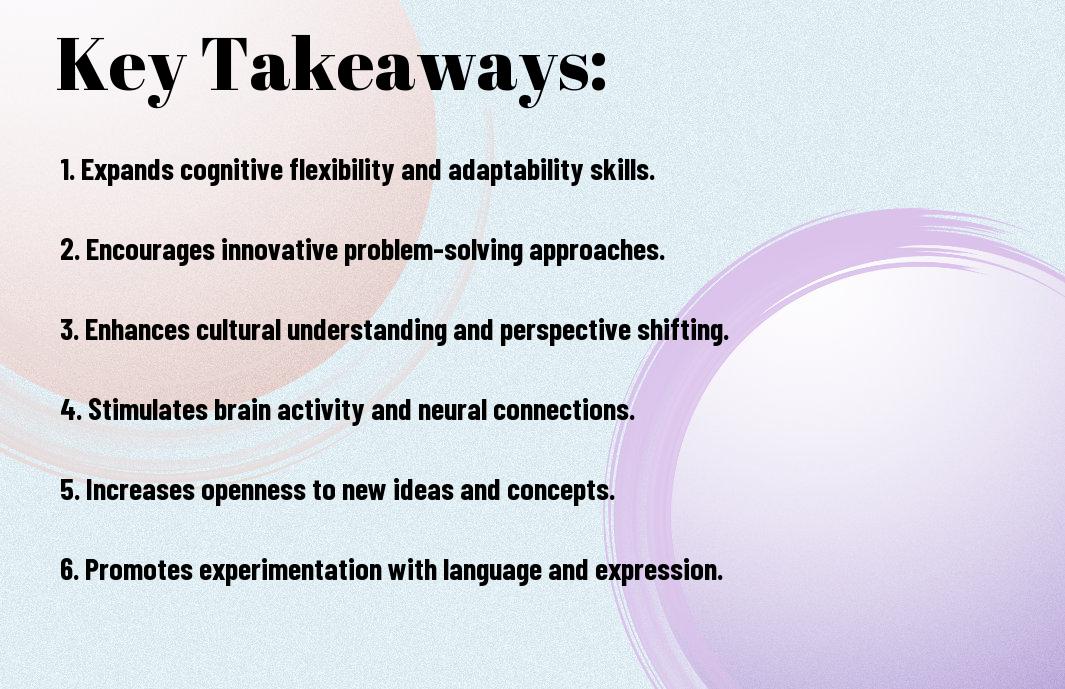
Key Takeaways:

  • Learning a new language can enhance Cognitive Flexibility, allowing individuals to switch between different mental frameworks and think outside the box, leading to increased Creativity and innovative problem-solving skills.
  • Acquiring a new language exposes individuals to different Cultural Perspectives, broadening their understanding of the world and enabling them to approach problems from unique angles, fostering Imagination and creative thinking.
  • The process of learning a new language requires Brain Plasticity, as the brain adapts to new grammar, vocabulary, and pronunciation rules, leading to improved Adaptability and enhanced creative potential.
  • Mastering a new language can increase Confidence and Self-Esteem, as individuals develop a sense of accomplishment and become more willing to take risks and explore new ideas, leading to increased Innovative Thinking.
  • Learning a new language can also facilitate Interdisciplinary Connections, as individuals discover relationships between languages, cultures, and disciplines, leading to a more Holistic Understanding and creative insights that can be applied to various areas of life.

Cognitive Benefits

To improve your cognitive abilities, learning a new language can be highly beneficial. You can find more information on How Learning a New Language Boosts Your Creativity, which highlights the positive impact on your brain.

Enhanced Problem-Solving Skills

After acquiring a new language, you’ll develop a fresh perspective, enabling you to approach problems from different angles and find innovative solutions, enhances your problem-solving skills.

Improved Memory and Concentration

Skills such as memorization and focus are sharpened as you learn to process and understand new grammar rules, vocabulary, and sentence structures, which improves your memory and concentration.

Concentration is key to language learning, and as you practice, you’ll notice improvements in your ability to focus and absorb new information, leading to better overall cognitive function and enhanced creativity in your daily life, as you apply your new skills.

Creative Expression

Any language learner can attest to the fact that acquiring a new language can have a profound impact on your creative expression. As you develop your language skills, you’ll find that your ability to think outside the box and come up with innovative ideas improves significantly.

Language and Artistic Inspiration

For instance, learning a new language can inspire you to explore different forms of art, such as literature, music, or film, which can, in turn, influence your creative pursuits. You’ll discover new authors, musicians, and artists that can spark your imagination and broaden your creative horizons.

Cultural Exchange and Diversity

Exchanging cultural norms and values with native speakers of your target language can also foster creativity. You’ll be exposed to new customs, traditions, and ways of thinking that can help you develop a unique perspective and approach to problem-solving.

Diversity of cultural experiences and interactions with people from different backgrounds can further enrich your creative potential. As you navigate different cultural contexts, you’ll develop a deeper understanding of the nuances of human expression, allowing you to tap into your creative potential and produce work that is authentic and innovative, reflecting your unique blend of cultural influences and experiences.

Brain Development

Keep in mind that learning a new language can significantly impact your brain development, as it challenges your brain to adapt and change. This process can lead to improved cognitive abilities and enhanced creativity.

Neuroplasticity and Language Learning

Contrary to what you might think, learning a new language can rewire your brain, making it more flexible and adaptable. As you learn, your brain forms new connections, strengthening your ability to think creatively and solve problems.

The Impact of Bilingualism on the Brain

Following your decision to become bilingual, you’ll notice significant changes in your brain’s structure and function. Your brain becomes more efficient, able to switch between languages and tasks with ease, leading to improved cognitive abilities.

It is interesting to note that as you continue to practice and use your new language, your brain’s gray matter increases, and the density of your neural connections improves. This can lead to improved memory, problem-solving skills, and enhanced creativity, allowing you to approach challenges from unique perspectives and think outside the box.

Practical Applications

Not only does learning a new language enhance your cognitive abilities, but it also has numerous practical benefits. You can explore the benefits of bilingualism on Bilingualism and creativity: Benefits from cognitive flexibility and language control to understand its impact on your creativity.

Language Learning for Career Advancement

Any effort you put into learning a new language will pay off in your professional life, as it opens up new career opportunities and allows you to communicate with clients and colleagues from diverse backgrounds, giving you a competitive edge in the job market.

Travel and Exploration Opportunities

An added benefit of learning a new language is the ability to travel and explore new places with ease, immersing yourself in different cultures and broadening your perspective, which can be a life-changing experience for you.

Plus, when you speak the local language, you can engage with the community, try authentic food, and visit off-the-beaten-path destinations, making your travels more enjoyable and allowing you to create lasting memories, as you navigate through unfamiliar territories with confidence and curiosity.

Overcoming Challenges

For many individuals, learning a new language can be a daunting task, but with the right mindset, you can overcome the obstacles and unlock your creative potential. You will encounter challenges, but by persisting and staying committed, you can develop the skills and confidence to express yourself in a new language.

Strategies for Effective Language Learning

Fortunately, there are numerous strategies that can help you learn a new language, such as immersing yourself in the language, practicing consistently, and seeking out opportunities to speak with native speakers. You can use language learning apps, watch TV shows and movies in the target language, and listen to music to help you stay engaged and motivated.

Maintaining Motivation and Discipline

Beneath the surface of language learning lies the importance of maintaining motivation and discipline. You need to set achievable goals, track your progress, and celebrate your successes to stay motivated and encouraged throughout the learning process.

In fact, as you continue to learn and practice, you will find that your motivation and discipline will grow, and you will become more confident in your ability to express yourself creatively in the new language. You will be able to think outside the box, make new connections, and approach problems from unique perspectives, ultimately boosting your creativity and opening up new opportunities for personal and professional growth.

Real-Life Examples

After delving into the theoretical benefits of language learning, you can explore how it enhances creativity in real-life scenarios, where you can apply your skills to achieve innovative solutions.

Famous Polyglots and Their Stories

One notable example is the story of polyglots like Richard Simmons, who have mastered multiple languages, demonstrating the potential for language learning to broaden your perspectives and foster creativity in various aspects of your life.

Successful Language Learning Experiences

An example of successful language learning is when you navigate a foreign country, using your new language skills to interact with locals and discover novel ideas, ultimately enriching your creative potential and broadening your cultural understanding.

In addition, as you accumulate successful language learning experiences, you will find that your brain becomes more adept at making connections between seemingly unrelated concepts, allowing you to approach problems from unique angles and think outside the box, which is important for cultivating creativity in your personal and professional pursuits.

Final Words

So, as you launch on your language-learning journey, you’ll discover that it can significantly enhance your creative thinking. You’ll be able to approach problems from unique perspectives, leading to innovative solutions. To learn more about the advantages of language learning, visit 9 Benefits of Learning a Second Language and unlock your full potential, boosting your creativity and opening doors to new opportunities for you.

FAQ

Q: How does learning a new language impact cognitive flexibility and creativity?

A: Learning a new language can significantly enhance cognitive flexibility, which is the ability to switch between different mental tasks and adapt to new information. As individuals learn to navigate a new language, they develop a greater capacity for creative thinking and problem-solving. This cognitive flexibility can then be applied to various aspects of life, leading to innovative solutions and fresh perspectives. By challenging the brain to think in new and unfamiliar ways, language learning fosters a creative mindset that can be highly beneficial in both personal and professional settings.

Q: Can learning a new language influence one’s ability to think outside the box and approach problems from unique angles?

A: Yes, acquiring a new language can indeed influence one’s ability to think outside the box. As learners become proficient in a new language, they are exposed to different cultural norms, customs, and ways of expression. This exposure broadens their understanding of the world and encourages them to consider alternative viewpoints and perspectives. The process of learning a language also requires individuals to analyze and compare linguistic structures, syntax, and semantics, which can help develop their critical thinking skills. By cultivating these skills, language learners can approach problems with a more innovative and open-minded attitude, often leading to groundbreaking ideas and solutions.

Q: What role does language learning play in enhancing artistic and creative expression?

A: Language learning can play a significant role in enhancing artistic and creative expression. As individuals gain proficiency in a new language, they gain access to a wealth of literary, poetic, and musical works that were previously inaccessible to them. This exposure can inspire new ideas and spark creativity, allowing language learners to express themselves in innovative and imaginative ways. Furthermore, the process of learning a language can also influence an individual’s writing style, tone, and voice, as they begin to incorporate elements of the new language into their native language expression. This blending of linguistic and cultural influences can lead to unique and captivating forms of artistic expression, making language learning a powerful catalyst for creativity.

The Role of Flashcards in Language Learning

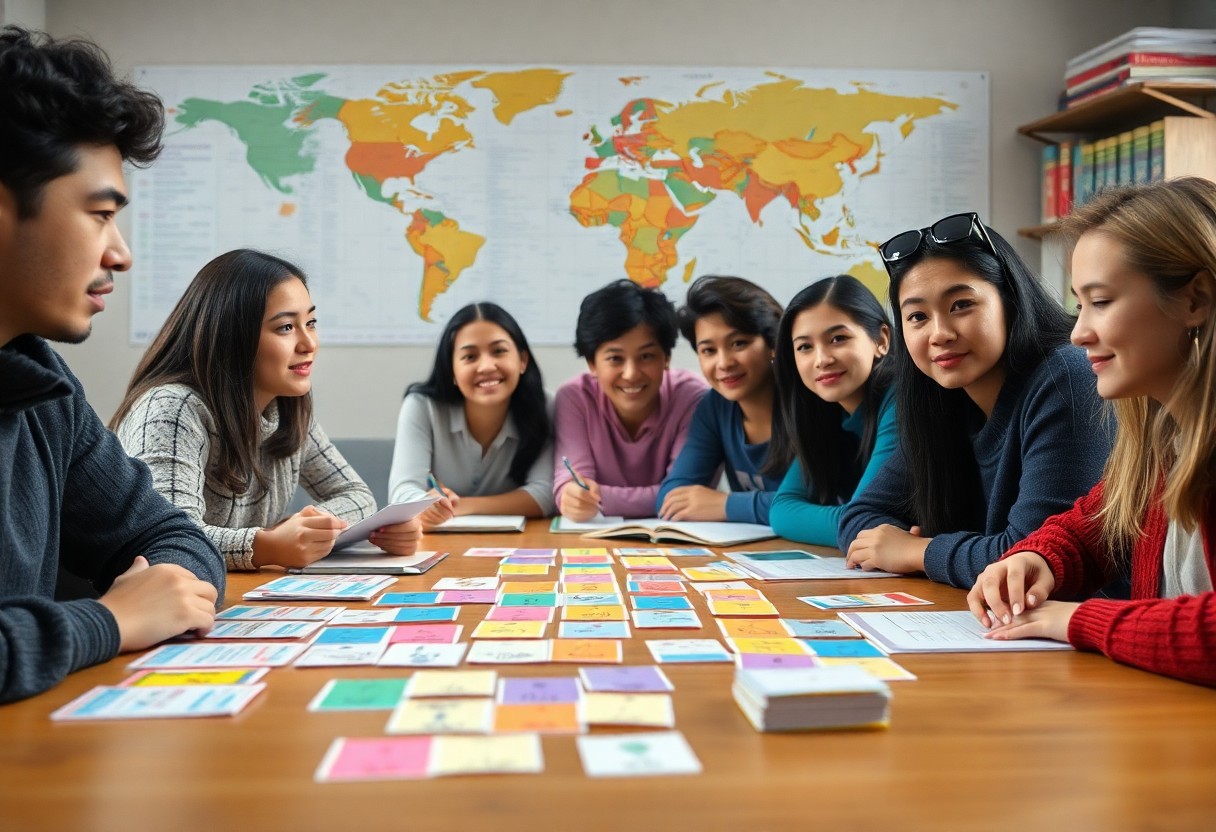
As you initiate on the journey of learning a new language, you will encounter various tools to aid your progress. You will find that flashcards are a simple, yet effective means to familiarize yourself with vocabulary and phrases. By using flashcards, you can test your knowledge and identify areas where your understanding is lacking, allowing you to focus your studies on those specific aspects, and thereby enhancing your overall comprehension of the language. Your approach to language learning will likely involve flashcards in some capacity.

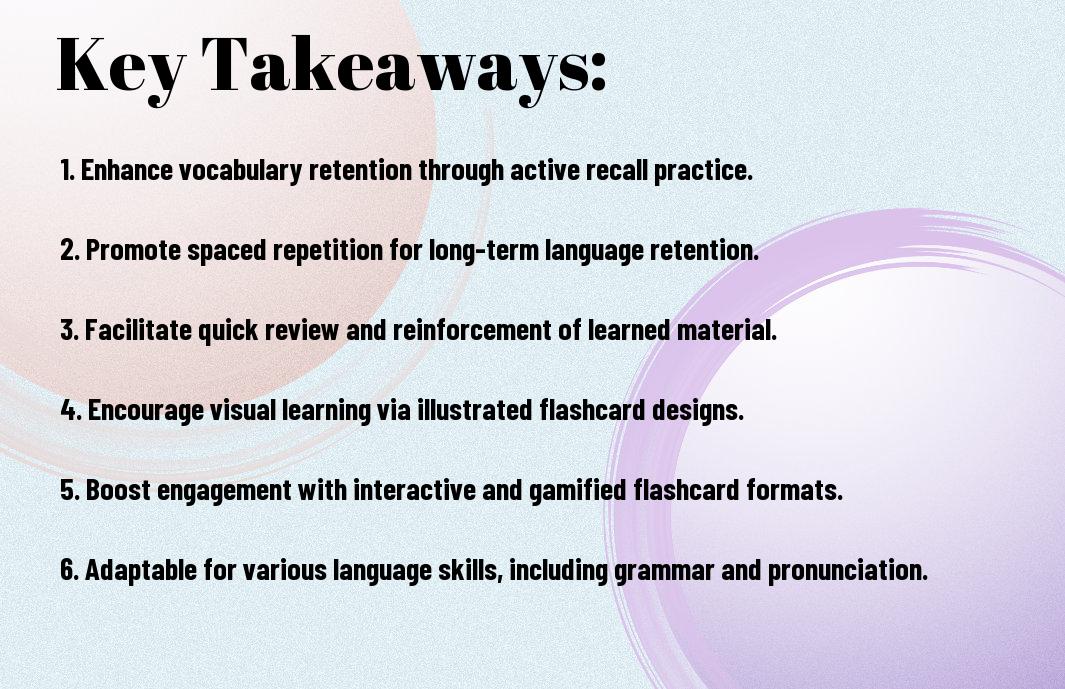
Key Takeaways:

  • The use of flashcards can be an effective tool in language learning, helping learners to memorize new vocabulary and grammar rules.
  • Active recall is a key benefit of using flashcards, as it requires learners to engage with the material and test their knowledge, rather than simply passively reading or listening to it.
  • Spaced repetition is another important aspect of flashcard use, where learners review material at increasingly longer intervals to help solidify it in their .
  • Flashcards can be used in a variety of contexts, including in the classroom, as a study aid, or as part of a language learning app, making them a flexible tool for learners.
  • By incorporating visuals and audio into flashcards, learners can create a more multisensory experience, which can help to enhance Retention and understanding of the material.

The Benefits of Flashcards

To effectively learn a new language, you need to utilize various tools, and flashcards are one of the most effective methods. They offer a simple yet efficient way to expand your knowledge and improve your understanding of a new language.

Improved Vocabulary Retention

Aiming to enhance your vocabulary, you will find that flashcards help you retain new words and their meanings, allowing you to build a strong foundation in the language you are learning.

Enhanced Memorization Techniques

By employing flashcards, you can develop your ability to memorize new information, such as grammar rules and phrases, which will aid you in your language learning journey.

Understanding how your brain processes information is key to using flashcards effectively. You will find that the repetition and active recall involved in using flashcards help reinforce new knowledge, making it easier for you to apply it in practical situations, and as you progress, you will become more proficient in utilizing this technique to your advantage.

Flashcard Design and Creation

While designing your flashcards, you should consider the layout and content to maximize your learning experience. You can find inspiration and guidance on effective flashcard use by reading articles such as Do Flashcards Really Work? Yes – Here’s How!, which provides valuable insights into the benefits and implementation of flashcards in your language learning journey.

Effective Keyword Selection

At the heart of a well-designed flashcard lies your ability to choose the most relevant keywords that will aid your understanding and recall of new vocabulary. You will need to select words that are representative of the concept or phrase you are trying to learn, allowing you to make connections between the new language and your existing knowledge.

Image Association Methods

An integral part of creating effective flashcards is using image association methods to link new words or phrases to memorable images. You can use pictures or diagrams to create vivid mental connections, making it easier for you to recall the associated word or phrase.

Due to the visual nature of image association methods, you will find that your flashcards become more engaging and interactive, facilitating a deeper understanding of the language. By incorporating images into your flashcards, you can create a powerful learning tool that will help you to reinforce new vocabulary and phrases, making your language learning experience more enjoyable and effective.

Interactive Flashcard Activities

Unlike traditional learning methods, interactive flashcard activities can make language learning more engaging and effective. You can create digital flashcards with audio, images, and text to practice vocabulary and phrases in context.

Quizzes and Games

Alike the aforementioned activities, quizzes and games can be created using flashcards to test your knowledge and reinforce new language skills in a fun and competitive way.

Group Study Sessions

Studying with others, you can use flashcards to collaborate on language learning, sharing knowledge and tips to improve your skills collectively.

At this stage, you will find that group study sessions become increasingly beneficial, as you can discuss complex grammar rules, practice conversations, and learn from one another’s mistakes, promoting a sense of community and accountability in your language learning journey.

Personalized Flashcard Approaches

Now, as you explore the world of flashcards, you can discover how to tailor them to your needs by visiting How To Use Foreign Language Flashcards To Learn a New Language for insights, thereby enhancing your learning experience.

Tailoring to Individual Learning Styles

Learning your way, you find that personalized flashcards can be adapted to suit your preferences, allowing you to focus on areas where you need improvement, thus making the learning process more efficient.

Tracking Progress and Adjustments

The ability to monitor your progress is vital, as it enables you to identify areas that require more attention and make adjustments to your flashcard approach accordingly, ensuring you stay on track with your language learning goals.

Approaches to tracking progress involve regularly reviewing your flashcards, identifying patterns of difficulty, and adjusting the content or frequency of review to optimize your learning experience, allowing you to refine your strategy and make steady progress in your language learning journey, as you continually assess and refine your approach to achieve your goals.

Overcoming Common Challenges

Despite the benefits of flashcards, you may encounter obstacles in your language learning journey. You will need to develop strategies to overcome these challenges and stay on track.

Maintaining Motivation

At this stage, you are likely to experience a surge in motivation, and it is important to capitalize on this energy to drive your progress, setting achievable goals and tracking your progress to sustain your enthusiasm.

Avoiding Burnout

For your own benefit, you should prioritize self-care and take regular breaks to avoid exhaustion, as this can hinder your ability to focus and retain new information.

And as you continue to use flashcards, you will find that avoiding burnout is vital to maintaining a healthy and productive learning routine, allowing you to recharge and approach your studies with renewed vigor and dedication, ultimately leading to more effective language acquisition and a stronger grasp of the material.

Integrating Flashcards into Language Learning

Keep in mind that flashcards can be a valuable tool in your language learning journey. You can use them to reinforce new vocabulary, grammar rules, and phrases, helping to solidify your understanding of the language.

Supplementing Traditional Courses

About the time you start a language course, you will find that flashcards can be a useful supplement to your traditional learning materials, allowing you to review and practice outside of class.

Independent Study Techniques

Below the surface of traditional language learning methods, you will discover that flashcards can be a powerful tool for independent study, enabling you to take control of your learning pace and focus on areas where you need improvement.

Also, as you research deeper into independent study techniques, you will find that flashcards can be used in conjunction with other methods, such as spaced repetition and active recall, to create a personalized learning system that suits your needs and learning style, allowing you to make the most of your time and effort.

Final Words

To wrap up, you have seen the significance of flashcards in language learning. As you continue to enhance your language skills, consider exploring How to Use Flashcards Effectively for Language Learning to maximize your progress. By leveraging flashcards, you will be able to reinforce your vocabulary and develop a more nuanced understanding of your target language, ultimately leading to more effective communication. Your language learning journey will thus become more efficient and enjoyable.

FAQ

Q: What is the main purpose of using flashcards in language learning?

A: The primary purpose of using flashcards in language learning is to help learners acquire and reinforce new vocabulary in a efficient and engaging way. Flashcards typically consist of a word or phrase on one side and its translation or definition on the other, allowing learners to quiz themselves and track their progress. By using flashcards, language learners can build their vocabulary, improve their pronunciation, and develop a stronger understanding of grammar and sentence structure.

Q: How can flashcards be used effectively in language learning to improve retention and comprehension?

A: Flashcards can be used effectively in language learning by incorporating them into a regular study routine. Learners can start by creating physical or digital flashcards with new vocabulary and then use spaced repetition to review them at increasingly longer intervals. This technique helps to solidify new words and phrases in long-term memory. Additionally, learners can use flashcards to practice active recall, where they try to recall the meaning or pronunciation of a word without looking at the answer. This approach strengthens the connection between the word and its meaning, leading to better retention and comprehension.

Q: Can flashcards be used in conjunction with other language learning tools and methods to enhance their effectiveness?

A: Absolutely, flashcards can be used in conjunction with other language learning tools and methods to enhance their effectiveness. For example, learners can use flashcards to supplement language learning apps, textbooks, or online courses. Flashcards can also be used in conjunction with other study techniques, such as making sentences or creating stories using the new vocabulary. Furthermore, learners can share flashcards with language exchange partners or tutors, who can provide feedback and pronunciation guidance. By combining flashcards with other language learning tools and methods, learners can create a comprehensive and engaging study routine that helps them achieve their language learning goals.

Skip to content