simon weiner

The Role of Technology in Modern Language Learning

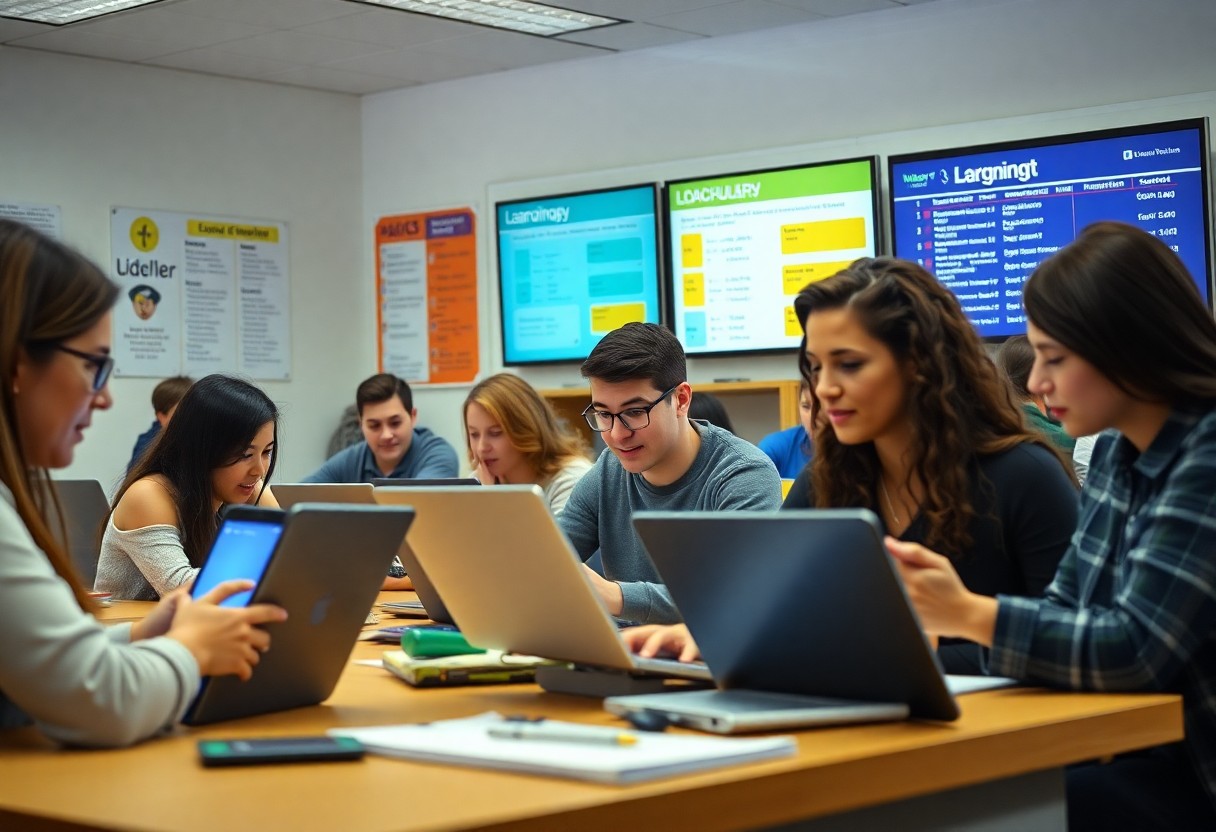
As you commence on learning a new language, you’ll discover that technology plays a significant role in enhancing your learning experience. Your ability to access various resources and tools will help you stay engaged and motivated. With the plethora of language learning apps, online courses, and multimedia materials available, you can now personalize your learning journey to suit your needs and skills. You will find that technology helps you to practice, track your progress, and connect with native speakers, making language learning more efficient and enjoyable.

Key Takeaways:

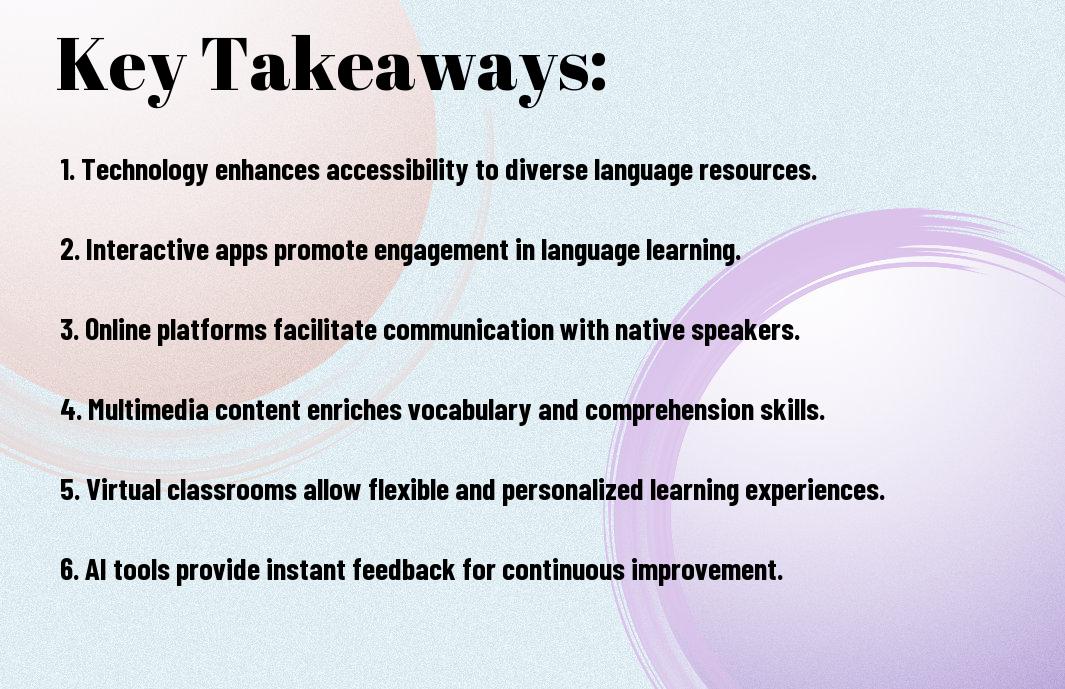
  • The integration of technology in language learning has increased accessibility and flexibility for learners, allowing them to learn at their own pace and from any location.
  • Online platforms and mobile apps have made it possible for learners to engage in interactive lessons and virtual conversations, improving their pronunciation and communication skills.
  • The use of artificial intelligence and data analytics in language learning software enables personalized learning experiences, providing learners with tailored feedback and assessment to help them achieve their language goals.

The Evolution of Language Learning

While exploring the history of language learning, you will discover that it has undergone significant transformations over the years, influenced by various factors, including technological advancements, changing learner needs, and innovative teaching methods.

Traditional Methods

Approximately, you will find that traditional language learning methods relied heavily on textbooks, grammar rules, and language labs, which often resulted in a rigid and ineffective learning experience, limiting your ability to engage with the language in a more immersive and interactive way.

Technological Advancements

Emerging developments in technology have revolutionized the way you learn languages, providing access to a wide range of digital resources, including language learning apps, online courses, and virtual classrooms, which enable you to learn at your own pace and convenience.

Further, as you probe deeper into the world of technological advancements in language learning, you will find that these innovations offer personalized learning experiences, real-time feedback, and opportunities to interact with native speakers, making the learning process more engaging, effective, and enjoyable, allowing you to achieve your language learning goals more efficiently and confidently.
Digital Tools and Resources

Assuming you are looking to improve your language skills, you will find a plethora of digital tools and resources at your disposal, designed to cater to your unique learning needs and styles, enabling you to learn more efficiently.

Language Learning Apps

Any serious language learner can benefit from utilizing language learning apps, which provide you with an interactive and immersive experience, allowing you to practice your language skills on-the-go, and receive instant feedback on your progress.

Online Courses and Tutorials

Above all, online courses and tutorials offer you the flexibility to learn at your own pace, with access to a wide range of languages, courses, and instructors, helping you to stay motivated and engaged throughout your learning journey.

Hence, as you explore online courses and tutorials, you will discover that many platforms provide you with personalized learning plans, video lessons, and opportunities to practice speaking with native speakers, which can significantly enhance your language proficiency and fluency, ultimately helping you to achieve your language learning goals.

Virtual Classrooms and Communities

Despite the physical distance, virtual classrooms and communities enable you to connect with fellow language learners and instructors from around the world, fostering a sense of belonging and motivation in your language learning journey.

Online Collaboration Platforms

Through online collaboration platforms, you can engage in discussions, share resources, and participate in activities with your peers, allowing you to practice your language skills in a supportive and interactive environment.

Social Media and Language Exchange

About the role of social media in language learning, you can leverage platforms to find language exchange partners, join language learning groups, and access a wealth of language learning resources, facilitating your progress and enhancing your overall language learning experience.

Social media platforms provide you with an opportunity to practice your language skills in a real-world context, enabling you to engage with native speakers, share your thoughts and ideas, and get feedback on your language usage, which can help you improve your language proficiency and build your confidence in using the language.

Artificial Intelligence and Adaptive Learning

Your language learning journey can be significantly enhanced by leveraging artificial intelligence and adaptive learning. This technology enables you to learn at your own pace, receiving real-time feedback and adjusting the difficulty level according to your progress.

AI-Powered Language Tools

By utilizing AI-powered language tools, you can access a wide range of interactive lessons, exercises, and quizzes tailored to your needs and goals. These tools provide you with an immersive learning experience, helping you develop your language skills efficiently.

Personalized Learning Experiences

With the help of AI-driven algorithms, you can create a customized learning path that suits your learning style, interests, and abilities. This personalized approach allows you to focus on areas where you need improvement, maximizing your learning outcomes.

Consequently, you will find that your language skills improve rapidly as you engage with the content that resonates with you the most. Your progress is constantly monitored, and the AI system adapts to your learning patterns, ensuring that you stay motivated and engaged throughout your language learning journey, ultimately helping you achieve your goals more effectively.
Challenges and Limitations

Keep in mind that technology integration in language learning comes with its own set of challenges. You will encounter limitations, such as infrastructure and technical issues, that can hinder your progress.

Accessibility and Equity

For your consideration, uneven access to technology and internet connectivity can affect your ability to participate in online language learning activities, making it difficult to achieve your goals.

Effective Integration and Implementation

On the other hand, you need to consider how to effectively integrate technology into your language learning routine, ensuring that it supports your learning objectives and doesn’t become a distraction.

For instance, you can start by identifying your learning needs and goals, and then selecting the most suitable technological tools and resources to help you achieve them, such as language learning apps, online courses, or virtual language exchange platforms, and by doing so, you will be able to maximize the benefits of technology in your language learning journey.

Future Directions and Innovations

After exploring the current state of technology in language learning, you can look forward to exciting developments. For more information, visit The Role of Technology in Language Learning: Tools and Techniques to discover the latest research.

Emerging Trends and Technologies

Alongside existing technologies, you will encounter new innovations that enhance your learning experience, offering personalized and interactive lessons.

Potential Impact on Language Education

To fully leverage technology, you should consider how it can transform your language learning journey, making it more engaging and effective.

Potential applications of technology in language education are vast, and as you explore these opportunities, you will find that they can help you develop a more nuanced understanding of languages, allowing you to communicate more confidently and accurately, and you can apply this knowledge in various contexts, from personal to professional settings.

Conclusion

Considering all points, you can see that technology plays a significant role in modern language learning, enhancing your learning experience. You have access to various tools and resources that make learning more engaging and effective. Your ability to practice and improve your language skills is greatly increased, allowing you to achieve your goals more efficiently. As you continue to learn, you will find that technology is an invaluable aid in your language learning journey.

FAQ

Q: What impact has technology had on modern language learning, and how has it changed the way we approach language acquisition?

A: Technology has significantly impacted modern language learning, providing learners with unprecedented access to language resources, interactive tools, and opportunities for practice. With the rise of online platforms, mobile apps, and social media, learners can now engage with languages in more immersive and personalized ways. This shift has enabled a more self-directed and flexible approach to language learning, allowing individuals to learn at their own pace and according to their interests. Moreover, technology has facilitated connection with native speakers and language exchange partners worldwide, enhancing the potential for authentic language practice and cultural exchange.

Q: How do digital tools and platforms support language learners in developing their reading, writing, listening, and speaking skills?

A: Digital tools and platforms offer a wide range of activities and resources designed to target specific language skills. For reading, learners can access e-books, online newspapers, and blogs that cater to their level and interests. Writing skills are developed through interactive exercises, grammar guides, and prompts for creative writing. Listening and speaking skills are enhanced through podcasts, audiobooks, video lectures, and language exchange apps that allow for oral practice with native speakers or AI-powered chatbots. Additionally, multimedia resources such as videos and interactive quizzes provide engaging and dynamic ways to learn vocabulary and grammar, making the learning process more enjoyable and effective.

Q: What are some of the challenges associated with using technology for language learning, and how can learners overcome these challenges to achieve their goals?

A: Despite the numerous benefits, there are several challenges associated with using technology for language learning, including the potential for distraction, the need for self-motivation, and issues related to the quality and reliability of online resources. To overcome these challenges, learners should set clear goals and schedules, select high-quality, reputable learning platforms, and balance screen time with face-to-face interaction and physical activity. Moreover, engaging in a community of learners, whether online or offline, can provide support, motivation, and opportunities for practice. By being aware of these challenges and adopting strategies to manage them, learners can maximize the benefits of technology in their language learning journey and achieve significant progress in their target language.
The Most Influential Languages in Global Communication

As you navigate the complexities of global interaction, you’ll notice that certain languages dominate your conversations, media, and online content. Your ability to communicate effectively relies on understanding these languages, which have become the cornerstone of international exchange. You may wonder which languages hold the most sway, and how they impact your daily life, from business to social media. This essay will explore the most influential languages, shedding light on their significance and your role in the global conversation.

Key Takeaways:

To understand the dynamics of global communication, it’s imperative to identify the languages that have the most significant impact. Here are the key points:

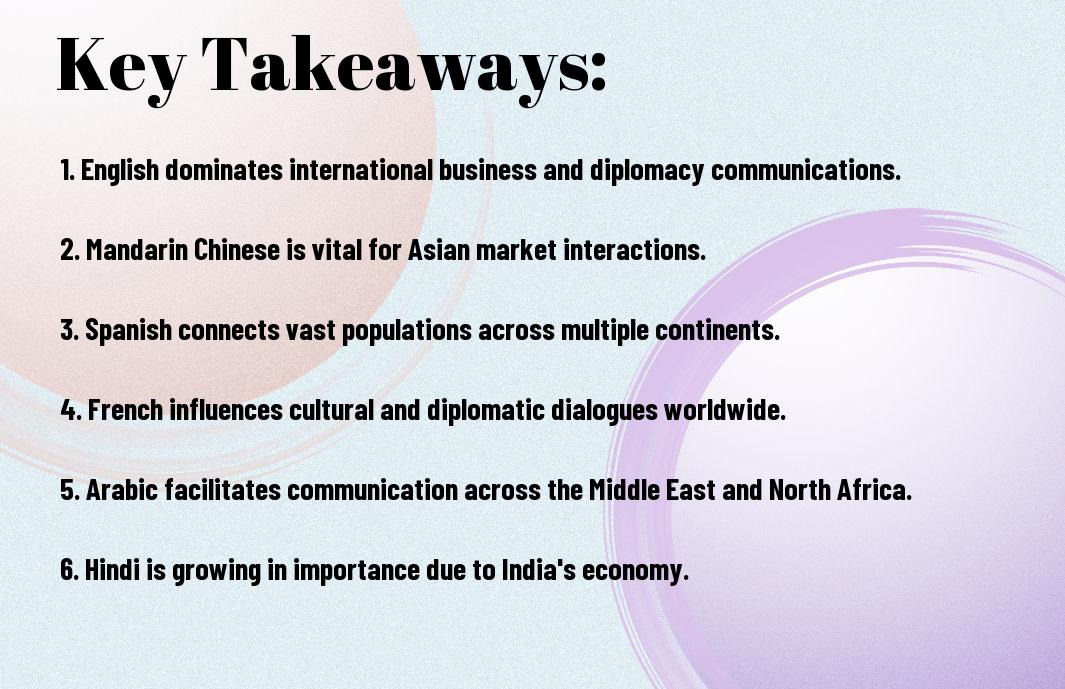
  • The English language plays a dominant role in global communication, serving as the primary language for international business, science, and technology.
  • The use of Mandarin Chinese is increasingly significant due to China’s growing economic influence, making it a key language for trade and cultural exchange.
  • The spread of Arabic and Spanish is also notable, given the large number of native speakers and the geographic reach of these languages, which contributes to their importance in global communication networks.

    Language Dominance

    Your understanding of language dominance is shaped by the most widely spoken languages in the world, which have a significant impact on global communication.

    English as a Global Language

    Around the globe, English is the language of international business, science, and entertainment, making it the most dominant language in the world, and you likely use it to communicate with people from different countries.

    Mandarin Chinese as a Rising Power

    Language skills in Mandarin Chinese are becoming increasingly valuable, as China’s economic influence expands, and you may find yourself needing to learn this language to stay competitive in the global market.

    Global economic trends indicate that Mandarin Chinese will continue to grow in importance, and as you consider the languages that will shape the future of international communication, you should take into account the rising status of Mandarin Chinese, which is already spoken by over a billion people, and its potential to rival English as a global language.

    Historical Influence

    Even as you explore the history of languages, you’ll notice that some have had a lasting impact on global communication. The influence of ancient languages can still be seen in modern languages today, shaping the way you express yourself and understand others.

    Latin and its Legacy

    Around the time of the Roman Empire, Latin emerged as a dominant language, and its legacy can be seen in many modern languages, including your own, as you use words derived from Latin roots in your daily conversations.

    Arabic and its Impact on Science and Culture

    Always a significant force, Arabic has contributed greatly to your understanding of science, mathematics, and culture, as you find Arabic terms and concepts woven into your knowledge of these fields.

    And as you probe deeper into the history of Arabic’s influence, you’ll discover that it has had a profound impact on the development of various sciences, including mathematics, astronomy, and medicine, with many Arabic terms and concepts becoming an integral part of your vocabulary and understanding of these subjects.

    Economic Factors

    To understand the influence of languages in global communication, you should consider the economic factors at play. Some key points to note include:

    • Global trade
    • Commerce

    As you explore the role of languages in the economy, you can find more information in My Guide to the Most Influential Languages in the World as a language learner. Any language you choose to learn will impact your career prospects.

    Trade and Commerce

    Alongside economic growth, a number of languages have emerged as key players in international trade. You will find that languages such as English, Mandarin, and Arabic are dominant in global commerce, facilitating communication between nations and driving economic development.

    Global Business and Language

    Business leaders recognize the importance of language skills in today’s global market. You need to be able to communicate effectively with clients, partners, and colleagues from diverse linguistic backgrounds to succeed in international business.

    For instance, as you navigate the complexities of global business, you will encounter various languages that hold significant economic value. You may find that speaking multiple languages, such as Spanish, French, or German, can give you a competitive edge in your career, allowing you to connect with customers, negotiate deals, and expand your business into new markets. You will discover that language skills are imperative for building strong relationships with international partners and staying ahead in the global economy.

    Cultural Exchange

    Keep in mind that languages play a significant role in shaping your understanding of the world. As you engage with different cultures, you’ll find that language is a key factor in facilitating exchange and cooperation.

    Language and Identity

    Culturally, your language helps define your sense of self and community, influencing your perceptions and interactions with others. You’ll notice that language is often closely tied to identity, shaping your values and beliefs.

    Language and Media

    Beneath the surface of global communication, your access to information is often determined by the languages you speak. You’ll find that language can limit or expand your access to media, shaping your worldview and cultural knowledge.

    In fact, as you explore the role of language in media, you’ll discover that it has a profound impact on your ability to engage with global events, ideas, and cultures. You’ll see that languages like English, Spanish, and Mandarin dominate international media, while others may be largely absent, limiting your exposure to diverse perspectives and ideas.

    Technological Advancements

    Unlike traditional methods, technological advancements have revolutionized the way you communicate globally. You can explore The 10 Most Spoken Languages In The World to understand the impact of technology on language learning.

    Internet and Social Media

    Above all, the internet and social media have made it easier for you to connect with people from diverse linguistic backgrounds, fostering global communication and cultural exchange.

    Language Learning and Translation Tools

    Adeptly, language learning and translation tools have become crucial for effective global communication, enabling you to overcome language barriers and engage with people from different parts of the world.

    Learning a new language has become more accessible than ever, thanks to the array of language learning and translation tools available to you. You can now use online resources to learn languages at your own pace, and translation tools to communicate with people who speak different languages, making global communication more efficient and effective for you.

    Regional Languages

    After exploring global languages, you’ll find that regional languages play a significant role in shaping your communication. You’ll notice that certain languages dominate specific regions, influencing culture and trade.

    Spanish and Portuguese in the Americas

    Linguistically, you’ll observe that Spanish and Portuguese are prevalent in the Americas, with your interactions often involving these languages in business and tourism.

    French and German in Europe

    Similarly, you’ll discover that French and German are prominent in Europe, with your travels often requiring knowledge of these languages to navigate effectively.

    A closer look at French and German in Europe reveals that you’ll encounter these languages in various aspects of your life, from education to entertainment, making them crucial for your understanding of European culture and communication.

    To wrap up

    Conclusively, you now have a sense of the most influential languages in global communication. You see that your ability to speak languages like English, Mandarin, or Spanish can significantly impact your interactions worldwide. As you navigate the complexities of global communication, your understanding of these languages will serve as a foundation for forging connections across cultures, and you will be better equipped to engage with diverse perspectives and ideas.

    FAQ

    Q: What are the most influential languages in global communication and why are they significant?

    A: The most influential languages in global communication include English, Mandarin, Spanish, Arabic, and French. These languages are significant because they are widely spoken and are often used as official languages in international organizations, business, and diplomacy. English, for instance, is the primary language of international business, science, and technology, while Mandarin is the most spoken language in the world, with a large number of native speakers. Spanish and Arabic are also widely spoken and are official languages in many countries, while French is an official language in several international organizations, including the United Nations.

    Q: How do these languages impact global communication and international relations?

    A: The most influential languages in global communication have a profound impact on international relations, trade, and cultural exchange. They facilitate communication between people from different countries and cultures, enabling the exchange of ideas, goods, and services. For example, English is often used as a lingua franca in international business meetings, while Arabic is an important language for communication in the Middle East and North Africa. Additionally, the spread of these languages has also led to the exchange of cultural practices, values, and beliefs, promoting cross-cultural understanding and cooperation. The dominance of these languages can also influence the way information is disseminated and consumed globally, shaping public opinion and international policy.

    Q: What is the future of language in global communication, and will the dominance of these languages continue?

    A: The future of language in global communication is likely to be shaped by technological advancements, demographic changes, and shifting global power dynamics. While English is likely to remain a dominant language in global communication, the rise of emerging economies such as China and India may lead to an increased use of Mandarin and other languages. Additionally, the growing importance of social media and online communication may lead to the emergence of new languages or dialects, such as pidgins or simplified languages. Furthermore, language learning and translation technologies are becoming increasingly sophisticated, making it easier for people to communicate across language barriers, which may reduce the dominance of a few select languages and promote greater linguistic diversity in global communication.

How to Perfect Accent and Intonation in Languages

Key Takeaways:

To improve your language skills, focus on the following points:

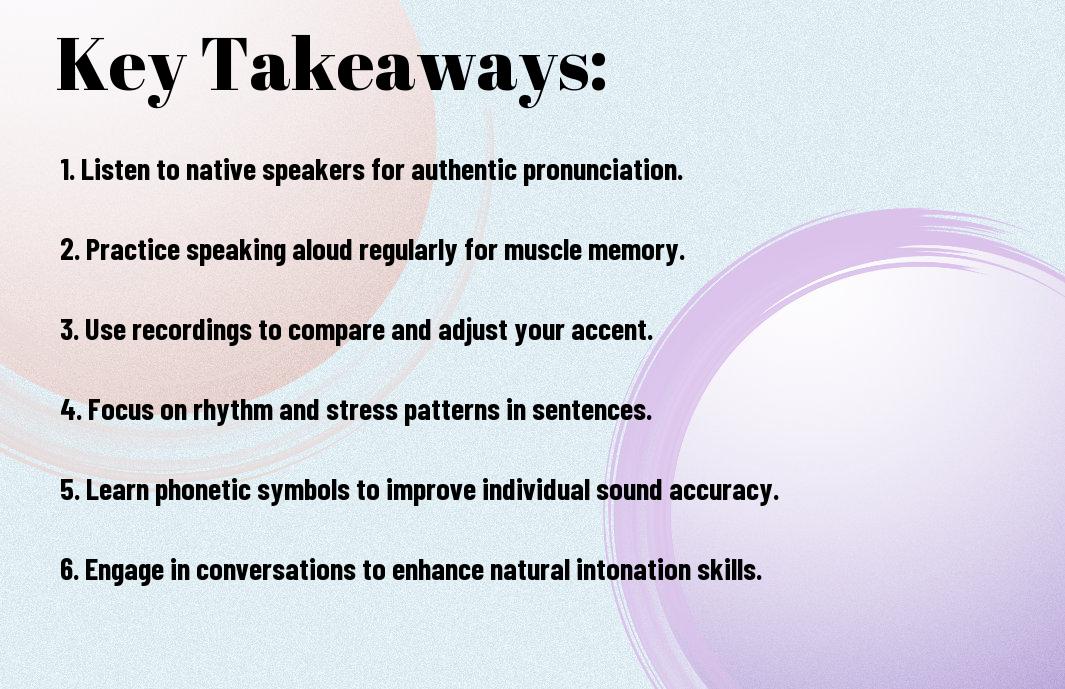
  • Develop your listening skills by exposing yourself to native speakers, podcasts, and audio materials to get accustomed to the natural intonation and accent of the language.
  • Practice pronunciation regularly by recording yourself and comparing your speech with native speakers to identify areas that need improvement, focusing on stress and pitch patterns.
  • Immerse yourself in the language by watching TV shows and movies, engaging in conversations with native speakers, and using language learning apps to develop a more natural flow and fluency in your speech.

Developing Accent

The key to mastering a language lies in its accent, and you’ll need to dedicate time to perfecting yours. Your goal is to sound as natural as possible, and this requires a lot of practice and patience. You’ll need to focus on intonation, rhythm, and individual sounds to develop an authentic accent.

Identifying Key Sounds

Anyway, you should start by identifying the key sounds that are unique to the language you’re learning. You’ll need to pay close attention to how native speakers pronounce certain words and phrases, and try to mimic them as closely as possible. Your listening skills will be imperative in this process.

Practicing Pronunciation

Anyway, you can practice your pronunciation by listening to native speakers and trying to repeat what they say. You’ll find that the more you practice, the more comfortable you’ll become with the sounds and rhythm of the language. Your pronunciation will improve significantly with consistent practice.

Developing your pronunciation skills takes time and effort, but it’s worth it in the end. You’ll be able to express yourself more clearly and confidently, and you’ll sound more like a native speaker. As you continue to practice, you’ll notice significant improvements in your ability to communicate effectively in the language, and you’ll be able to hold conversations with native speakers without struggling to make yourself understood.

Mastering Intonation

If you want to sound like a native speaker, you need to work on your intonation. This involves understanding the rise and fall of your voice when speaking, which can completely change the meaning of a sentence. You’ll need to practice consistently to develop an ear for intonation.

Recognizing Patterns

For instance, you’ll notice that different languages have distinct intonation patterns. You’ll start to pick up on these patterns as you listen to native speakers and practice speaking yourself. Your ability to recognize these patterns will help you improve your overall intonation.

Improving Inflection

Similarly, patterns of inflection will become clearer as you practice speaking. You’ll start to notice how your voice rises and falls when asking questions or making statements. This awareness will help you improve your inflection and sound more natural.

Hence, as you work on improving your inflection, you’ll find that your speech becomes more engaging and expressive. You’ll be able to convey subtle shades of meaning and emotion, drawing your listeners in and keeping them interested. This, in turn, will help you communicate more effectively and build stronger connections with others.

Language Immersion

For effective language learning, surround yourself with the language you want to master, and you’ll find that your accent and intonation will improve dramatically as you absorb the sounds and rhythms of the language.

Surrounding Yourself with the Language

With constant exposure to your target language, you’ll start to pick up on nuances that might have otherwise gone unnoticed, and your brain will begin to mimic the patterns and intonations you hear.

Engaging with Native Speakers

Native to the language, speakers will help you refine your accent and intonation, offering you a unique opportunity to learn from those who have spoken the language their entire lives, and you’ll find that your language skills will improve rapidly.

It is through these interactions that you’ll be able to practice your language skills in a real-world setting, and you’ll gain valuable feedback from native speakers, allowing you to tweak your accent and intonation to sound more natural and fluent, drawing you closer to your goal of perfecting your language skills.

Effective Listening

Unlike other language skills, listening requires patience and dedication to master, and you’ll find that your accent and intonation improve dramatically as you tune in to the sounds and rhythms of the language you’re learning.

Paying Attention to Rhythm

After you’ve started listening regularly, you’ll begin to pick up on the rhythm of the language, and you’ll notice that your own pronunciation is becoming more natural and fluid, allowing you to express yourself with greater confidence and precision.

Imitating Native Speakers

The key to perfecting your accent and intonation is to immerse yourself in the sounds and rhythms of native speakers, and you’ll find that mimicking their pronunciation helps you develop a more authentic tone and style.

Rhythm is what sets native speakers apart from non-native ones, and as you work on imitating the rhythm of native speakers, you’ll notice that your accent and intonation become more nuanced and expressive, allowing you to convey subtle shades of meaning and emotion in your speech, and you’ll be amazed at how much more effectively you can communicate in the language you’re learning.

Recording and Feedback

Keep in mind that perfecting your accent and intonation requires practice and self-assessment, as discussed in If you already speak a foreign language with a good accent, how do you develop a perfect accent. This will help you identify areas that need improvement.

Recording Yourself

By taking the time to record yourself speaking, you’ll be able to pinpoint the nuances of your accent and intonation that need work, allowing you to make adjustments and track your progress over time.

Analyzing Your Progress

Your ability to analyze your own recordings will help you develop a more discerning ear for the sounds and rhythms of the language, enabling you to make targeted improvements.

This process of analysis is where the real growth happens, as you’ll be able to identify patterns and habits that are holding you back, and make conscious efforts to break them, ultimately leading to a more natural and authentic accent and intonation.

Overcoming Challenges

Now that you’ve started working on your accent and intonation, you’ll encounter obstacles that test your dedication. You’ll face setbacks, but don’t let them discourage you. Your progress may be slow, but with persistence, you’ll overcome these challenges and improve your language skills.

Managing Accent Interference

Around the time you start to develop your new accent, your native accent may interfere. About this issue, it’s vital to practice consistently, focusing on reproducing the correct sounds and intonation of the target language. You’ll need to develop an awareness of your own speech patterns to minimize interference.

Building Confidence

Ironically, as you progress, self-doubt may creep in. Interfering thoughts can hinder your ability to speak confidently. You must push past these doubts and focus on your strengths, using them to build your confidence in speaking the language.

At this stage, you’ll need to challenge yourself to speak in front of others, whether it’s with a language exchange partner or in a classroom setting. As you continue to practice and receive feedback, you’ll become more comfortable with your accent and intonation, and your confidence will grow, allowing you to express yourself more effectively in the language.

Conclusion

Drawing together the threads of accent and intonation, you’ll find that your journey to mastering a language is almost complete. As you practice, your ear will become attuned to the subtleties of native speech, and your own voice will begin to echo with authenticity. With dedication and persistence, you’ll unlock the doors to fluent communication, and your words will flow with the rhythm and music of your chosen language, allowing you to express yourself with confidence and precision.

FAQ

Q: What are the best ways to improve my accent in a foreign language?

A: To perfect your accent in a foreign language, it’s crucial to immerse yourself in the language as much as possible. Listen to native speakers, watch TV shows and movies in the target language, and try to mimic the sounds and intonation patterns you hear. You can also practice speaking with native speakers, either in person or through online language exchange platforms. Additionally, consider working with a language teacher or tutor who can provide personalized feedback on your pronunciation and help you identify areas for improvement. Regular practice and consistent exposure to the language will help you develop a more authentic accent over time.

Q: How can I work on intonation patterns in a foreign language?

A: Intonation patterns can be challenging to master, but there are several strategies that can help. Start by listening to native speakers and paying close attention to the rise and fall of their pitch when they speak. Try to identify the stressed and unstressed syllables in words and the overall rhythm of the language. You can also practice speaking in front of a mirror, recording yourself, or working with a language exchange partner to get feedback on your intonation. Another helpful technique is to practice repeating phrases and sentences after native speakers, focusing on mimicking their intonation patterns as closely as possible. With consistent practice, you can develop a more natural-sounding intonation in the target language.

Q: Are there any specific exercises or techniques that can help me improve my accent and intonation in a short amount of time?

A: Yes, there are several exercises and techniques that can help you improve your accent and intonation quickly. One effective method is to practice tongue twisters, which can help you develop the muscle memory needed to pronounce words and sounds correctly. You can also try Shadowing, a technique where you repeat what a native speaker is saying, trying to mimic their pronunciation, intonation, and rhythm exactly. Another helpful exercise is to practice speaking in different emotions and contexts, such as acting out a scene or role-playing a conversation. This can help you develop a more nuanced understanding of the language and improve your accent and intonation in a variety of situations. With consistent practice and dedication, you can see significant improvement in your accent and intonation in a relatively short period of time.

The Role of Memory Techniques in Language Learning

Key Takeaways:
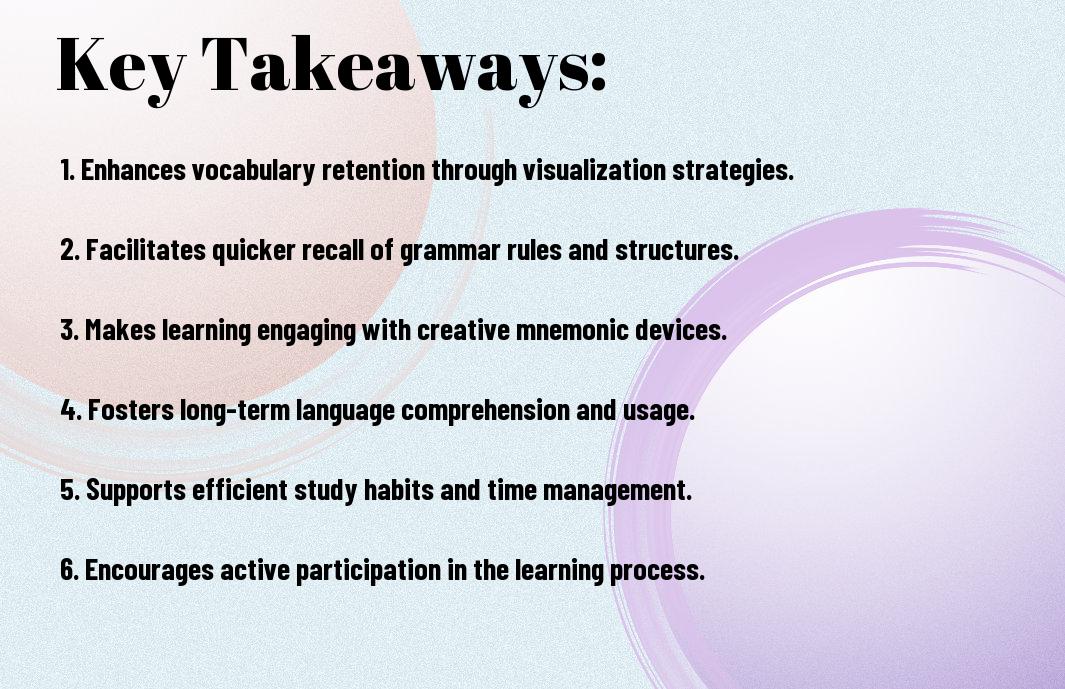
  • Effective use of mnemonic devices can significantly improve language learners’ ability to retain new vocabulary and grammar rules, leading to better overall language proficiency.
  • Association techniques, such as linking new words to personal experiences or emotions, can help learners to connect new language information to their existing knowledge and experiences, making it easier to recall.
  • Developing a range of repetition strategies, including spaced repetition and active recall, can help language learners to consolidate new language information in their long-term memory, allowing for more efficient and effective language learning.

    The Power of Memory

    Before you commence on your language learning journey, it’s imperative to understand the significance of memory techniques in acquiring and retaining new information, and you’ll soon discover how it can elevate your learning experience.

    Improving Vocabulary Retention

    Retention of new words and phrases is key to language learning, and you’ll find that using memory aids like flashcards and association can significantly improve your ability to recall vocabulary, making your learning process more efficient and enjoyable for you.

    Enhancing Language Comprehension

    Powering your way through language barriers, you’ll discover that memory techniques can help you grasp complex grammar rules, idiomatic expressions, and nuances of the language, allowing you to communicate more effectively and confidently, as you progress in your learning journey.

    This ability to comprehend and engage with the language on a deeper level will enable you to navigate real-life situations with ease, understand various contexts, and even pick up on subtle cues, all of which will make you a more proficient and expressive language user, capable of conveying your thoughts and ideas with precision and clarity.

    Effective Memory Techniques

    Even the most avid language learners can struggle to commit new information to long-term memory. You’ll find that employing memory techniques can greatly enhance your ability to absorb and retain new language skills.

    Association and Visualization

    Around the time you start learning a new language, you’ll discover that linking new words to vivid mental images or personal experiences helps solidify them in your mind, making recall easier for you.

    Repetition and Spaced Repetition

    About the most effective way to reinforce new language skills is through repetition, where you revisit and practice new words or phrases at increasingly longer intervals, allowing you to gradually build a strong foundation.

    Due to the way your brain processes and retains information, spaced repetition can be particularly helpful in language learning, as it helps prevent the forgetting curve and allows you to focus on the most challenging material, ultimately making your learning process more efficient and effective for you.

    Language Learning Strategies

    Unlike other skills, language learning requires a combination of cognitive and memorization techniques. You will find that using the right strategies can greatly enhance your ability to absorb and retain new information, making the learning process more efficient and effective.

    Using Mnemonics and Acronyms

    After experimenting with different methods, you’ll discover that mnemonics and acronyms can be powerful tools in your language learning arsenal, helping you to associate new words and phrases with memorable images or sounds.

    Creating Mental Maps and Chains

    Among the various techniques at your disposal, creating mental maps and chains can be a particularly effective way to organize and connect new information, allowing you to visualize relationships between words and concepts.

    Maps of your mental landscape can become increasingly complex as you learn more, but this is a good thing – it means you’re building a rich and interconnected web of knowledge that you can draw upon as you continue to learn and grow, and you’ll find that your ability to recall and use new language improves dramatically as a result.

    Overcoming Language Barriers

    Despite the challenges you face in learning a new language, you can overcome them by utilizing effective memory techniques. You can learn more about how working memory impacts language acquisition by reading The Role of Working Memory in SLA, which sheds light on this fascinating topic.

    Building Confidence and Fluency

    Fluidly, you’ll start to notice improvements in your language skills as you practice consistently, and your confidence will grow, allowing you to express yourself more effectively in your new language.

    Practicing Active Recall and Summarization

    Linguistically, you’ll find that active recall and summarization are powerful tools to reinforce your learning, helping you to better understand and retain new information.

    Understanding how to apply these techniques can make a significant difference in your language learning journey, as you’ll be able to engage more actively with the material, testing your knowledge and identifying areas where you need more practice, and you’ll find that your progress will accelerate as you continue to challenge yourself in this way.

    The Role of Technology

    After delving into the world of memory techniques, you’ll find that technology plays a significant role in enhancing your language learning experience. You can utilize various digital tools to aid in your learning journey, making the process more engaging and effective.

    Utilizing Language Learning Apps

    The advent of language learning apps has revolutionized the way you learn a new language, providing you with a wealth of resources at your fingertips, from interactive lessons to speech recognition tools.

    Leveraging Digital Flashcards and Quizzes

    The digital equivalent of traditional flashcards and quizzes offers you a convenient way to test your knowledge and track your progress, helping you identify areas where you need to focus your attention.

    With digital flashcards and quizzes, you can create customized learning materials tailored to your needs, allowing you to practice vocabulary and grammar in a fun and interactive way, and you’ll find that your language skills improve significantly as you continue to use these tools to reinforce your learning.

    Maintaining Motivation

    All language learners face the challenge of staying motivated, and you are no exception. You’ll encounter obstacles, but with the right mindset, you can overcome them and achieve your goals.

    Setting Realistic Goals and Rewards

    Motivated by your desire to learn, you set achievable targets and reward yourself for each milestone reached, keeping your enthusiasm high.

    Finding a Language Learning Community

    Between the lines of language learning books and online resources, you discover the value of connecting with fellow learners, sharing experiences, and gaining new insights.

    For instance, joining a language exchange program or online forum can provide you with a sense of belonging and accountability, as you engage with others who are on a similar journey, helping you stay motivated and inspired to continue improving your language skills.

    Summing up

    Presently, you’ve seen how memory techniques can be a powerful ally in your language learning journey. You’ve discovered that by using these techniques, you can improve your ability to absorb and retain new information, making your learning process more efficient. As you continue to hone your skills, you’ll find that your mind becomes a sharper tool, capable of picking up nuances and details that once seemed elusive, and your grasp of the language will become more confident and intuitive, drawing you deeper into the world of communication.

    FAQ

    Q: What is the significance of memory techniques in language learning, and how do they impact the learning process?

    A: Memory techniques play a vital role in language learning as they enable learners to effectively encode, store, and retrieve vocabulary, grammar rules, and other important language components. By utilizing methods such as mnemonics, visualization, and chunking, learners can improve their ability to absorb and apply new language information, leading to enhanced fluency and accuracy in communication. These techniques also help to alleviate the cognitive load associated with language learning, allowing learners to focus on higher-level skills such as comprehension and expression.

    Q: How can memory techniques be applied to vocabulary acquisition in language learning, and what are some effective methods for learners to try?

    A: Memory techniques can be applied to vocabulary acquisition through various methods, including the use of flashcards, word associations, and mind maps. Learners can also employ techniques such as spaced repetition, where vocabulary is reviewed at increasingly longer intervals to help solidify it in long-term memory. Additionally, learners can use visual imagery to associate new words with memorable images or scenarios, making them easier to recall. By incorporating these methods into their study routine, learners can expand their vocabulary and improve their ability to use new words in context.

    Q: Can memory techniques be used to improve grammar and sentence structure in language learning, and if so, how can learners effectively utilize them?

    A: Yes, memory techniques can be used to improve grammar and sentence structure in language learning. Learners can use techniques such as rhymes, songs, or chants to help them internalize grammar rules and patterns, making them easier to apply in sentence construction. Additionally, learners can create mental frameworks or diagrams to organize and visualize grammar concepts, such as verb conjugations or sentence diagrams. By using these techniques, learners can develop a deeper understanding of how the language works and improve their ability to express themselves accurately and effectively in writing and speaking.

How Learning a New Language Shapes Identity

As you initiate on the journey of acquiring a new language, you begin to unravel the intricacies of your own identity. Your sense of self is woven into the fabric of the words you speak, and the languages you know. Delving into the depths of linguistic expression, you may wonder, how does the language you speak influence your perception of yourself? For insight, you can explore How Much Does the Language We Speak Shape Our Identity, and discover the profound impact it has on your inner world, as your newfound language skilfully reshapes your thoughts, emotions, and ultimately, your very being.

Key Takeaways:

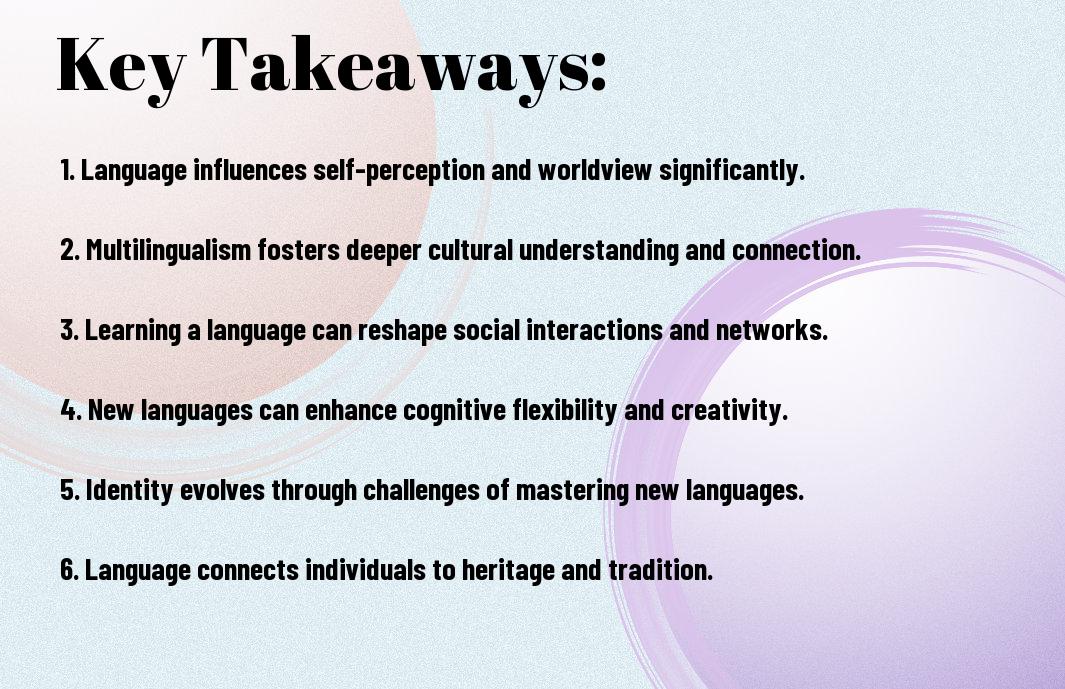
  • Learning a new language can significantly influence an individual’s self-perception and identity formation, as it exposes them to new cultural norms and ways of thinking that can shape their worldview and behavior.
  • The process of acquiring a new language can lead to a shift in perspective, enabling individuals to see themselves and their place in the world from a different linguistic lens, and potentially altering their sense of belonging to a particular community or culture.
  • As individuals become proficient in a new language, they may experience a redefinition of self, as they navigate the complexities of communicating in a new linguistic context and form new social connections that can, in turn, impact their overall identity and personal growth.

The Linguistic Self

To research into language and identity, you must consider how your sense of self is intertwined with the words you speak. Your language shapes your perceptions, influences your thoughts, and molds your understanding of the world.

Language as a Reflection of Identity

Before you acquire a new language, your identity is already embedded in your native tongue, with its nuances and expressions that define your cultural background and personal experiences. Your language is a mirrored reflection of your soul, revealing your values, beliefs, and attitudes towards life.

The Impact of Language on Thought Patterns

At the heart of language lies the power to shape your thought patterns, as the words you use influence the way you think, categorize, and make sense of the world. Your language can expand or limit your cognitive horizons, depending on its grammatical structures, vocabulary, and idiomatic expressions.

Also, as you learn a new language, you begin to notice how your thoughts are reshaped by the linguistic frameworks you acquire, allowing you to perceive your surroundings from novel perspectives, and to develop a more nuanced understanding of yourself and your place in the world, as your linguistic self evolves and adapts to the new linguistic landscape.

Cultural Immersion

Any journey into a new language is a journey into the depths of your own identity, as you navigate the complexities of a foreign culture and find yourself reflected in its nuances. As you examine deeper into the language, you begin to uncover the intricacies of your own self, and the boundaries between your native and adopted cultures start to blur.

Acquiring a New Language as a Rite of Passage

Beneath the surface of language acquisition lies a transformative process, one that reshapes your perspective and redefines your sense of self. As you initiate on this journey, you are forced to confront your own limitations and biases, and to adapt to new ways of thinking and being.

Navigating Cultural Nuances and Norms

Above language lies a complex web of cultural norms and nuances, which you must learn to navigate in order to truly master the language. As you immerse yourself in the culture, you begin to develop a heightened sense of awareness, one that allows you to pick up on subtle cues and nuances that would have otherwise gone unnoticed.

Consequently, as you continue to navigate the complexities of cultural nuances and norms, you find that your sense of identity begins to shift and evolve. You start to see yourself as a multifaceted being, with multiple layers and dimensions, and your understanding of the world and your place within it becomes more nuanced and sophisticated. Your experiences, perceptions, and interactions with others are filtered through the lens of your new language, and you begin to develop a deeper appreciation for the richness and diversity of human culture, and the many ways in which it can shape and transform your sense of self.

Identity Formation

Now, as you launch on the journey of learning a new language, you begin to uncover the intricate dynamics of identity formation, where the boundaries of self and culture blur, and your sense of being evolves.

The Role of Language in Shaping Self-Perception

The more you immerse yourself in a new language, the more you become aware of the subtle ways it influences your thoughts, emotions, and perceptions, gradually reshaping your self-image and your place within the world.

Language and Belonging: Finding One’s Place

Like a thread weaving through the fabric of your existence, language connects you to a community, a culture, and a history, allowing you to find your footing in unfamiliar territory and to claim your space within a new social landscape.

Understanding the profound impact of language on your sense of belonging, you start to see how it facilitates your navigation of complex social dynamics, enabling you to forge meaningful connections with others and to cultivate a deeper appreciation for the cultural nuances that surround you, as you continue to grow and evolve in your newfound linguistic skin.

Language and Memory

For you, the process of language acquisition is intricately tied to the unfolding of your personal narrative, as the words and phrases you learn become an integral part of your identity and inform your perception of the world around you.

The Intersection of Language and Personal History

Across the landscape of your life, language has played a significant role in shaping your experiences, influencing the way you perceive and interpret the world, and informing your sense of self, as the nuances of language weaving a complex tapestry of meaning and significance.

How Language Influences Recall and Nostalgia

By virtue of its capacity to evoke powerful emotions and associations, language has the ability to transport you back to moments from your past, conjuring feelings of nostalgia and wistfulness, as the sounds and rhythms of a language become inextricably linked to your personal history.

Another notable aspect of the relationship between language and memory is the way in which your native language can influence your recollection of events, with certain words and phrases serving as triggers that unlock a floodgate of memories, allowing you to relive moments from your past with vivid clarity, and inviting you to reflect on the ways in which language has shaped your understanding of yourself and your place in the world.

The Bilingual Mind

Unlike the monolingual mind, your bilingual mind is a dynamic, ever-changing entity, shaped by the constant interplay between two languages, influencing your thoughts, emotions, and perceptions in profound ways.

Cognitive Benefits of Language Acquisition

Cognitively, you will develop enhanced executive control, as your brain navigates the complexities of multiple languages, allowing you to switch between them with greater ease and flexibility, ultimately improving your problem-solving skills and mental agility.

The Complexities of Multilingual Identity

Linguistically, your multilingual identity is a rich tapestry, woven from the threads of different languages, cultures, and experiences, shaping your sense of self and informing your interactions with the world around you, as you navigate the nuances of multiple linguistic and cultural contexts.

In addition, as you probe deeper into the complexities of your multilingual identity, you will begin to uncover the subtle ways in which language influences your thoughts, feelings, and behaviors, and how your multiple languages intersect and interact, creating a unique and ever-evolving sense of self, one that is both deeply personal and profoundly shaped by the languages you speak.

Societal Implications

Your new language becomes a part of your social fabric, influencing how you interact with others and perceive yourself within the community.

Language as a Social Construct

To understand the role of language in shaping identity, you must consider its social context, where language is constructed and negotiated among individuals and groups, reflecting and influencing societal norms and values.

The Politics of Language and Identity

After acquiring a new language, you begin to see how language and identity are intertwined, with language policies and practices often reinforcing social hierarchies and power dynamics, affecting how you position yourself within the social landscape.

Identity, in this sense, becomes a complex interplay of language, culture, and power, as you navigate the nuances of your new language and its associated cultural norms, values, and beliefs, which in turn shapes your sense of self and your place within the larger societal framework, inviting you to ponder the intricate relationships between language, identity, and the social world you inhabit.

Summing up

Summing up, as you research into a new language, you begin to unravel the intricacies of your own identity. Your sense of self evolves, like a tapestry woven with new threads of thought and expression. You find that your perceptions, values, and beliefs are reshaped, as the language seeps into your being, transforming your very understanding of the world and your place within it.

FAQ

Q: How does learning a new language influence one’s sense of identity?

A: Learning a new language has a profound impact on one’s sense of identity. As individuals acquire a new language, they are not only gaining a new means of communication but also adopting a new cultural perspective. This newfound understanding and connection to a different culture can broaden one’s worldview, allowing them to see things from multiple angles and fostering a more nuanced sense of self. Furthermore, being able to communicate in a new language can grant access to previously inaccessible communities and networks, potentially leading to new friendships, relationships, and a sense of belonging to these groups, which in turn can shape and expand one’s identity.

Q: Can learning a new language change one’s perception of their native culture and identity?

A: Yes, learning a new language can significantly alter one’s perception of their native culture and identity. Through the process of learning, individuals are often prompted to compare and contrast the new language and culture with their own, leading to a deeper understanding and appreciation of their native culture. This comparative analysis can highlight aspects of one’s native culture that were previously taken for granted, fostering a new sense of pride and connection to one’s heritage. Moreover, the experience of being an outsider in a new linguistic and cultural context can provide a unique perspective on one’s own identity, encouraging self-reflection and potentially leading to a reevaluation of one’s values, beliefs, and cultural practices.

Q: How does bilingualism or multilingualism affect one’s overall identity and sense of belonging in different cultural contexts?

A: Bilingualism or multilingualism can have a profound effect on one’s overall identity, particularly in terms of sense of belonging. Individuals who speak multiple languages often find themselves navigating between different cultural identities, depending on the context in which they are communicating. This navigational ability can lead to a flexible and adaptive sense of identity, as bilingual or multilingual individuals learn to switch between languages and cultural norms. This flexibility can be both empowering, as it allows for a deeper connection to multiple cultures, and challenging, as it may lead to feelings of not fully belonging to any one culture. Nonetheless, the ability to communicate across linguistic and cultural boundaries can enrich one’s identity, offering a unique position of cultural mediation and understanding, and often leading to a rich and multifaceted sense of self and belonging.

Skip to content