simon weiner

How to Find the Best Language Tutors Online

As you begin on learning a new language, you’ll likely need guidance from a qualified tutor. Your search for the perfect online tutor can be overwhelming, but with the right approach, you can find a tutor who meets your needs. You’ll want to consider factors such as their teaching style, experience, and expertise in your desired language. By doing your research and evaluating your options, you can make an informed decision and take your language skills to the next level.

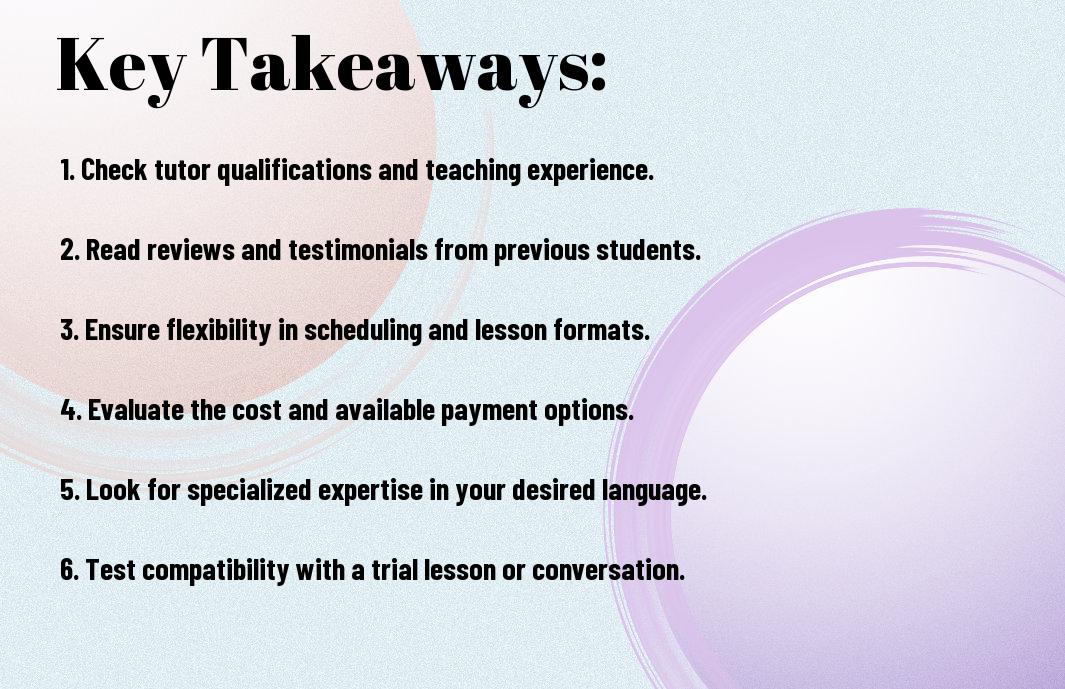
Key Takeaways:

  • When searching for online language tutors, consider their qualifications and experience in teaching languages to ensure you find the best fit for your learning needs.
  • Look for reviews and testimonials from previous students to gauge the tutor’s effectiveness and teaching style, and to get a sense of their strong and weak points.
  • Utilize online platforms and marketplaces that connect students with certified language tutors, and take advantage of free trials or consultations to assess the tutor’s compatibility with your learning goals and schedule.

    Benefits of Online Language Tutors

    A great way to learn a new language is with online tutors, you can find them on platforms like Preply: Learn with the best online language tutors, which offers a wide range of qualified instructors.

    Flexibility and Accessibility

    The flexibility to learn at your own pace and from any location is a major advantage of online language tutors, allowing you to fit lessons into your busy schedule.

    Personalized Learning Experience

    Experience the benefits of a tailored learning approach with online language tutors, who can adapt to your learning style and goals, helping you to achieve fluency faster.

    Language learning is most effective when it’s personalized to your needs, and with online tutors, you can expect to receive feedback and guidance that addresses your strengths and weaknesses, enabling you to make rapid progress and stay motivated throughout your learning journey.
    Qualities of an Effective Language Tutor

    Any language learner seeks a tutor who can provide personalized guidance and support. When searching for a tutor, consider their ability to communicate complex concepts and tailor lessons to your needs and goals.

    Native Speaker or Fluency

    Speakers of a language often possess an innate understanding of its nuances, which can be beneficial for your learning experience. You will likely prefer a tutor who is a native speaker or has achieved fluency in the language you want to learn.

    Teaching Experience and Qualifications

    .Qualified instructors typically possess a strong educational background and extensive teaching experience. You should look for a tutor with a proven track record of successfully teaching languages to students with goals and proficiency levels similar to yours.

    Also, as you evaluate a tutor’s experience and qualifications, consider their ability to adapt to your learning style and pace. You can assess this by reviewing their teaching philosophy, asking about their approach, and observing a trial lesson to ensure it aligns with your expectations and needs.

    How to Find the Best Online Tutors

    For your language learning journey, finding the right online tutor is important. You want someone who is experienced, knowledgeable, and fits your learning style. With so many options available, it can be overwhelming to choose the best one. You’ll need to consider factors like their qualifications, teaching methods, and availability.

    Online Platforms and Reviews

    To locate the best online tutors, you can start by searching on dedicated platforms and reading reviews from other students. This will give you an idea of their teaching style, strengths, and weaknesses, helping you make an informed decision about who to hire.

    Referrals and Word of Mouth

    Above all, personal recommendations can be a great way to find a reliable online tutor. You can ask friends, family, or colleagues who have learned a language online for suggestions. They can provide valuable insights into their experience and help you find a tutor who suits your needs.

    Referrals from people you trust can be particularly helpful in finding a tutor who is a good fit for you. You can ask them about their experience with the tutor, including the tutor’s teaching style, communication skills, and ability to adapt to your learning pace. This will help you get a better understanding of what to expect and make a more informed decision when choosing your online tutor.

    Evaluating a Tutor’s Profile

    Not all profiles are created equal, so you’ll want to do your research before selecting a tutor. You can find helpful tips on How to find a language tutor? : r/languagelearning to aid in your search.

    Profile Completeness and Accuracy

    Along with a thorough profile, you should look for complete and accurate information about the tutor’s qualifications and experience, which will help you make an informed decision about your language learning journey.

    Tutor’s Specializations and Expertise

    Before choosing a tutor, consider their specializations and expertise to ensure they align with your learning goals and needs, allowing you to achieve your desired level of language proficiency.

    Tutors with specialized knowledge in specific areas, such as business or conversational language, can provide you with tailored lessons and personalized feedback, enhancing your learning experience and helping you to reach your full potential, and you should prioritize finding a tutor whose expertise matches your objectives.

    Conducting a Successful First Session

    After selecting a language tutor, it’s time to conduct your first session. This initial meeting sets the tone for your learning journey, allowing you to gauge the tutor’s teaching style and your compatibility.

    Setting Clear Goals and Expectations

    Successfully establishing a strong foundation is key, so you’ll want to clearly outline your objectives and what you hope to achieve with your tutor’s guidance, ensuring you’re both on the same page.

    Assessing Tutor-Student Compatibility

    With this first session, you’ll be able to assess whether your personalities and learning styles mesh, which is necessary for a productive tutoring experience, allowing you to adjust your approach as needed.

    Further, as you engage with your tutor, pay attention to how they adapt their teaching methods to your needs, and whether you feel comfortable asking questions and seeking clarification, helping you determine if this is the right fit for your language learning goals.

    Tips for Effective Online Learning

    Once again, you’ll want to ensure you’re getting the most out of your online lessons. Consider the following:

    • Set clear goals
    • Establish a routine

    The key to success lies in your ability to stay focused and motivated.

    Creating a Conducive Learning Environment

    Beneath the surface of a successful online learning experience lies a well-organized workspace. You should select a quiet, dedicated area for your lessons, free from distractions and interruptions, to help you stay on track.

    Active Participation and Engagement

    Approximately, your participation will directly impact your progress, so it’s necessary to engage fully with your tutor and the material.

    Online learning requires you to be proactive and engaged, asking questions and seeking clarification when needed. You’ll need to take an active role in your lessons, sharing your thoughts and ideas, and providing feedback to your tutor. This will help you get the most out of your lessons and achieve your language goals more efficiently, as you’ll be able to address any challenges or difficulties you encounter in a timely manner, with your tutor’s guidance and support.

    Conclusion

    Drawing together all the factors to consider, you can now find the best language tutors online to suit your needs. You will be able to assess your requirements, search for qualified tutors, and evaluate their expertise to make an informed decision. By following these steps, you can find your ideal language tutor and achieve your learning goals, improving your language skills with your chosen online tutor.

    FAQ

    Q: What are the key factors to consider when searching for the best language tutors online?

    A: When searching for the best language tutors online, there are several key factors to consider. First, look for tutors who are native speakers of the language you want to learn, as they will be able to provide the most authentic and accurate instruction. Additionally, consider the tutor’s qualifications and experience, including their teaching certifications and the number of years they have been teaching. You should also look for tutors who specialize in the specific language and level you are interested in, whether it’s beginner, intermediate, or advanced. Furthermore, check the tutor’s reviews and ratings from previous students to get an idea of their teaching style and effectiveness. Finally, consider the tutor’s availability and scheduling flexibility to ensure that they can accommodate your schedule and learning needs.

    Q: How can I evaluate the effectiveness of an online language tutor before committing to lessons?

    A: Evaluating the effectiveness of an online language tutor before committing to lessons can be done in several ways. First, many online tutoring platforms offer free trial lessons or consultations, which can give you a chance to assess the tutor’s teaching style and see if you are a good fit. You can also ask the tutor questions about their teaching approach, such as what methods they use, what materials they provide, and how they assess student progress. Additionally, you can ask to see examples of their lesson plans or watch a video of one of their lessons to get a sense of how they teach. You can also check the tutor’s social media profiles or website to see if they have any testimonials or reviews from previous students. By doing your research and asking the right questions, you can get a sense of whether an online language tutor is a good fit for you.

    Q: What are some red flags to watch out for when selecting an online language tutor, and how can I ensure a safe and productive learning experience?

    A: When selecting an online language tutor, there are several red flags to watch out for. One major red flag is if the tutor is not transparent about their qualifications, experience, or teaching approach. Another red flag is if the tutor is pushing for a large upfront payment or commitment, as this can be a sign of a scam. You should also be wary of tutors who are not responsive to your questions or concerns, or who seem unprofessional or unprepared. To ensure a safe and productive learning experience, make sure to use a reputable online tutoring platform that screens and verifies its tutors. You should also establish clear boundaries and expectations with your tutor, including your learning goals, schedule, and communication preferences. Finally, trust your instincts and don’t be afraid to end the lessons if you feel uncomfortable or unsure about the tutor’s qualifications or approach.

How to Learn Regional Languages of Your Country

As you navigate the diverse landscape of your country, you may find yourself surrounded by languages beyond the dominant one. Your curiosity about these regional languages is natural, and learning them can be a rewarding experience. You can start by exploring the languages spoken in your vicinity, and then look for resources to learn them, such as language classes or online tutorials. By doing so, you will not only broaden your understanding of your country’s cultural heritage, but also enhance your communication with people from diverse backgrounds.

Key Takeaways:

  • Start by identifying the regional languages spoken in your country and understand their cultural significance to appreciate the diversity and richness they bring to the community.
  • Enroll in a language course or find a language exchange partner who is a native speaker of the regional language you want to learn, as this will help you improve pronunciation and get feedback on your progress.
  • Immerse yourself in the language environment by listening to music, watching movies, and reading books in the regional language to enhance comprehension and vocabulary.

Benefits of Learning Regional Languages

Before venturing into the process of learning regional languages, it’s crucial to consider the advantages it brings. Learning regional languages can broaden your understanding of your country’s diverse culture and history, allowing you to connect with people from different backgrounds.

Enhancing Cultural Experience

For instance, when you learn a regional language, you gain a deeper appreciation for the local customs, traditions, and way of life, enabling you to immerse yourself in the culture more fully.

Improving Communication Skills

At the heart of learning a regional language lies the ability to communicate effectively with people who speak it, allowing you to build stronger relationships and navigate everyday situations with ease.

Communication is a vital aspect of learning a regional language, as it enables you to express yourself and understand others in a more nuanced way, which can be particularly helpful in both personal and professional settings, and you will find that your interactions become more meaningful and productive as you become more proficient in the language.

Choosing the Right Language

Some countries have numerous regional languages, making it difficult to decide which one to learn. You can explore programs like the Eurasian Regional Language Program to discover the language that suits your interests. This will help you narrow down your options and choose a language that aligns with your goals.

Identifying Local Dialects

On the path to learning a regional language, you’ll encounter various dialects. You’ll need to identify the local dialects spoken in your desired region to focus your learning efforts. This will enable you to communicate effectively with native speakers and immerse yourself in the local culture.

Selecting Language Learning Resources

Along with choosing the right language, you’ll need to select suitable learning resources. You’ll find a plethora of language learning materials, including textbooks, language learning apps, and online courses. These resources will aid you in developing your language skills and staying motivated throughout your learning journey.

With a wealth of language learning resources at your disposal, you can create a personalized learning plan. You’ll be able to practice speaking, reading, and writing in your chosen language, and track your progress over time. As you continue to learn, you’ll become more confident in your ability to communicate in the regional language, and you’ll be able to connect with the local community on a deeper level. You’ll find that learning a regional language is a rewarding experience that broadens your understanding of the culture and its people.

Language Learning Methods

After deciding to learn a regional language, you will encounter various methods to achieve your goal. You can choose from immersive techniques, traditional classroom instruction, or self-study materials. Your approach will depend on your learning style, preferences, and available resources.

Immersive Learning Techniques

Methods such as language exchange programs, watching regional movies, and listening to local music can help you learn a language quickly. You will be surrounded by the language, allowing you to pick up its nuances and rhythms naturally.

Traditional Classroom Instruction

Immersing yourself in a classroom setting can provide structure and guidance as you learn a regional language. You will have the opportunity to interact with a teacher and fellow students, practicing your speaking and listening skills.

A traditional classroom setting offers a supportive environment where you can ask questions, clarify doubts, and track your progress. You will have access to textbooks, worksheets, and other learning materials, helping you build a strong foundation in the language. As you attend classes regularly, you will become more confident in your ability to communicate in the regional language.

Overcoming Language Barriers

Despite the challenges you may face, learning a regional language can be a rewarding experience. You will be able to connect with people from different backgrounds and understand their culture better. As you progress, you will become more confident in your ability to communicate effectively.

Managing Accent and Pronunciation

With consistent practice, you will be able to improve your accent and pronunciation. You can listen to native speakers, repeat phrases, and record yourself to track your progress. This will help you to develop a more authentic tone and intonation.

Building Vocabulary and Grammar

Parallel to learning new words, you will also need to understand the grammar rules of the language. You can start by learning basic phrases and sentences, and then gradually move on to more complex structures. This will help you to express yourself more accurately and effectively.

Another key aspect of building vocabulary and grammar is to immerse yourself in the language as much as possible. You can read books, watch movies, and engage in conversations with native speakers to improve your comprehension and retention. As you continue to learn, you will find that your vocabulary and grammar skills will improve significantly, enabling you to communicate with greater ease and confidence in your newly acquired language.

Practicing Language Skills

Once again, consistent practice is key to improving your language skills. You can start by speaking with native speakers, either in person or online, to get a feel for the language’s nuances and rhythm.

Conversing with Native Speakers

Skilfully, you can develop your speaking skills by engaging in conversations with native speakers, which will help you to pick up their accent, intonation, and vocabulary.

Engaging in Local Activities

Linguistically, you can improve your language skills by participating in local events, such as festivals, markets, or community gatherings, where you can interact with native speakers and practice your language skills in a real-life setting.

Even more effective is to take it a step further by joining local clubs or groups that align with your interests, allowing you to practice your language skills while doing something you enjoy, making the learning process more enjoyable and increasing your chances of retaining the language.

Staying Motivated

All learners face challenges when acquiring a new language, and your motivation may wane at times, but persistence is key to overcoming these obstacles and achieving your goals.

Setting Achievable Goals

Attainable objectives help you stay focused and driven, allowing you to track your progress and celebrate your successes, which in turn boosts your motivation to continue learning your regional language.

Joining Language Learning Communities

Accessible online forums and language exchange websites provide you with opportunities to practice your language skills and connect with fellow learners, helping you stay motivated and engaged in the learning process.

With these communities, you can find language exchange partners, participate in discussions, and learn from others who are also learning your target language, making the experience more enjoyable and helping you to stay committed to your goal of becoming proficient in your country’s regional language.

Summing up

Upon reflecting on the methods outlined, you will find that learning regional languages of your country is a straightforward process. You can start by immersing yourself in your target language, using online resources and speaking with native speakers. As you progress, you will become more comfortable with your new language, and your interactions with people from other regions will become more meaningful. By taking these steps, you will be able to appreciate your country’s linguistic diversity and connect with your fellow citizens on a deeper level.

FAQ

Q: What are the benefits of learning regional languages of my country?

A: Learning regional languages of your country can have numerous benefits, including enhanced communication with people from diverse backgrounds, improved job opportunities, and a deeper understanding of local cultures. It can also foster a sense of national unity and pride, as you develop a greater appreciation for the diversity and richness of your country’s linguistic heritage. Additionally, being proficient in regional languages can be a valuable skill in both personal and professional settings, allowing you to connect with people and access resources that may not be available otherwise.

Q: How can I start learning a regional language, and what resources are available to support my learning journey?

A: To start learning a regional language, you can begin by exploring online resources such as language learning apps, YouTube channels, and podcasts that offer lessons and tutorials. You can also look for language exchange programs, where you can practice speaking with native speakers and get feedback on your pronunciation and grammar. Furthermore, many regional languages have dedicated language schools, community centers, and cultural organizations that offer classes and workshops. You can also try to immerse yourself in the language by watching regional movies, listening to local music, and reading books and newspapers in the target language. With persistence and dedication, you can make steady progress and become proficient in the regional language of your choice.

Q: Are there any specific tips or strategies for learning regional languages, especially for those who are not familiar with the script or grammar?

A: Yes, there are several tips and strategies that can help you learn a regional language, even if you’re not familiar with the script or grammar. One approach is to start with the basics, such as learning the alphabet, common phrases, and vocabulary related to everyday life. You can also focus on developing your listening and speaking skills by practicing with native speakers, listening to podcasts or audio recordings, and speaking as much as possible. Additionally, you can use flashcards, language learning apps, and other tools to help you memorize new words and phrases. It’s also crucial to be patient and persistent, as learning a new language takes time and effort. You can also try to find a language partner or tutor who can guide you and provide feedback on your progress, helping you to stay motivated and overcome any challenges you may encounter.

The Best Languages to Learn for Tech Enthusiasts

As you probe into the world of technology, you’ll find that learning the right programming languages can significantly enhance your skills. Your interest in tech likely stems from a desire to innovate and create. To achieve this, you need to speak the language of computers. In this article, you will discover the most valuable languages to learn, allowing you to unlock new possibilities and stay ahead in the ever-evolving tech landscape. You are about to initiate on a journey to expand your technical abilities.

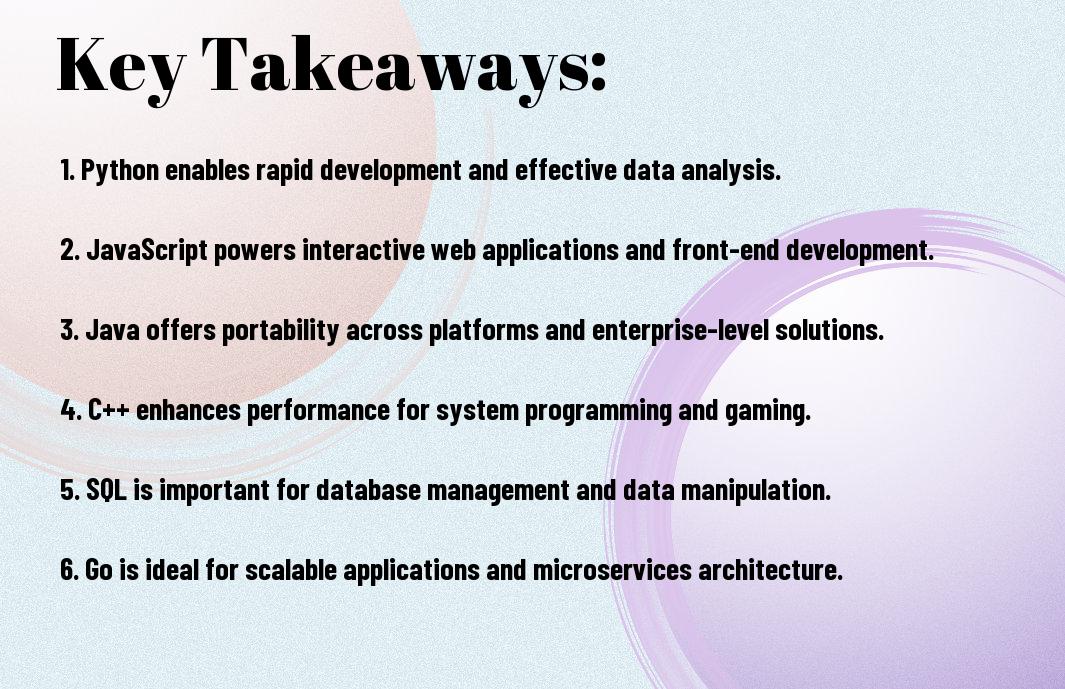
Key Takeaways:

  • The best languages to learn for tech enthusiasts include Python, Java, and JavaScript, as they are widely used in web development, data analysis, and artificial intelligence.
  • Programming languages such as C++ and Ruby are also in high demand, particularly in the fields of game development and system administration.
  • Learning in-demand languages like Swift and Kotlin can open up opportunities for mobile app development and cross-platform development, making them attractive options for tech enthusiasts looking to expand their skill set.

Benefits of Learning Programming Languages

While learning programming languages, you will discover a wide range of benefits that can enhance your tech enthusiasts’ journey. You will gain a deeper understanding of computer systems and open up new possibilities for your career and personal projects.

Improved Career Opportunities

Backing up your passion for tech with programming skills, you can unlock new career paths and increase your earning potential. You will become a more competitive candidate in the job market, with a wide range of career options available to you.

Enhanced Problem-Solving Skills

Around the globe, programmers are valued for their ability to analyze problems and develop creative solutions. You will develop strong logical thinking and problem-solving skills, which will benefit you in many areas of your life.

Improved problem-solving skills will enable you to approach complex challenges with confidence, breaking them down into manageable parts and devising innovative solutions. You will learn to debug your code, identify errors, and optimize your programs, skills that will serve you well in your future projects and endeavors.

Top Languages for Tech Enthusiasts

You will find that learning the right programming languages can significantly enhance your tech career. Your choice of language will depend on your interests and goals, but some languages are more in-demand than others.

Python for Data Science and Machine Learning

On the cutting edge of tech, Python stands out for its simplicity and versatility in data science and machine learning applications. Your proficiency in Python can open doors to exciting opportunities in these fields.

JavaScript for Web Development

Across the web development landscape, JavaScript is a dominant force, enabling you to create interactive and dynamic websites. Your knowledge of JavaScript will allow you to build robust web applications and enhance user experiences.

Consequently, as you probe deeper into JavaScript, you will discover its extensive range of libraries and frameworks, such as React and Angular, which can help you streamline your development process and create complex web applications with ease. Your mastery of JavaScript will grant you a competitive edge in the job market and open up new avenues for innovation and experimentation.

Emerging Languages in the Tech Industry

Once again, you find yourself at the forefront of innovation, with new programming languages emerging to shape the tech landscape. You can explore languages like Kotlin, Swift, and others that are gaining traction in the industry.

Kotlin for Android App Development

Among the emerging languages, Kotlin stands out for its simplicity and effectiveness in Android app development. You will find it easy to learn and use, making it an excellent choice for your next project.

Swift for iOS App Development

Similarly, Swift is quickly becoming the go-to language for iOS app development, offering you a powerful tool to create seamless and intuitive user experiences. You can leverage its high-performance capabilities to bring your app ideas to life.

At the heart of Swift’s popularity is its ability to provide you with a clean and modern syntax, making it easy to write and maintain code. You can focus on developing your app’s features and functionality, knowing that Swift will handle the underlying complexity, allowing you to create high-quality iOS apps with ease and efficiency, and taking your development skills to the next level.

Language Learning Resources

After selecting the language you want to learn, you’ll need to find the right resources to help you get started. You’ll find a wide range of options available, from online courses to books and documentation.

Online Courses and Tutorials

Resources like Codecademy, Coursera, and Udemy offer interactive coding lessons and exercises to help you learn at your own pace. You can explore various topics, from basic programming to advanced specialized courses.

Books and Documentation

On top of online resources, you can supplement your learning with books and official documentation. You can find comprehensive guides, tutorials, and reference materials to deepen your understanding of the language.

Courses may provide a foundation, but books and documentation offer in-depth knowledge and detailed explanations. You can use them to clarify concepts, explore specific topics, and develop a more nuanced understanding of the language, allowing you to become a proficient tech enthusiast.

Key Considerations for Beginners

Now, as you launch on your journey to learn a new language for tech, you’ll want to consider what languages are in demand. You can find insights on What foreign language is preferable to learn if I work on the tech industry to inform your decision.

Choosing the Right Language

Among the various options, you’ll need to select a language that aligns with your interests and career goals, considering factors such as job prospects and industry trends.

Setting Realistic Goals and Expectations

By setting achievable milestones, you’ll be able to track your progress and stay motivated throughout the learning process, which is important for success.

Language learning requires dedication and persistence, so it’s important to set realistic goals and expectations for yourself. You should consider your prior experience, the amount of time you can devote to learning, and the resources available to you. This will help you create a tailored plan that suits your needs and ensures you make steady progress in your chosen language.

Advanced Topics and Specializations

Your journey as a tech enthusiast can take you to various advanced topics, including:

  1. Artificial Intelligence
  2. Cybersecurity
Topic Description
AI Machine learning and robotics
Cybersecurity Network security and threat analysis

Artificial Intelligence and Robotics

Beside the fundamentals, you’ll explore AI applications, such as machine learning and natural language processing, to create intelligent systems that can interact with you.

Cybersecurity and Networking

After mastering the basics, you’ll investigate into network architecture, threat analysis, and security protocols to protect your systems from vulnerabilities.

Networking requires a deep understanding of how devices communicate, and as you learn more about cybersecurity, you’ll be able to design and implement secure networks that safeguard your data and systems from potential threats, allowing you to stay one step ahead of hackers and protect your digital assets.

Summing up

Ultimately, as you explore the world of tech, you’ll find that learning certain languages can enhance your skills and open new doors. You’ll discover that languages like Python, Java, and JavaScript are highly valued in the industry. By mastering these languages, you can expand your capabilities and take your tech endeavors to the next level, making your journey as a tech enthusiast more rewarding and productive. Your efforts will pay off, and you’ll be well-equipped to tackle complex challenges in the ever-evolving tech landscape.

FAQ

Q: What programming languages are most in demand for tech enthusiasts looking to start a career in the industry?

A: For tech enthusiasts, learning programming languages such as Python, JavaScript, and Java can significantly enhance career prospects. Python is versatile and widely used in data science, artificial intelligence, and machine learning. JavaScript is imperative for web development, allowing enthusiasts to create interactive web pages and develop desktop and mobile applications. Java is another popular choice, particularly for Android app development and enterprise software development. These languages are consistently in high demand across various sectors of the tech industry.

Q: How does learning a programming language benefit a tech enthusiast in terms of career advancement and personal projects?

A: Learning a programming language can profoundly impact a tech enthusiast’s career and personal projects. Professionally, it opens up opportunities in software development, data analysis, and IT, among other fields. On a personal level, it enables enthusiasts to develop their own apps, games, or software, fostering creativity and innovation. Moreover, understanding programming concepts can improve problem-solving skills and logical thinking, which are valuable assets in any career path. By acquiring programming skills, tech enthusiasts can also contribute to open-source projects, collaborate with other developers, and stay updated with the latest technological advancements.

Q: Are there any resources or platforms that tech enthusiasts can use to learn programming languages, especially for those who are beginners?

A: Yes, there are numerous resources and platforms available for tech enthusiasts to learn programming languages, catering to all levels of expertise, including beginners. Online platforms like Codecademy, Coursera, and edX offer interactive coding lessons and courses from renowned universities and institutions. Websites such as GitHub provide access to a community of developers and a wealth of open-source projects to learn from and contribute to. Additionally, YouTube channels and forums dedicated to programming can offer tutorials, tips, and support for learners. For beginners, it’s also beneficial to start with the basics of programming concepts before entering into a specific language, ensuring a solid foundation for further learning.

How to Balance Learning Multiple Languages

As you launch on the challenging journey of learning multiple languages, you will face a common dilemma: how to allocate your time and energy effectively. Your goal is to make steady progress in each language without feeling overwhelmed. You need to prioritize your schedule, set realistic goals, and develop a strategy to manage your workload. By doing so, you will be able to navigate the complexities of language learning and achieve your objectives.

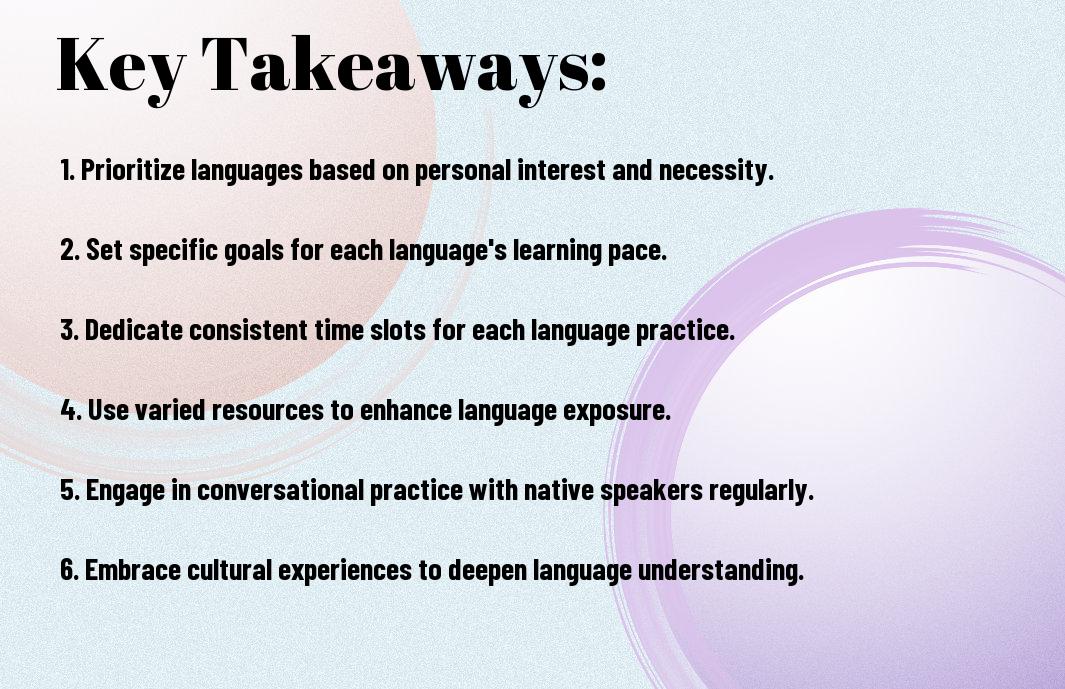
Key Takeaways:

To effectively balance learning multiple languages, consider the following points:

  • Set realistic goals and priorities to manage your time and energy efficiently, ensuring you make steady progress in each language.
  • Develop a consistent study routine, allocating specific times for each language to maintain momentum and avoid confusion between languages.
  • Utilize language learning tools and resources, such as apps, podcasts, and language exchange programs, to stay engaged and motivated in your learning journey.

Setting Goals

For your language learning journey to be successful, you need to define what you want to achieve. You can find helpful advice on managing multiple languages at For those who study two languages at the same time, how do you balance your study routine?, which can inform your approach.

Defining Language Learning Objectives

About your goals, you should consider what motivates you to learn multiple languages, and what you hope to accomplish, to help guide your efforts.

Creating a Study Schedule

With a clear plan, you can allocate time for each language, ensuring you make progress in all of them, which is vital for achieving your objectives.

It is imperative to prioritize your goals and allocate specific times for studying each language, using tools like calendars or planners to stay organized and on track, allowing you to make consistent progress and avoid burnout, as you work towards your goals, you will find that having a schedule helps you stay focused and motivated.

Language Selection

Assuming you have decided to learn multiple languages, the next step is to select the languages you want to learn. This decision will have a significant impact on your learning journey, and you should consider your motivations, interests, and goals when making this choice.

Choosing Languages to Learn

The most effective way to approach language selection is to think about your personal and professional goals, and how learning a particular language will help you achieve them. You should consider the language’s relevance to your career, travel plans, or cultural interests.

Prioritizing Language Acquisition

Along with considering your goals, you should also think about your learning style and the level of difficulty associated with each language. You may want to start with a language that is relatively easy for you to learn, and then move on to more challenging ones.

Hence, as you prioritize your language acquisition, you will need to weigh the importance of each language and allocate your time and resources accordingly. You may need to focus on one language at a time, or divide your time between two or more languages, depending on your learning style and goals. By prioritizing your language acquisition, you can create a realistic and achievable learning plan that works for you.

Time Management

Your schedule is key to balancing multiple language learning. You must prioritize your time to accommodate each language, ensuring consistent progress.

Allocating Time for Each Language

For efficient learning, divide your time among languages, setting aside dedicated periods for each, considering your goals and proficiency levels.

Avoiding Burnout and Maintaining Motivation

Timely breaks and realistic goals help you stay motivated, as overexertion can lead to burnout, hindering your progress.

And as you navigate the challenges of learning multiple languages, you will find that maintaining a balance between study and rest is vital to your success, allowing you to recharge and approach each language with renewed enthusiasm and focus, thus preventing the exhaustion that can accompany intense learning periods.

Learning Strategies

To develop effective learning strategies, you must consider your goals and schedule. As you launch on learning multiple languages, your approach should be tailored to your needs and preferences.

Immersion Techniques

With consistent practice, you can surround yourself with the languages you’re learning, using music, TV shows, and conversation to reinforce your skills.

Language Learning Tools and Resources

With access to various online platforms and language learning apps, you can supplement your learning and stay organized, tracking your progress and identifying areas for improvement.

Tools such as flashcard apps and language exchange websites can be invaluable in your language learning journey, providing you with the flexibility to learn at your own pace and connect with native speakers to practice your skills, helping you to refine your pronunciation and build confidence in using your new languages.

Staying Organized

Now that you’ve begined on learning multiple languages, staying organized is key to making progress. You’ll need to prioritize your time and schedule to ensure you’re allocating enough time for each language.

Tracking Progress and Setting Milestones

Along with setting a schedule, tracking your progress and setting milestones will help you stay motivated. You can use a journal or app to monitor your progress and celebrate your achievements.

Managing Language Learning Materials

The abundance of language learning materials can be overwhelming, but you can simplify your learning process by categorizing and prioritizing your resources. You can sort your materials into folders or digital files for easy access.

Hence, as you gather more materials, you’ll find it easier to manage your resources and focus on your learning goals. You can then adjust your approach as needed, ensuring that you’re using the most effective materials for your language learning journey, and making the most of your time and effort.

Overcoming Challenges

Keep in mind that learning multiple languages can be daunting, but with persistence, you can overcome the hurdles. You will encounter setbacks, but it’s important to stay focused on your goals.

Dealing with Language Learning Plateaus

With time, you may feel like you’re not making progress, but this is a normal part of the learning process. You can break through the plateau by adjusting your study routine or trying new materials.

Seeking Help and Support

Around you, there are numerous resources available to aid in your language learning journey. You can find language exchange partners, online forums, or tutors to help you stay motivated and improve your skills.

And as you seek help and support, you’ll find that your language learning experience becomes more enjoyable and rewarding. You can join online communities or language clubs, where you can practice speaking with native speakers and get feedback on your progress, helping you to refine your skills and stay engaged in the learning process.

Final Words

Conclusively, as you navigate the complex process of learning multiple languages, you will find that your approach must be tailored to your unique needs and goals. You must prioritize your time, set achievable milestones, and maintain consistency in your practice. By doing so, you will be able to effectively balance your language learning journey and make steady progress in mastering the languages you desire.

FAQ

Q: What is the best way to balance learning multiple languages simultaneously?

A: To effectively balance learning multiple languages, it’s crucial to create a schedule that allows you to dedicate specific times to each language. Set realistic goals and prioritize your languages based on your proficiency level and interests. Allocate your time wisely, focusing on the languages that require more attention, and make sure to leave some buffer time for review and practice. Consistency is key, so try to study each language at the same time every day or week to develop a routine.

Q: How can I avoid mixing up vocabulary and grammar rules when learning multiple languages?

A: To avoid confusion and mixing up vocabulary and grammar rules, it’s helpful to use separate notebooks, flashcards, or language learning apps for each language. This will help you keep your study materials organized and prevent you from getting languages mixed up. Additionally, focus on one language at a time during study sessions, and try to immerse yourself in each language by listening to music, watching TV shows or movies, or speaking with native speakers. This will help you develop a sense of the rhythm, tone, and nuances of each language, making it easier to distinguish between them.

Q: What strategies can I use to maintain motivation and track progress when learning multiple languages?

A: To maintain motivation and track progress, set achievable milestones and celebrate your successes, no matter how small. Use language learning apps, spreadsheets, or journals to track your progress, identify areas that need improvement, and adjust your study plan accordingly. Join a language learning community or find a language exchange partner to stay motivated and get support from others who are going through similar experiences. Regularly test your language skills, whether through quizzes, conversations with native speakers, or writing exercises, to gauge your progress and stay motivated to continue learning and improving.

The Role of Podcasts in Language Mastery

As you launch on your language learning journey, you’ll discover various tools to aid your progress. Your ability to grasp nuances and expressions can be significantly enhanced through an innovative medium: podcasts. You can leverage podcasts to immerse yourself in your target language, exposing your ears to native speakers and authentic conversations. By incorporating podcasts into your daily routine, you’ll find that your listening skills and vocabulary expand, bringing you closer to achieving language mastery.

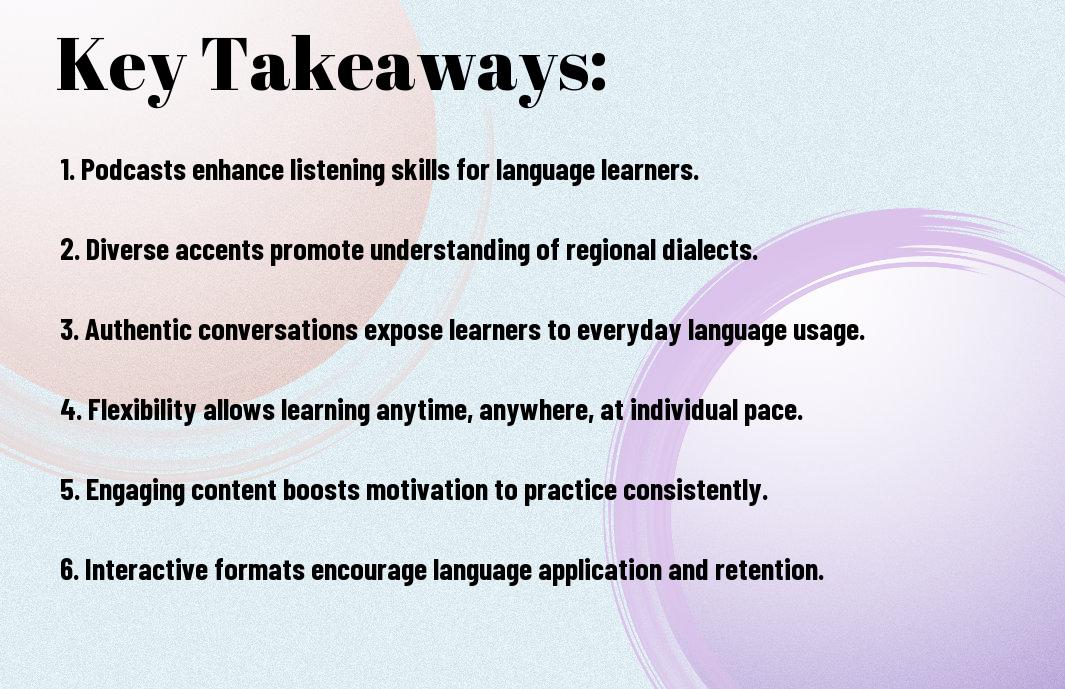
Key Takeaways:

  • Language Immersion is a key benefit of podcasts, as they provide listeners with the opportunity to hear native speakers and authentic conversations, helping to improve listening and speaking skills.
  • Podcasts offer a convenient and flexible way to learn a language, allowing listeners to learn at their own pace and on their own schedule, making them an ideal tool for language mastery.
  • Personalized learning is another advantage of podcasts, as listeners can choose from a wide range of topics and levels, selecting content that is relevant to their interests and language level, helping to keep them engaged and motivated in the learning process.

Section

The role of podcasts in language mastery is significant, as they provide you with a unique opportunity to improve your language skills in a convenient and enjoyable way. You can access a wide range of podcasts on various topics, allowing you to focus on areas that interest you the most.

subsection: Benefits of Podcasts for Language Learners

On the path to language mastery, you will find that podcasts offer numerous benefits, including exposure to native speakers, diverse accents, and real-life conversations. You can enhance your vocabulary, grammar, and pronunciation by listening to podcasts regularly.

subsection: How Podcasts Improve Listening Skills

Around the globe, language learners are using podcasts to improve their listening skills, and you can do the same. You will be able to tune in to podcasts that match your level and interests, helping you to stay motivated and engaged.

Learners like you can benefit greatly from podcasts, as they provide a relaxed and entertaining way to improve listening skills. You can listen to podcasts at your own pace, pause, and rewind to ensure you understand the content, making it an effective tool for language mastery. As you progress, you will find that your ability to comprehend various accents and speaking styles improves significantly, bringing you closer to achieving your language goals.

Section

If you’re looking to improve your language skills, podcasts can be a valuable resource. You can access a wide range of podcasts tailored to your level and interests, helping you to enhance your comprehension and vocabulary.

subsection: Vocabulary Building through Podcasts

Adept learners can use podcasts to expand their vocabulary, as they are exposed to various words and expressions in context, allowing you to understand their meanings and usage, and thus improve your language mastery.

subsection: Pronunciation Practice with Native Speakers

Alongside the benefits of listening to podcasts, you can also practice your pronunciation by mimicking native speakers, which helps you to develop an authentic accent and intonation, making your language sound more natural.

Plus, as you listen to native speakers in podcasts, you’ll become accustomed to their rhythm, stress, and intonation patterns, enabling you to pronounce words and sentences more accurately, and enhancing your overall language skills, so you can communicate more effectively in your target language.

Section

For language learners, podcasts offer a unique opportunity to improve your listening skills and expand your vocabulary. You can access a wide range of topics and genres, making it easier to find content that interests you and helps you stay motivated.

subsection: Language Immersion through Storytelling

Around the world, podcasts have become a popular way to experience immersive storytelling in your target language. You can listen to engaging narratives, interviews, and conversations that help you get used to the natural flow and rhythm of the language.

subsection: Cultural Insights and Contextual Learning

On a deeper level, podcasts provide you with cultural insights and contextual learning opportunities. You can learn about the customs, traditions, and values of the communities that speak your target language, giving you a more nuanced understanding of the language and its usage.

The cultural insights you gain from podcasts can be particularly valuable as you navigate real-life situations in your target language. You’ll be better equipped to understand the context and nuances of conversations, allowing you to communicate more effectively and build stronger relationships with native speakers. As you listen to podcasts, you’ll start to pick up on cultural references, idioms, and expressions that are often difficult to learn from textbooks or language classes alone, helping you to sound more natural and confident in your language skills.

Section

Once again, podcasts prove to be a valuable resource for language learners, as you can discover How Podcasts Can Enhance Language Learning: Insights for Language Learners and improve your skills. You can explore various topics and find the ones that suit your interests and level of proficiency.

subsection: Overcoming Language Barriers with Podcasts

Before entering into the world of podcasts, you may have felt overwhelmed by language barriers, but with the right resources, you can break through these obstacles and enhance your listening and speaking skills, allowing you to communicate more effectively in your target language.

subsection: Building Confidence in Language Skills

Above all, podcasts can help you build confidence in your language skills, as you become more comfortable with the sounds, rhythms, and nuances of the language, enabling you to express yourself more accurately and fluently.

With consistent practice and exposure to podcasts, you can develop a more natural flow in your speech and improve your comprehension, which will, in turn, boost your confidence and motivation to continue learning and improving your language skills, allowing you to achieve your goals and become a proficient language user.

Section

To effectively utilize podcasts for language mastery, you’ll want to explore various options and find the ones that suit your needs. You can discover new podcasts through online recommendations, ratings, and reviews from fellow language learners.

subsection: Popular Podcasts for Language Learners

Against the backdrop of numerous podcasts available, you’ll find some that stand out for their engaging content and effective teaching methods, offering you a valuable resource for improving your language skills.

subsection: How to Choose the Right Podcast for Your Level

After determining your language proficiency level, you can select podcasts that cater to your needs, ensuring you’re challenged enough to improve without feeling overwhelmed, and you can adjust your choices as your skills progress.

Another consideration when choosing a podcast is your learning style and goals; if you prefer conversational lessons, you might opt for a podcast focused on discussions, while those seeking structured lessons might prefer a more formal, instructional approach, allowing you to tailor your learning experience to your preferences and objectives.

Section

All language learners can benefit from podcasts, which provide an accessible and engaging way to improve your listening skills and learn new vocabulary. You can use podcasts to practice your language skills anywhere, at any time, making them an ideal tool for busy learners.

subsection: Creating a Study Routine with Podcasts

Alongside your regular study routine, podcasts can be a valuable addition, helping you to stay motivated and focused. You can incorporate podcasts into your daily commute, exercise routine, or downtime, making language learning a seamless part of your daily life.

subsection: Supplementing Language Courses with Podcasts

Without a doubt, podcasts can enhance your language learning experience, offering a unique perspective on the language and providing you with authentic listening materials. You can use podcasts to supplement your language courses, filling in gaps in your knowledge and gaining a deeper understanding of the language.

With podcasts, you can reinforce the concepts you learn in your language courses, and explore different accents, dialects, and speaking styles. You can also use podcasts to practice active listening, summarizing, and note-taking, which will help you to improve your comprehension and retention of the language, and ultimately, achieve your language mastery goals.

Final Words

Upon reflecting on your journey to language mastery, you will find that podcasts have played a significant role in your progress. You have utilized them to improve your listening skills, expand your vocabulary, and gain cultural insights. As you continue to learn, your reliance on podcasts will likely grow, providing you with a valuable tool to enhance your language abilities and stay motivated, ultimately helping you to achieve your goals in becoming proficient in your target language.

FAQ

Q: What is the significance of podcasts in language learning, and how can they contribute to language mastery?

A: Podcasts play a significant role in language learning as they provide learners with an opportunity to listen to and engage with native speakers, improve their listening skills, and enhance their vocabulary and pronunciation. By incorporating podcasts into their learning routine, language learners can expose themselves to various accents, expressions, and conversational styles, which can help them develop a more nuanced understanding of the language and improve their overall language proficiency.

Q: How can podcasts be used to improve specific language skills, such as listening, speaking, reading, and writing?

A: Podcasts can be utilized in a variety of ways to enhance specific language skills. For example, learners can use podcasts to improve their listening skills by listening to episodes with transcripts, practicing active listening, and repeating what they hear. To improve speaking skills, learners can engage in discussions about podcast topics, practice speaking by summarizing episodes, or participate in language exchange programs. Additionally, podcasts can be used to improve reading and writing skills by providing learners with resources and materials to practice reading and writing about topics discussed in the podcasts.

Q: What are some tips for effectively using podcasts to achieve language mastery, and how can learners maximize their benefits?

A: To effectively use podcasts for language mastery, learners should start by selecting podcasts that align with their interests and language level. They should also create a consistent listening schedule, take notes, and practice active listening. Moreover, learners can maximize the benefits of podcasts by exploring additional resources, such as podcast transcripts, vocabulary lists, and language learning apps. By combining podcasts with other language learning tools and techniques, learners can create a well-rounded learning routine that helps them achieve language mastery and improve their overall language proficiency.

Skip to content