simon weiner

How to Learn a Language Through Cooking and Recipes

You can combine your passion for food and language learning in a unique way. As you explore new cuisines, you’ll discover that cooking and recipes can be a delicious path to language mastery. You can learn more about this approach by checking out The Gourmet Polyglot: Learning Languages Through Food, which highlights the benefits of this method. Your language skills will improve as you cook and learn.

Key Takeaways:

To learn a language through cooking and recipes, consider the following points:

  • Learning a language can be a delicious experience when combined with cooking and recipes from the target culture, allowing for a more immersive learning experience.
  • Cultural and linguistic insights can be gained by exploring traditional dishes and ingredients from the target language, helping to build vocabulary and phraseology skills.
  • Using recipes as a teaching tool can help learners develop their reading, writing, and listening skills, while also providing a sense of accomplishment and motivation to continue learning the language.

Setting the Table

To begin your language learning journey through cooking, you’ll want to explore how recipes can help you learn a new language. You can find more information on this topic at The Language Of Cooking: How Recipes Can Teach You English, which highlights the benefits of using recipes as a language learning tool.

Choosing a Language to Learn

About the language you want to learn, you’ll need to consider your interests and motivation for learning. What culture and cuisine fascinate you, and how can you use recipes to learn the corresponding language?

Selecting Recipes for Language Practice

For your language practice, you’ll want to select recipes that interest you and provide opportunities to learn new vocabulary and grammar. Look for recipes with clear instructions and ingredients you can easily find.

Language learners like you can benefit from choosing recipes with simple, step-by-step instructions, allowing you to focus on the language used in the recipe rather than complicated cooking techniques. As you practice, you’ll become more comfortable with the language and more confident in your ability to understand and use new vocabulary and grammar in context.
Kitchen Essentials

There’s no better way to learn a language than by immersing yourself in the culture, and for you, that starts in the kitchen. You’ll need some basic equipment and ingredients to get started, such as pots, pans, and utensils, as well as a few staple ingredients like olive oil and spices.

Language Learning Tools for the Kitchen

Knownly, kitchen tools can aid in your language learning journey, you can find many recipes and cooking shows with subtitles or translations in your target language, allowing you to learn new vocabulary and phrases while cooking.

Basic Cooking Vocabulary

Cookingly, kitchen basics are important to learn, you should start by learning the names of common ingredients, cooking techniques, and kitchen tools in your target language, this will help you to understand and follow recipes with ease.

Also, as you investigate deeper into the world of cooking and language learning, you’ll find that understanding basic cooking vocabulary is key to unlocking more complex recipes and techniques, and you’ll be able to express yourself with confidence in the kitchen, asking for ingredients, explaining recipes, and sharing your creations with others in your target language.

Recipe for Success

All your efforts to learn a language through cooking will pay off with the right approach, and by following a few simple steps, you can achieve your goals and become proficient in your target language.

Finding Authentic Recipes in the Target Language

Recipes from native speakers will help you discover new vocabulary and phrases, and by searching for them in your target language, you will be able to immerse yourself in the language and get a feel for how it is used in context, which will help you to improve your language skills.

Practicing Language Skills through Meal Preparation

Against the backdrop of a bustling kitchen, you will find opportunities to practice your language skills, from reading recipes to communicating with fellow cooks, and as you work through the preparation of a meal, you will be able to hone your skills in a practical and engaging way.

Even as you follow a recipe, you will be able to practice your listening, speaking, reading, and writing skills, and by using language learning apps, watching cooking videos, or listening to podcasts, you will be able to take your language skills to the next level, and you will find that your ability to communicate in your target language improves with each passing day, as you become more confident and comfortable using the language in a variety of contexts.

Cooking Up Conversations

Unlike other language learning methods, cooking provides a unique opportunity to engage with native speakers and practice your language skills in a practical way. You can find language exchange partners who share your passion for cooking and practice your conversation skills while preparing a meal together.

Using Recipes to Spark Language Practice

Around the kitchen, you’ll discover a wealth of language learning opportunities. You can start by following recipes in the target language, which will help you learn new vocabulary and grammar structures. As you cook, you’ll be able to practice your listening and reading comprehension skills.

Engaging in Culinary Conversations

The moment you step into a kitchen, you’re immersed in a world of culinary conversations. You’ll be discussing ingredients, cooking techniques, and cultural traditions, all of which will help you improve your language skills.

Cooking with others provides a relaxed atmosphere where you can engage in conversations about food, culture, and traditions. As you share recipes and cooking techniques, you’ll be able to practice your speaking and listening skills, and learn about the cultural context of the language you’re learning. You’ll be able to ask questions, share your own experiences, and learn from others, all while enjoying the process of cooking and sharing a meal together.

Taste and Feedback

Now that you’re cooking and exploring new recipes, you’ll start to develop your sense of taste and receive feedback on your language learning progress. This feedback loop is important to improving your language skills, as you’ll be able to identify areas that need improvement and adjust your approach accordingly.

Evaluating Progress in Language Learning

Feedback is key to evaluating your progress in language learning. You’ll be able to gauge your understanding of vocabulary, grammar, and pronunciation, and make necessary adjustments to your learning strategy. As you taste and explore new dishes, you’ll be able to assess your comprehension of recipe instructions and culinary terms.

Adjusting Recipes for Better Learning Outcomes

Adjusting your approach to learning through cooking involves modifying recipes to suit your language level and learning style. You’ll be able to simplify or complicate recipes to challenge yourself and stay engaged, ensuring that you’re consistently learning and improving your language skills.

Outcomes will vary depending on how you adjust your recipes and learning approach. As you modify recipes to suit your needs, you’ll be able to track your progress and identify areas where you need more practice. By doing so, you’ll be able to refine your language skills and develop a more nuanced understanding of the language, allowing you to tackle more complex recipes and culinary concepts with confidence.

Cultural Connections

For language learners, cooking and recipes offer a unique opportunity to connect with the culture behind the language, allowing you to research into the traditions and customs that shape the way people communicate.

Exploring Cultural Contexts through Cuisine

Similarly, one of the most effective ways to learn about a culture is through its cuisine, as you explore the various dishes, ingredients, and cooking techniques that are unique to that culture, giving you a deeper understanding of the language and its context.

Enhancing Language Skills with Cultural Insights

Skilled language learners know that understanding the cultural nuances of a language is important to effective communication, and you can gain valuable insights into these nuances by exploring the cultural context of the recipes and cooking techniques you encounter.

In fact, as you learn more about the cultural insights behind the language, you will find that your language skills improve significantly, allowing you to better understand and communicate with native speakers, and to navigate everyday situations with confidence and precision, making your language learning journey more enjoyable and rewarding.

Conclusion

With these considerations, you can effectively learn a language through cooking and recipes. You will find that your vocabulary and pronunciation improve as you follow recipes and watch cooking videos in your target language. As you progress, your confidence in using the language will grow, and you will develop a new appreciation for the culture behind the cuisine. By combining language learning with your love of cooking, you will stay motivated and engaged in the learning process.

FAQ

Q: What are the benefits of learning a language through cooking and recipes?

A: Learning a language through cooking and recipes offers a unique and engaging approach to language acquisition. By exploring the cuisine of a target language, individuals can develop their vocabulary, grammar, and pronunciation skills in a practical and enjoyable way. This method also allows learners to connect with the culture associated with the language, making the learning process more meaningful and memorable. Furthermore, cooking and recipe-based language learning can be a fun and interactive way to improve language skills, as it involves hands-on activities and real-life applications.

Q: How can I get started with learning a language through cooking and recipes?

A: To get started with learning a language through cooking and recipes, begin by selecting a target language and cuisine that interests you. Look for cookbooks, blogs, or online resources that feature recipes in the target language. Start by reading and translating recipes, and then try cooking the dishes to practice your pronunciation and vocabulary. You can also watch cooking videos or TV shows in the target language to improve your listening skills. Additionally, consider joining online communities or forums where people share recipes and cooking experiences in the target language, allowing you to practice your writing and conversation skills.

Q: What language learning resources are available for learning a language through cooking and recipes?

A: There are numerous language learning resources available for learning a language through cooking and recipes. These include language learning apps, such as Duolingo, that offer cooking-themed lessons and exercises. You can also find YouTube channels and podcasts dedicated to cooking and language learning, featuring recipes, cooking challenges, and cultural insights. Moreover, many online platforms, such as language exchange websites and social media groups, provide opportunities to connect with native speakers and practice language skills through cooking and recipe-sharing. Additionally, local cooking classes, language schools, and cultural centers often offer language courses that incorporate cooking and cuisine, providing a more immersive and interactive learning experience.

How to Adapt Learning Styles for Language Acquisition

You’re about to initiate on a journey to learn a new language, and your approach will make all the difference. As you start this process, you’ll discover that your learning style plays a significant role in your progress. Your ability to absorb and retain information is unique, and understanding your strengths will help you navigate the challenges of language acquisition. You’ll need to identify what works best for you to unlock your full potential and make steady progress in your language learning endeavors.

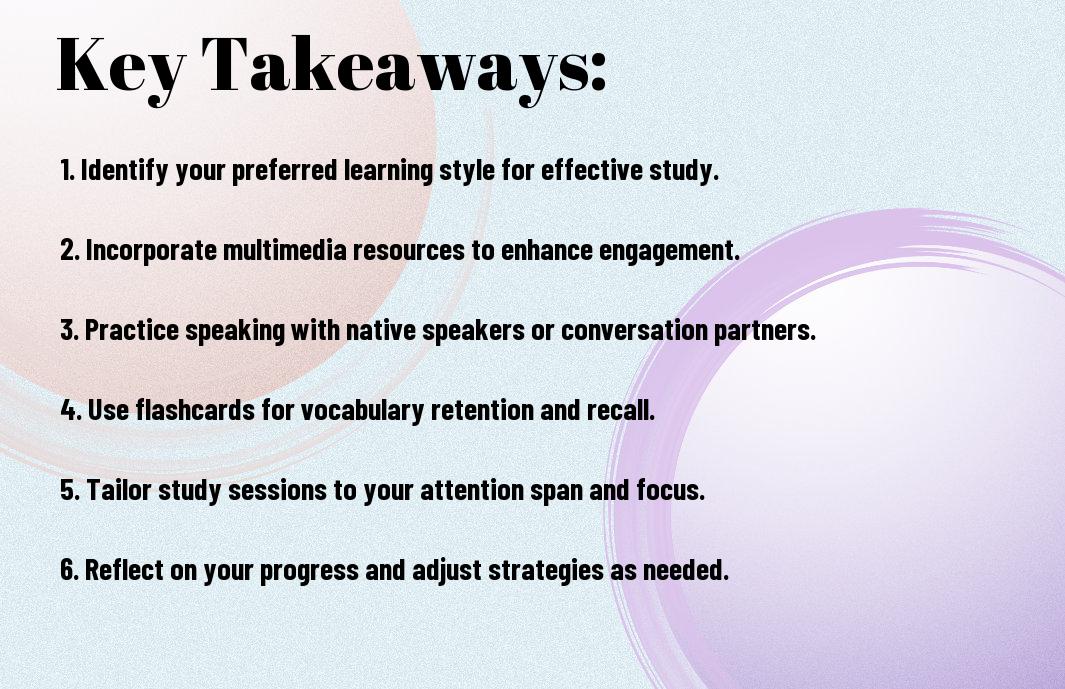
Key Takeaways:

To effectively adapt learning styles for language acquisition, consider the following points:

  • Understanding individual learning preferences is crucial to tailor the teaching approach, as some learners may be more visual, auditory, or kinesthetic.
  • Implementing a flexible curriculum that incorporates various teaching methods, such as group work, role-playing, and technology integration, can cater to different learning styles and enhance language retention.
  • Encouraging self-directed learning and providing opportunities for feedback and reflection can help learners develop autonomy and improve their language skills more efficiently, leading to better academic achievement and increased confidence in using the target language.

    Identifying Learning Styles

    A key step in adapting your learning approach is to identify your individual learning style, which can significantly impact your language acquisition journey, so you can tailor your study methods to suit your needs and maximize your progress.

    Visual Learning

    After determining your learning style, if you find that you are a visual learner, you will likely benefit from using images, videos, and graphics to help you understand and retain new language information, allowing you to associate words and concepts with visual cues that you can easily recall.

    Auditory Learning

    One of the most effective ways to learn a new language is through auditory means, and if you are an auditory learner, you will likely find that listening to music, podcasts, or native speakers helps you pick up the sounds, rhythms, and intonations of the language, making it easier for you to mimic and reproduce them in your own speech.

    Understanding how auditory learning works can help you take advantage of its benefits, and as you tune in to the unique sounds and rhythms of your target language, you will start to develop your ability to distinguish between similar sounds, pick up on nuances of pronunciation, and even improve your own speaking skills, allowing you to engage more effectively with native speakers and immerse yourself in the language, all of which are necessary components of successful language acquisition.

    Language Acquisition Principles

    Some key principles guide your language learning journey, and understanding them is important to adapting your learning style. You’ll find that acquiring a new language is a complex process that involves multiple factors, including your motivation, learning environment, and individual characteristics.

    Immersion Techniques

    Practically, the most effective way to learn a language is to surround yourself with it, using immersion techniques to absorb the sounds, rhythms, and grammar of the new language. You can achieve this by listening to music, watching TV shows or movies, and speaking with native speakers.

    Repetition and Practice

    With consistent effort, you’ll start to see progress in your language skills, and repetition and practice will become your most valuable tools. You’ll need to practice speaking, writing, and listening regularly to reinforce new language patterns and build your confidence.

    Further, as you engage in repetition and practice, you’ll notice that your brain starts to rewire itself, making new connections and strengthening existing ones, allowing you to access the language more easily and spontaneously, and your skills will become more automatic and natural-sounding, helping you to communicate effectively in your new language.

    Adaptation Strategies

    Not every learner is the same, and adapting your learning style is key to language acquisition. You can found more information about Language Learning Styles and What Works for You to help you tailor your approach. This will enable you to make the most of your language learning journey.

    Personalized Learning Plans

    Besides understanding your learning style, creating a personalized plan helps you stay focused and motivated. You can identify your strengths and weaknesses, and develop strategies to improve your language skills. This will allow you to make progress at your own pace.

    Technology Integration

    Integrating technology into your language learning can be a game-changer. You can access a wide range of resources, from language learning apps to online courses, to help you practice and improve your skills. This will enable you to learn more efficiently and effectively.

    Learning a new language with technology integration can be a fun and engaging experience. You can use interactive tools, such as language exchange websites and mobile apps, to practice your speaking and listening skills. You can also access online resources, such as videos and podcasts, to learn new vocabulary and grammar rules. This will help you stay motivated and interested in the learning process.

    Effective Instruction Methods

    Many language learners benefit from tailored instruction, and you can adapt your teaching to suit individual styles. By understanding your students’ strengths and weaknesses, you can create a more effective learning environment, helping them to absorb and retain new language skills.

    Interactive Lessons

    Efficient instruction involves engaging your students in interactive lessons, where you encourage discussion, role-playing, and hands-on activities, allowing them to practice their language skills in a supportive setting, and you can adjust your approach to meet their unique needs.

    Real-World Applications

    Realistic learning experiences help you connect language acquisition to everyday life, making it more relatable and interesting, as you learn to communicate in practical situations, and your language skills become more relevant and useful.

    Further exploration of real-world applications can help you discover new ways to make language learning more enjoyable and effective, such as using authentic materials, like news articles or videos, to teach vocabulary and grammar in context, allowing you to see the language in action and apply it to your own life.

    Overcoming Learning Barriers

    To tackle the obstacles that hinder your language acquisition, you need to understand the roots of your learning difficulties. Identifying these barriers is the first step towards creating a personalized learning plan that suits your needs.

    Building Confidence

    Besides developing a growth mindset, you can build confidence by setting achievable goals and celebrating your progress, no matter how small. This will help you stay motivated and focused on your language learning journey.

    Addressing Learning Disabilities

    Between the lines of language learning lies the importance of acknowledging any learning disabilities you may have. You can work with your instructor to develop strategies that cater to your needs, ensuring you have an equal opportunity to learn and succeed.

    In addition to seeking guidance from your instructor, you can also explore various tools and resources designed to support learners with disabilities. By doing so, you’ll be able to create a tailored approach that addresses your unique challenges and helps you overcome them, ultimately enhancing your language acquisition experience.

    Implementation and Assessment

    Unlike other learning processes, adapting learning styles for language acquisition requires a tailored approach. You’ll need to consider your individual needs and goals to create an effective plan.

    Setting Goals and Objectives

    Among the first steps in implementing your language learning plan is setting achievable goals and objectives. You’ll want to identify what you want to accomplish and by when, helping you stay focused and motivated.

    Evaluating Progress

    Against the backdrop of your overall progress, it’s important to regularly assess your language skills. You’ll want to track your improvement and make adjustments as needed to stay on track.

    Indeed, evaluating your progress is an ongoing process that helps you refine your approach and make informed decisions about your learning strategy. As you assess your progress, you’ll identify areas where you need more practice or review, allowing you to adjust your plan and make steady gains in your language skills, and you will be able to develop a more effective learning style that suits your needs.

    Conclusion

    Following this guide, you’ll be able to tailor your learning approach to suit your needs, making language acquisition more effective. You’ll identify your learning style and adapt it to absorb new language skills, using techniques that work best for you. Your journey to mastering a new language will be more efficient, and you’ll be able to track your progress, staying motivated along the way.

    FAQ

    Q: What are the different types of learning styles and how do they impact language acquisition?

    A: There are several learning styles, including visual, auditory, and kinesthetic. Visual learners acquire language best through images, videos, and written texts. Auditory learners thrive in environments where they can listen to native speakers, podcasts, or audio recordings. Kinesthetic learners, on the other hand, learn by practicing and engaging in physical activities related to the language, such as role-playing or writing. Understanding and adapting to these learning styles can significantly enhance the language learning process, making it more effective and engaging for learners.

    Q: How can language instructors adapt their teaching methods to accommodate different learning styles in the classroom?

    A: Instructors can adapt their teaching methods by incorporating a variety of activities and resources that cater to different learning styles. For instance, they can use multimedia presentations for visual learners, provide audio materials and encourage class discussions for auditory learners, and design interactive exercises and activities for kinesthetic learners. Additionally, instructors can offer one-on-one support or group work that allows learners to work in their preferred style, thereby promoting a more inclusive and effective learning environment.

    Q: What strategies can language learners use to identify and utilize their preferred learning style for more effective language acquisition outside of the classroom?

    A: Language learners can start by identifying their preferred learning style through self-assessment or by trying out different learning methods to see what works best for them. Once they have identified their style, they can seek out resources and tools that align with it, such as language learning apps, videos, podcasts, or language exchange programs. They can also create a personalized learning plan that incorporates their preferred style, setting realistic goals and tracking their progress. This self-directed approach enables learners to take charge of their language learning, making the process more enjoyable and fostering a deeper engagement with the target language.

How to Stay Consistent in Language Practice

To become proficient in a new language, you need to practice regularly. Your progress depends on your ability to stick to a routine. As you initiate on this journey, you will encounter challenges that may deter you from your goals. You must find ways to maintain your motivation and make language practice a habit. In this article, you will learn simple yet effective techniques to help you stay on track and achieve your language learning objectives.

Key Takeaways:

To maintain a steady progress in language learning, follow these crucial tips:

  • Set realistic goals that align with your schedule and learning style, allowing you to make steady progress without feeling overwhelmed.
  • Establish a consistent routine that includes regular practice sessions, using a combination of language learning tools and resources to stay engaged.
  • Track your progress and adjust your approach as needed, celebrating small achievements and identifying areas that require more attention to stay motivated and focused on your language learning journey.

Setting Goals

To achieve success in language practice, you need to define your objectives. You can learn how to Build a consistent language learning habit with these tips and set your goals accordingly.

Defining Objectives

An necessary step in setting goals is to identify what you want to achieve in your language practice. You should determine your motivation and what drives you to learn a new language.

Creating a Schedule

Any successful language learning journey starts with a well-planned schedule. You should allocate a specific time each day to practice your language skills.

Even with a busy schedule, you can find time to practice your language skills. You can use your commute, lunch break, or any other spare time to listen to a podcast, watch a video, or practice speaking with a language exchange partner. By incorporating language practice into your daily routine, you will be able to stay consistent and make progress in your language learning journey.

Building Habits

Now that you’ve set your language learning goals, it’s time to focus on building habits that will help you stay consistent in your practice. You need to create an environment that supports your learning and makes it a part of your daily routine.

Establishing a Routine

Beneath the surface of language learning lies the foundation of a well-planned routine. You should schedule your practice sessions at the same time every day, so it becomes second nature to you. This will help you make progress and stay motivated.

Tracking Progress

Against the backdrop of your daily routine, tracking your progress is necessary. You will be able to identify areas where you need improvement and make adjustments to your practice schedule accordingly. This will help you stay on track and achieve your goals.

Habits take time to develop, and tracking your progress is an necessary part of the process. As you track your progress, you will be able to see how far you’ve come and make informed decisions about your learning strategy. You will be able to identify what works for you and what doesn’t, and make adjustments to optimize your practice sessions, which will help you stay consistent in your language practice.

Overcoming Obstacles

Unlike many other skills, language practice requires dedication and persistence. You will face obstacles, but with the right mindset, you can overcome them and stay consistent in your practice.

Managing Motivation

Against all odds, you must find ways to motivate yourself to practice every day. You can set achievable goals, track your progress, and reward yourself for milestones reached.

Dealing with Setbacks

About the time you think you’re making progress, setbacks can occur. You may encounter difficulties with grammar, vocabulary, or pronunciation, but don’t let them discourage you.

Indeed, setbacks are an opportunity to learn and improve. You can analyze what went wrong, adjust your approach, and try again. By doing so, you will develop resilience and perseverance, necessary qualities for successful language learning. You will learn to navigate challenges and stay on track with your practice, ultimately achieving your language goals.

Staying Engaged

Once again, your motivation will be tested as you continue your language practice. Staying engaged is vital to achieving your goals, and you can do this by setting realistic targets and rewarding yourself when you reach them.

Finding Language Learning Resources

Beneath the surface of language learning lies a wealth of resources to aid your progress. You will find numerous online courses, language exchange websites, and mobile apps that can supplement your learning and keep you engaged.

Practicing Active Listening

Between the lines of language learning, listening is an vital skill to master. You will need to tune your ears to the sounds, rhythms, and intonations of the language, and actively listen to native speakers to improve your comprehension.

Learning a language requires dedication and persistence, and practicing active listening is a key part of this process. As you listen to native speakers, you will begin to pick up on nuances and complexities that will help you to better understand the language and express yourself more effectively. You will find that your listening skills improve over time, allowing you to engage more fully with the language and its speakers.

Reviewing Progress

Your progress in language practice should be regularly evaluated to ensure you’re on the right track. This involves tracking your language learning journey, identifying areas of improvement, and setting realistic goals.

Evaluating Milestones

Against the backdrop of your overall goals, assess your achievements and pinpoint what’s working and what’s not. This helps you understand your strengths and weaknesses, allowing for more focused practice.

Adjusting the Approach

Along with evaluating milestones, you should be willing to modify your approach as needed. This may involve changing your study materials, practice schedule, or even your language learning strategy.

Approach adjustments with an open mind, considering what has and hasn’t worked for you so far. You may find that a particular method or resource that was effective initially becomes less so over time, and that’s okay. By being adaptable and willing to try new things, you can continue to make progress and stay motivated in your language practice.

Maintaining Momentum

Many language learners struggle to stay consistent in their practice, but you can overcome this by establishing a routine. You can learn more about building a language practice routine by visiting Mastering Consistency: Building a Language Practice Routine for English Learners.

Setting Reminders

One effective way to stay on track is to set reminders for your practice sessions, which will help you prioritize your time and ensure that you make progress in your language learning journey, as you stick to your schedule.

Finding Language Exchange Partners

Around you, there are many opportunities to practice your language skills with others, and finding a language exchange partner can be a great way to stay motivated and get feedback on your progress.

Further, having a language exchange partner can help you improve your speaking and listening skills, as you engage in conversations and discussions on various topics, which will help you to become more fluent and confident in your language abilities, and you will be able to track your improvement over time.

Final Words

The key to successful language practice lies in your ability to maintain a consistent routine. You must make language learning a part of your daily life, incorporating it into your schedule as you would any other habit. By doing so, you will find that your skills improve steadily, and your confidence grows. Your dedication will ultimately determine your level of proficiency, so stay committed and you will achieve your language goals.

FAQ

Q: What are the best ways to establish a daily routine for language practice?

Q: How can I avoid burnout and maintain motivation in my language practice?

A: Avoiding burnout and maintaining motivation in language practice requires a combination of setting realistic goals, taking breaks, and mixing up study materials. It is necessary to celebrate small victories along the way and not be too hard on oneself when encountering difficulties. Finding a language exchange partner or joining a language learning community can also provide support, accountability, and new perspectives, helping to keep practice sessions engaging and enjoyable. Moreover, understanding that language learning is a long-term process and being patient with oneself can help mitigate frustration and keep motivation levels high.

Q: What role does consistency play in achieving fluency in a language, and how can it be maintained over time?

A: Consistency plays a significant role in achieving fluency in a language as it ensures continuous exposure and practice, which are key to reinforcing new language skills and preventing forgetting. Maintaining consistency over time can be facilitated by making language practice a habit, ideally at the same time every day. Utilizing a variety of resources such as language learning apps, podcasts, and TV shows can keep practice interesting and prevent boredom. Additionally, immersing oneself in the language as much as possible by changing phone settings to the target language, following native speakers on social media, and engaging in conversations can significantly enhance consistency and fluency. Regularly assessing progress and adjusting the practice routine as needed can also help in staying consistent and motivated over the long term.

How to Prepare for a Multilingual World

As you navigate the complexities of a globalized society, you will inevitably encounter people who speak languages other than your own. You will need to communicate effectively with them to succeed. Your ability to adapt to this multilingual environment will depend on your willingness to learn and prepare. You must consider the skills and knowledge required to interact with people from diverse linguistic backgrounds, and take steps to acquire them, in order to thrive in a world where language barriers are increasingly irrelevant.

Key Takeaways:

To navigate a multilingual world effectively, consider the following points:

  • Developing language skills is vital in today’s globalized society, as it allows individuals to communicate with people from diverse cultural backgrounds and fosters international understanding.
  • Embracing diversity and promoting inclusion can help break down language barriers, enabling more effective collaboration and exchange of ideas across linguistic and cultural boundaries.
  • Utilizing technology, such as translation tools and language learning apps, can facilitate communication in a multilingual environment and provide opportunities for individuals to acquire new language skills and connect with others worldwide.

Language Skills

Your ability to navigate a multilingual world begins with language skills. You can learn more about Ways to Support Multilingual Learners – Literacy Partners and improve your understanding of diverse languages.

Learning Multiple Languages

Besides acquiring basic language skills, you can explore various languages to broaden your cultural knowledge and perspectives, enabling you to engage with people from diverse backgrounds.

Improving Communication

For effective communication in a multilingual setting, you need to be open to learning and using new languages, which will help you connect with people and foster meaningful relationships.

With practice and dedication, you can overcome language barriers and communicate confidently in a multilingual world, navigating everyday situations and professional interactions with ease, and you will be able to leverage your language skills to build stronger connections and achieve your goals.

Cultural Awareness

Assuming you want to thrive in a multilingual world, developing cultural awareness is crucial. You need to understand the values, customs, and practices of different cultures to navigate diverse social situations effectively.

Exploring Different Cultures

Beneath the surface of language lies a complex web of cultural norms. You will discover that exploring different cultures broadens your perspective, allowing you to engage with people from diverse backgrounds more sensitively.

Avoiding Cultural Misunderstandings

The key to successful communication is being mindful of cultural differences. You should be aware of the nuances of nonverbal communication, as gestures and facial expressions can have different meanings in various cultures.

It is worth noting that avoiding cultural misunderstandings requires effort and dedication from your part. You will need to educate yourself about the customs and traditions of other cultures, and be patient and open-minded when interacting with people from diverse backgrounds, which will help you to build stronger relationships and avoid unintended offenses.

Travel Preparation

After considering the linguistic and cultural nuances of your destination, you can begin to prepare for your trip. You will need to research the local customs, learn basic phrases, and understand the regional dialects to ensure a smooth journey.

Planning International Trips

To plan your international trips effectively, you should gather information about the visa requirements, travel restrictions, and health advisories for your destination. You will also need to consider the cost of travel, accommodation, and food to budget your trip accordingly.

Navigating Foreign Environments

To navigate foreign environments with ease, you should learn to read signs, menus, and maps in the local language. You can use translation apps or phrasebooks to help you communicate with locals and find your way around.

In fact, navigating foreign environments becomes much simpler when you have a basic understanding of the local language and culture. You will be able to appreciate the nuances of the place, interact with locals, and make the most of your trip. You will also be able to avoid potential pitfalls, such as getting lost or misunderstandings, and have a more enjoyable and enriching experience.

Business and Education

Many companies and institutions are now preparing for a multilingual world, and you can too by understanding the importance of language skills in your professional and academic life.

Multilingual Workplaces

Workplaces are becoming increasingly diverse, and you will likely encounter colleagues and clients who speak different languages, so it’s important to develop your language skills to communicate effectively and succeed in your career.

Language Requirements in Education

Beside the benefits of language skills in the workplace, you will also find that language requirements are becoming more prevalent in educational institutions, and you will need to meet these requirements to achieve your academic goals.

In fact, as you pursue higher education or specialized training, you will likely be required to demonstrate proficiency in one or more languages, and you should start preparing early to meet these requirements and stay competitive in your field.

Technology and Resources

All the tools you need to navigate a multilingual world are at your fingertips, thanks to advancements in technology. You can access a wide range of resources to improve your language skills and connect with people from diverse backgrounds.

Language Learning Tools

To take your language learning to the next level, you can utilize various apps, software, and online platforms that offer interactive lessons and exercises tailored to your needs and skill level, allowing you to learn at your own pace.

Online Resources for Multilingual Support

Linguistically, you will find numerous online resources that provide support for multilingual individuals, including language exchange websites, online dictionaries, and translation tools that can help you communicate effectively in a foreign language.

At your convenience, you can access these online resources from anywhere, at any time, and use them to improve your language skills, expand your vocabulary, and stay up-to-date with the latest language trends and developments, enabling you to navigate a multilingual world with confidence and ease.

Community Involvement

Unlike other approaches to language learning, community involvement allows you to engage with people from diverse linguistic backgrounds, broadening your understanding of different cultures. You can participate in local events, join clubs or organizations that align with your interests, and interact with native speakers of your target language.

Joining Multilingual Communities

By immersing yourself in multilingual communities, you can gain valuable insights into the daily lives of people who speak multiple languages. You will have the opportunity to observe how they communicate, navigate cultural differences, and adapt to new situations, all of which can help you in your own language learning journey.

Participating in Language Exchange Programs

By engaging in language exchange programs, you can practice your language skills with native speakers, while also helping them improve their own language proficiency. This mutual exchange can be incredibly beneficial, as you can learn from each other’s experiences and gain a deeper understanding of the nuances of language and culture.

Hence, as you participate in language exchange programs, you will find that your language skills improve significantly, and you become more confident in your ability to communicate effectively. You will also have the chance to learn about the customs, traditions, and ways of life of your language partners, allowing you to develop a more nuanced understanding of the world and its diverse cultures, which will serve you well in your personal and professional life, as you navigate your way through an increasingly multilingual world.

Final Words

To wrap up, you have taken the first step towards preparing for a multilingual world by reading this guide. You now understand the importance of language skills in your personal and professional life. As you continue on this journey, your ability to communicate across cultures will become a valuable asset, opening doors to new opportunities and experiences. You will be better equipped to navigate the complexities of a globalized world, and your horizons will expand as a result.

FAQ

Q: What are the benefits of preparing for a multilingual world, and how can it impact my future career prospects?

A: Preparing for a multilingual world can significantly broaden your cultural understanding and enhance your ability to communicate effectively with people from diverse linguistic backgrounds. This preparation can open up numerous career opportunities in fields such as international business, diplomacy, education, and tourism. Being proficient in multiple languages can make you a more competitive candidate in the job market, as it demonstrates your ability to adapt to different cultural environments and communicate with clients or colleagues from around the globe.

Q: What are some effective methods for learning a new language, especially for those with busy schedules or limited access to language classes?

A: There are several effective methods for learning a new language, catering to different learning styles and schedules. For busy individuals, language learning apps such as Duolingo, Babbel, and Rosetta Stone offer flexible, self-paced lessons that can be completed in short intervals. Additionally, podcasts, audiobooks, and language exchange programs can provide valuable listening and speaking practice. For those with limited access to classes, online courses and YouTube channels dedicated to language learning can serve as comprehensive resources. Consistency and immersion, such as watching TV shows or movies in the target language, can also accelerate the learning process.

Q: How can I continue to improve my language skills and stay motivated once I have started learning, especially when faced with challenging aspects like grammar and vocabulary retention?

A: Continuing to improve language skills requires consistent practice and exposure to the language. Setting achievable goals, such as holding a 10-minute conversation with a native speaker or reading a book in the target language, can help maintain motivation. Engaging in activities that you enjoy, such as listening to music, reading comics, or playing video games in the target language, can make the learning process more enjoyable and increase retention. Furthermore, joining language learning communities or finding a language learning partner can provide support, feedback, and opportunities for regular practice. Regular self-assessment and celebration of milestones achieved can also boost motivation and reinforce the learning process.

The Role of Dialects in Cultural Understanding

As you examine into the intricacies of language, you’ll find that dialects play a significant role in shaping your perception of cultural nuances. Your understanding of dialects can bridge the gap between communities, allowing you to grasp the subtleties of communication that might otherwise be lost. By examining dialects, you’ll gain insight into the complexities of cultural identity and how language influences your worldview, enabling you to navigate diverse social contexts with greater ease and sensitivity.

Key Takeaways:

  • The diversity of dialects plays a significant role in shaping cultural identity and influencing how individuals perceive and interact with their environment, highlighting the importance of linguistic variation in understanding cultural differences.
  • Dialects serve as a means of communication that is closely tied to regional and social contexts, and their study can provide valuable insights into the history and traditions of a particular community.
  • By examining the complexities of dialects and their relationship to cultural practices, we can gain a deeper understanding of the nuances of human expression and the ways in which language shapes our perceptions of the world around us.

Dialects and Cultural Identity

For your exploration of dialects, consider how they shape your sense of belonging and inform your understanding of cultural heritage. As you research into the nuances of dialects, you will find that they are closely tied to cultural identity, influencing how you perceive and interact with your surroundings.

Linguistic Variations

Culturally, you will discover that linguistic variations within dialects reflect the unique characteristics of a community, shaping your communication and expression. You will notice that these variations can indicate social status, geographic location, and historical context, all of which contribute to your cultural identity.

Regional Accents

Following your examination of linguistic variations, you will observe that regional accents play a significant role in distinguishing one cultural group from another. You will find that these accents are often a source of pride, serving as a badge of identity and a means of connecting with your cultural roots.

Linguistic diversity is a hallmark of regional accents, and as you explore this aspect further, you will see that it is a key factor in shaping your cultural landscape. You will notice that regional accents can affect how you interpret and respond to different situations, and they can also influence your relationships with people from other cultural backgrounds, allowing you to better understand and appreciate the complexities of your own cultural identity and that of others.

Language and Social Class

Any discussion of language and social class must consider the ways in which dialects reflect and reinforce socioeconomic divisions.

Socioeconomic Factors

You will notice that socioeconomic factors, such as income and education level, influence the dialect you speak, as seen in the following points:

  • Access to resources
  • Geographic location

The nuances of dialect can affect your perception of social class and cultural identity.

Educational Implications

Along with the complexities of language and social class, you should consider how dialects impact your educational experiences. As you navigate different linguistic environments, you may encounter various dialects that can either facilitate or hinder your learning.

Socioeconomic factors, such as those influencing the dialect you speak, can have a profound impact on your educational implications, and as you examine deeper into the role of dialects in cultural understanding, you will see that your ability to navigate multiple dialects can significantly affect your academic and professional opportunities, and you will begin to appreciate the value of dialectal diversity in your own life.

The Power of Dialects in Storytelling

After delving into the world of dialects, you will discover their significance in shaping your understanding of cultures. You can learn more about dialects by visiting What Are Dialects and Why They Matter in Language Services to broaden your knowledge.

Narrative Techniques

Narratively, dialects play a significant role in storytelling, as they add depth and authenticity to your characters and setting, allowing you to better connect with your audience.

Character Development

Behind the scenes of character development, dialects help you create unique and believable characters, enabling you to craft compelling stories that resonate with your readers.

For instance, when you use dialects in your writing, you can convey a character’s background, social status, and education level, making them more relatable and realistic, and allowing you to explore the complexities of human experience in a more nuanced way.

Dialects in Global Communication

Once again, you find yourself navigating the complexities of language as you engage with people from diverse backgrounds, and dialects play a significant role in shaping your interactions. As you communicate across cultures, you begin to appreciate the nuances of dialects and their impact on your understanding of others.

International Relations

Following your exploration of dialects, you notice that international relations are influenced by the various dialects spoken by world leaders and diplomats, which can either facilitate or hinder effective communication, and you start to consider how dialects affect your own interactions with people from other countries.

Cultural Exchange

Towards a deeper understanding of dialects, you start to see the value of cultural exchange programs, which allow you to immerse yourself in different dialects and gain a more nuanced understanding of the cultures they represent, enabling you to better navigate your interactions with people from diverse backgrounds.

This exchange of cultural practices and dialects enables you to broaden your perspective, as you learn to appreciate the unique characteristics of each dialect and how they reflect the history, values, and beliefs of the people who speak them, ultimately enriching your understanding of the complex tapestry of human culture and allowing you to engage more effectively with others in your global interactions.

Cultural Preservation through Dialects

To understand the significance of dialects, you can explore how they contribute to cultural preservation, as seen when you visit what role does language play in cultural diversity? and its impact on your community.

Language Revitalization

Above all, you’ll find that dialects play a significant role in language revitalization, allowing you to connect with your heritage and preserve your cultural identity.

Community Efforts

Culturally, you are likely to see that community efforts are vital in promoting dialects, enabling you to engage with your local traditions and customs.

Through your participation in community initiatives, you can help safeguard dialects and ensure their continuation, ultimately enriching your cultural landscape and allowing you to appreciate the unique characteristics of your dialect and its significance in your life.

Challenges and Opportunities

Unlike other aspects of culture, dialects can be particularly difficult to navigate, as you attempt to understand the nuances of a particular region or community. You will encounter various challenges, but also opportunities to gain a deeper understanding of the culture.

Language Barriers

Beneath the surface of dialects, you will find language barriers that can hinder your ability to communicate effectively. You may struggle to comprehend certain words or phrases, which can lead to misunderstandings and miscommunications.

Technological Advancements

Any attempt to understand dialects can be aided by technological advancements, which provide you with a wealth of resources to learn and explore different dialects. You can access language learning tools, podcasts, and videos that help you improve your understanding of various dialects.

Barriers to understanding dialects can be overcome with the help of technology, as you can now access a vast array of resources to aid in your learning. You can listen to native speakers, practice your pronunciation, and learn about the cultural context in which the dialect is spoken, allowing you to gain a more nuanced understanding of the culture and its people.

To wrap up

Taking this into account, you can see that dialects play a significant role in shaping your understanding of diverse cultures. As you explore the nuances of dialects, you gain insight into the history, values, and beliefs of a community. Your ability to appreciate these variations enriches your cultural awareness, allowing you to engage more deeply with the people and their traditions, and broadening your perspective on the world.

FAQ

Q: What is the significance of dialects in understanding cultural diversity?

A: Dialects play a vital role in understanding cultural diversity as they provide a unique window into the history, traditions, and values of a community. Each dialect has its own distinct characteristics, such as vocabulary, pronunciation, and grammar, which are shaped by the social, economic, and geographic context of the speakers. By studying dialects, we can gain insights into the cultural practices, customs, and beliefs of different communities, fostering greater empathy and understanding among people from diverse backgrounds.

Q: How do dialects influence cultural identity and belonging?

A: Dialects have a profound impact on cultural identity and belonging, as they often serve as a marker of group membership and affiliation. The dialect spoken by an individual can convey information about their geographic origin, social status, and cultural affiliations, influencing how they perceive themselves and are perceived by others. Moreover, dialects can evoke strong emotions and sentiments, such as nostalgia, pride, or solidarity, which are crucial components of cultural identity. By embracing and appreciating dialectal diversity, we can promote a sense of inclusivity and belonging among individuals from diverse cultural backgrounds.

Q: Can dialects be a barrier to communication, and if so, how can we overcome these barriers?

A: While dialects can enrich our cultural understanding, they can also create barriers to communication, particularly in situations where speakers of different dialects interact. These barriers can arise due to differences in vocabulary, pronunciation, or grammar, leading to misunderstandings or miscommunications. To overcome these barriers, it is crucial to promote dialectal awareness and tolerance, encouraging speakers to be patient, flexible, and open-minded when interacting with individuals who speak differently. Additionally, using standardized language varieties, providing linguistic support, and fostering a culture of respect and empathy can help bridge the gaps between dialects and facilitate effective communication across cultural boundaries.

Skip to content