- The immersion provided by language schools plays a significant role in fluency development, as it allows students to engage with the language in a more authentic way, surrounded by native speakers and real-life situations.
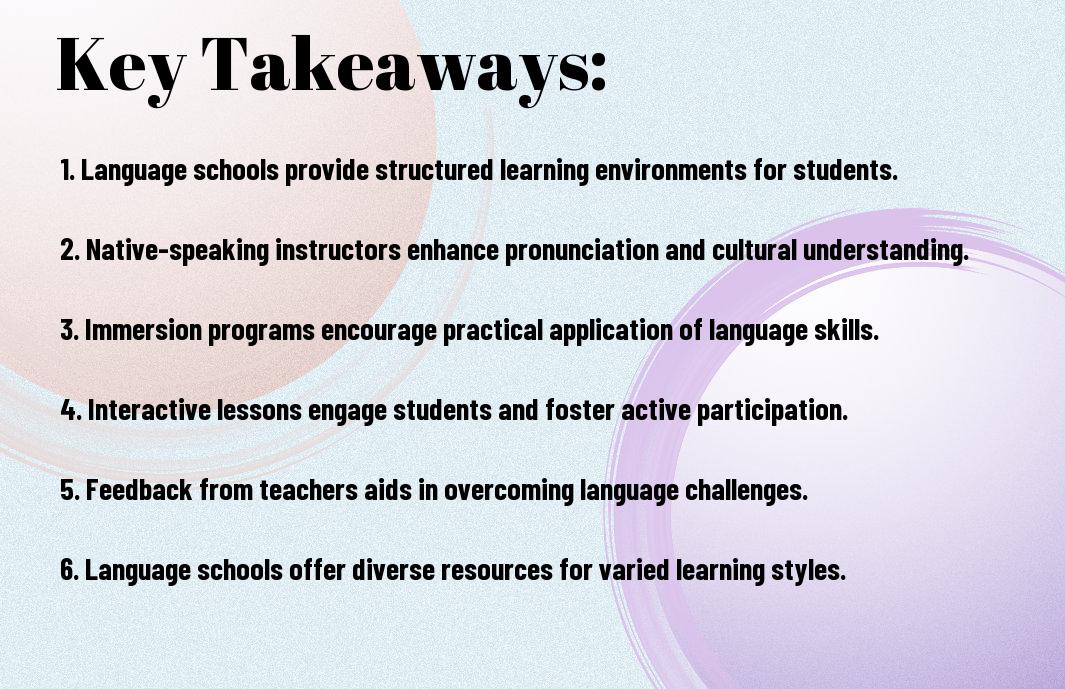
- Language schools offer a variety of teaching methods and resources that cater to different learning styles, helping students to develop their listening, speaking, reading, and writing skills.
- The supportive environment of language schools, which often includes feedback from instructors and interaction with peers, helps students build confidence in their language abilities and stay motivated to continue improving their fluency.
Importance of Language Schools
Before enrolling in a language school, you should understand the significance of language development. You can learn more about The importance of Language development in early childhood and its impact on your future. This understanding will help you make informed decisions about your language learning journey.
Role in Language Foundation
To build a strong language foundation, you need a solid understanding of the language’s grammar, vocabulary, and pronunciation. You will learn these fundamentals in a language school, which will help you develop your language skills and improve your communication abilities.
Qualified Instructors and Resources
Around the world, language schools offer qualified instructors and resources to support your language learning. You will have access to experienced teachers, language learning materials, and technology to enhance your learning experience.
Role of qualified instructors and resources is significant in your language development. You will benefit from their expertise and guidance, which will help you overcome language barriers and achieve your fluency goals. As you progress in your language learning journey, you will appreciate the value of qualified instructors and resources in a language school.

Language Immersion Programs
Some language schools offer language immersion programs that allow you to surround yourself with the language you’re learning, helping you to develop your fluency more effectively.
Cultural Exchange Opportunities
Along with language instruction, you’ll have opportunities to engage with native speakers and experience the culture, which will enhance your understanding of the language and its nuances, enabling you to communicate more confidently.
Interactive Learning Methods
The interactive learning methods used in language schools, such as role-plays and group discussions, help you to practice your language skills in a supportive environment, allowing you to build your fluency and improve your pronunciation.
It is through these interactive learning methods that you can develop a deeper understanding of the language, as you’re able to apply what you’ve learned in real-life situations, and your progress will be evident as you become more comfortable expressing yourself in the target language.
Fluency Development Strategies
Once again, you find yourself at the forefront of learning, and language schools play a significant role in this process, helping you enhance your language skills and achieve fluency.
Conversational Practice
For instance, engaging in conversations with native speakers or language exchange partners helps you develop your speaking skills and build confidence in using the language.
Grammar and Vocabulary Building
Strategies such as immersive learning, contextual learning, and spaced repetition can aid in building your grammar and vocabulary, enabling you to express yourself more effectively in the target language.
To further develop your grammar and vocabulary, you can focus on learning idiomatic expressions, phrasal verbs, and collocations, which are vital for sounding natural and fluent in your speech and writing, and language schools can provide you with the necessary guidance and support to achieve this goal, helping you to improve your overall language proficiency and communicate effectively in various social and professional contexts.
Overcoming Language Barriers
After breaking down the initial barriers, you can explore resources like A Comprehensive Guide to Language Fluency for Educators to further your understanding. This will help you navigate the complexities of language learning and develop effective strategies for your students.
Language School Support Systems
An vital aspect of language schools is the support system they provide, which enables you to address your students’ unique needs and foster a conducive learning environment.
Student Motivation and Engagement
The key to successful language acquisition lies in maintaining your students’ motivation and engagement, as this directly impacts their progress and overall fluency development.
With a well-structured approach to student motivation, you can create an environment that encourages active participation, boosts confidence, and helps your students stay focused on their goals, ultimately leading to improved language skills and a higher level of fluency.
Evaluation and Assessment
For effective fluency development, evaluation and assessment play a significant role in language schools. You will be able to track your progress and identify areas for improvement, allowing you to adjust your learning strategy.
Progress Monitoring
To monitor your progress, language schools use various assessment tools, enabling you to see how far you have come and what you need to work on, helping you stay motivated and focused on your goals.
Feedback and Improvement
Around the time of assessments, you can expect to receive constructive feedback from your instructors, which will help you refine your language skills and address any weaknesses, ultimately enhancing your overall fluency.
Further, when you receive feedback, you will be able to pinpoint specific areas that need improvement, and with the help of your instructors, you can develop a plan to tackle these challenges, leading to significant advancements in your language proficiency and fluency development.
Challenges and Future Directions
All language schools face challenges in balancing instruction with real-world application, and you will encounter various obstacles in your language learning journey. You can prepare yourself by understanding the potential hurdles and staying adaptable.
Accessibility and Affordability
Albeit language schools strive to be inclusive, you may find that certain programs are out of your budget or not easily accessible. Alongside these challenges, you will need to consider your own financial situation and location when selecting a language school.
Technological Integration
Accessible digital tools are becoming increasingly prevalent in language instruction, and you will likely encounter various technologies in your language learning process. Accessing these tools will help you stay connected with your instructors and peers, facilitating a more immersive experience.
This technological integration can greatly enhance your learning experience, as you will have the opportunity to engage with interactive materials, practice speaking with native speakers, and track your progress more efficiently. You can leverage these tools to supplement your in-class instruction and accelerate your fluency development, giving you a competitive edge in your language learning journey.
Final Words
Presently, you can see that language schools play a significant role in your fluency development. You will find that enrolling in a language school helps you achieve your goals, as your skills improve with practice and interaction. Your progress is supported by qualified instructors and a structured curriculum, allowing you to become a proficient speaker. By leveraging these resources, you can enhance your language skills and move closer to fluency.
FAQ
Q: What is the primary role of language schools in fluency development?
A: The primary role of language schools in fluency development is to provide students with a structured and supportive environment where they can learn and practice a new language. Language schools offer a range of programs and courses designed to help students improve their listening, speaking, reading, and writing skills, and to achieve fluency in the target language. Through a combination of classroom instruction, interactive activities, and real-life practice, language schools help students build confidence and develop the skills they need to communicate effectively in the target language.
Q: How do language schools help students develop fluency in a new language?
A: Language schools help students develop fluency in a new language by providing them with opportunities to practice speaking, listening, reading, and writing in the target language. Language schools offer a variety of activities and exercises designed to help students improve their pronunciation, vocabulary, and grammar, and to develop their ability to communicate effectively in real-life situations. Additionally, language schools often provide students with access to language exchange programs, conversation partners, and other resources that can help them practice their language skills and develop fluency. Language schools also use technology, such as language learning software and online resources, to support language learning and fluency development.
Q: What are the benefits of attending a language school for fluency development?
A: The benefits of attending a language school for fluency development are numerous. Language schools provide students with a comprehensive language learning experience that includes instruction, practice, and feedback from experienced teachers. Attending a language school can help students improve their language skills quickly and effectively, and can provide them with the confidence and fluency they need to communicate in the target language. Additionally, language schools offer students the opportunity to meet and practice with other language learners, which can be a fun and motivating way to learn a new language. Overall, attending a language school can be an excellent way to develop fluency in a new language and to achieve language learning goals.